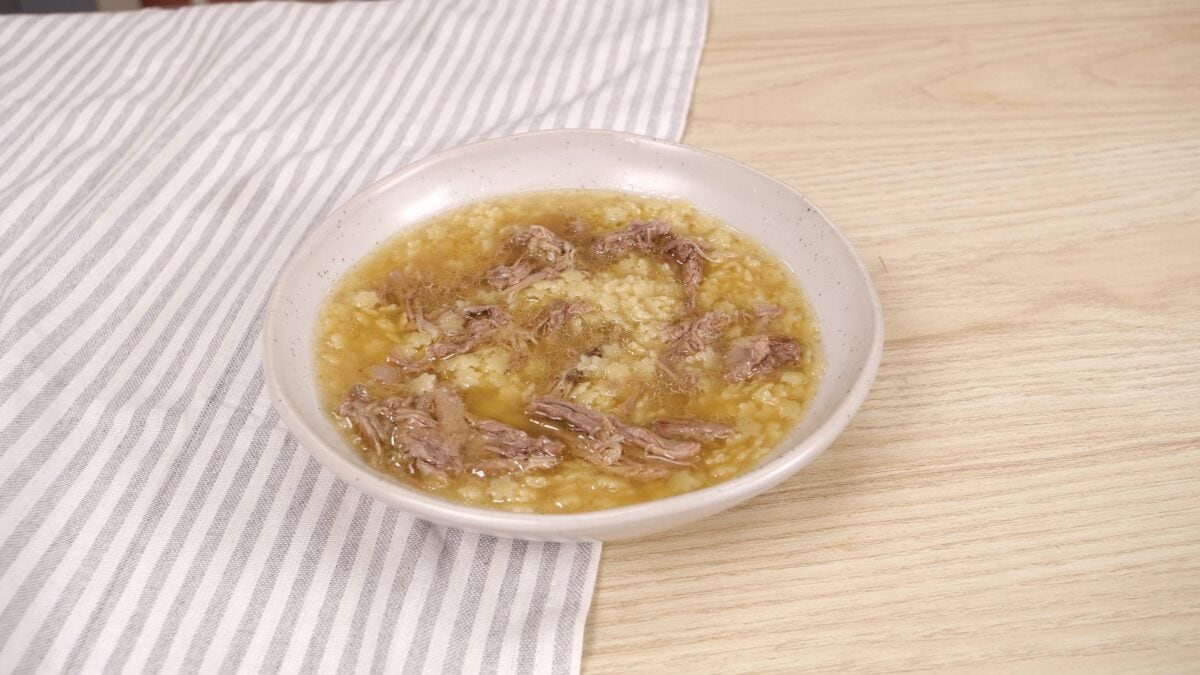
A steaming bowl of homemade beef broth is one of life's simplest comforts. Golden, fragrant, and full of savory flavor, it's a kitchen staple that tastes particularly good on cold winter days.
Known in Italy as brodo di carne, this traditional preparation combines beef, beef bones, carrots, celery, onion, bay leaves, cloves, and peppercorns.
Everything starts in cold water and slowly simmers for approximately three hours, giving the ingredients plenty of time to release their flavors.
The result is a rich, aromatic broth that can be enjoyed on its own or served with small pasta shapes, tortellini, or tender shredded beef.
It's also an excellent ingredient for preparing risotto, soups, gravies, and countless other homemade dishes.
What Is Italian Brodo di Carne?
Brodo di carne is a traditional Italian meat broth prepared by gently simmering meat, bones, vegetables, and aromatics in water.
It has long been a staple of Italian home cooking, particularly during the colder months and festive occasions.
In northern Italy, meat broth is famously served with filled pasta such as tortellini and cappelletti. It's also commonly enjoyed with pastina, the tiny pasta shapes often associated with comforting childhood meals.
Although the terms broth and stock are frequently used interchangeably, there is a traditional distinction between the two.
Beef broth generally emphasizes the flavor of the meat, while beef stock relies more heavily on bones and connective tissue for its body.
This recipe combines both, creating a flavorful broth with a naturally rich consistency.
Unlike darker beef stock recipes that begin by roasting the bones and vegetables, this traditional Italian preparation starts with raw ingredients and cold water, producing a lighter-colored, delicately flavored broth.
Why Everyone Will Love This Recipe
The beauty of homemade beef broth lies in its simplicity. There's no need to roast the bones beforehand or prepare a complicated vegetable base. Everything cooks together in one large pot.
The combination of beef and bones gives the broth a satisfying depth of flavor, while carrots, celery, and onion provide a naturally sweet, aromatic foundation.
Whole cloves add a subtle warmth that makes this Italian-style broth particularly fragrant without overpowering the other ingredients.
Another advantage is that very little goes to waste. Once the broth has been strained, the cooked beef can be shredded and served with the broth or used in other recipes.
It's also perfect for meal preparation. Make a large batch, divide it into portions, and you'll have homemade broth ready whenever you need it.
Tips for Making the Best Homemade Beef Broth
- Start with cold water. Gradually heating the meat, bones, and vegetables allows their flavors to infuse into the liquid and makes it easier to remove the foam that rises to the surface.
- Keep the broth at a gentle simmer. A vigorous boil can disperse fat and impurities throughout the liquid, making the finished broth cloudy.
- Skim the surface regularly. Remove the foam that collects during cooking with a fine-mesh skimmer or spoon for a clearer, cleaner-tasting broth.
- Add salt at the end. As the broth simmers, some of the water evaporates and the flavors become more concentrated. Seasoning after cooking gives you better control over the final taste.
Frequently Asked Questions
What Is the Difference Between Beef Broth and Beef Stock?
Beef broth is traditionally made with meat, vegetables, and sometimes bones, while beef stock generally relies more heavily on bones and connective tissue. Stock often has a fuller body because of the gelatin released during cooking. This recipe uses both meat and bones to combine their benefits.
What Is the Best Cut of Beef for Homemade Broth?
Cuts from the shoulder, such as beef chuck, are particularly suitable because they contain connective tissue and develop a tender texture during slow cooking. Beef shank, brisket, and short ribs are also good alternatives, although each will give the broth a slightly different flavor.
Do You Need to Roast the Bones Before Making Beef Broth?
No. Roasting the bones creates a darker broth with deeper roasted flavors, but traditional Italian brodo di carne is often prepared without this step. Starting with raw meat and bones produces a lighter, more delicate broth.
Why Is My Homemade Beef Broth Cloudy?
Cloudiness can develop when the broth boils too vigorously or when foam and impurities are not removed during cooking. A gentle simmer and careful straining help produce a clearer result. Cloudiness alone doesn't mean the broth is spoiled or unsuitable for eating.
Why Does Homemade Beef Broth Turn Into Jelly When Refrigerated?
This happens when collagen from the bones and connective tissue breaks down into gelatin during cooking. As the broth cools, the gelatin sets, giving it a jelly-like consistency. It will become liquid again when reheated.
What Can You Do With the Meat Left Over From Making Beef Broth?
The cooked beef can be shredded and added to the broth with pastina, as in this recipe. It can also be used in sandwiches, meatballs, croquettes, salads, or served with a traditional Italian salsa verde.
How to Store
Once the beef broth has been strained, divide it into smaller, shallow containers to help it cool quickly. An ice-water bath can also speed up the cooling process.
Refrigerate within two hours of cooking and store in airtight containers for up to 3–4 days.
As the broth chills, a layer of fat may solidify on the surface. You can remove it with a spoon if you prefer a lighter broth.
When ready to use, transfer the desired amount to a saucepan and bring it to a rolling boil before serving.
Store the cooked beef separately, preferably with a little broth to help prevent it from drying out.
How to Freeze
Homemade beef broth freezes very well and is particularly convenient for meal preparation.
Once cooled, pour the strained broth into freezer-safe containers or bags, leaving enough space for the liquid to expand during freezing.
For smaller quantities, freeze it in silicone molds or ice cube trays before transferring the frozen portions to a freezer bag.
Freeze for up to 3 months for the best quality.
Thaw overnight in the refrigerator or reheat directly from frozen in a saucepan.
If you plan to serve the broth with pastina, freeze the broth without the pasta. Adding freshly cooked pasta after reheating prevents it from becoming overly soft.
Ingredients
How to make Homemade Beef Broth
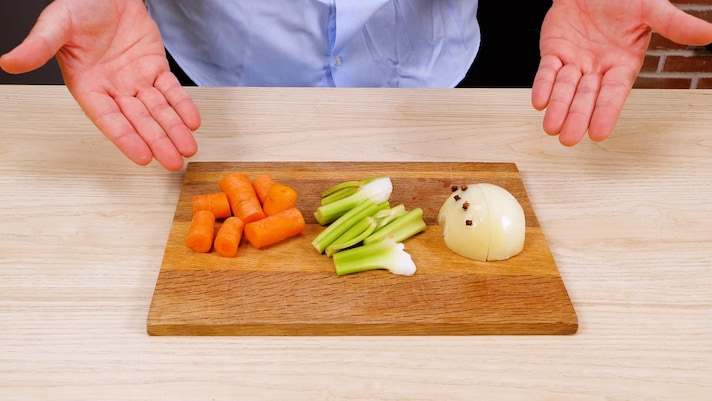
Begin by preparing the vegetables.
Wash the celery stalk and carrots, then peel the carrots and cut both vegetables into large, roughly even pieces.
Peel the onion and cut it in half.
Take one half of the onion and insert the 5 whole cloves directly into its surface.
Begin by preparing the vegetables.
Wash the celery stalk and carrots, then peel the carrots and cut both vegetables into large, roughly even pieces.
Peel the onion and cut it in half.
Take one half of the onion and insert the 5 whole cloves directly into its surface.
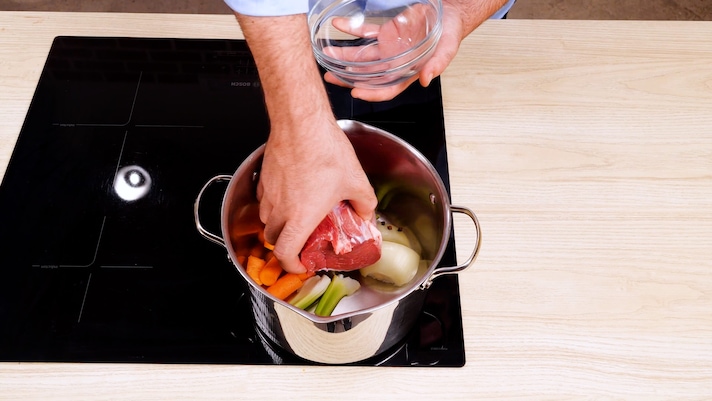
Place the beef chuck shoulder roast and beef bones in a large stockpot.
Add the chopped celery, carrots, and clove-studded onion, followed by the bay leaves and whole black peppercorns.
Place the beef chuck shoulder roast and beef bones in a large stockpot.
Add the chopped celery, carrots, and clove-studded onion, followed by the bay leaves and whole black peppercorns.
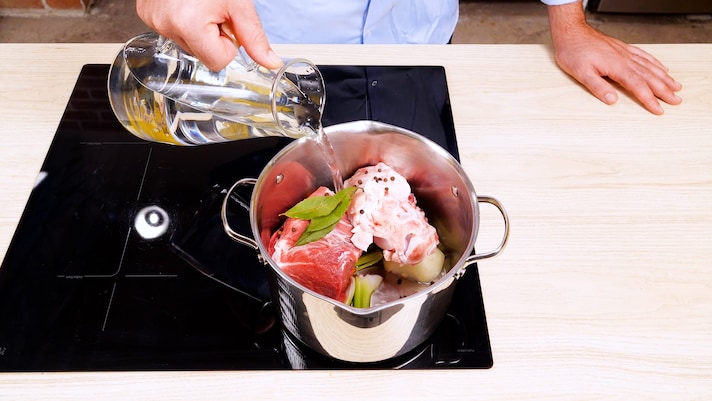
Pour in 3 liters of cold water, making sure the ingredients are completely submerged.
Pour in 3 liters of cold water, making sure the ingredients are completely submerged.
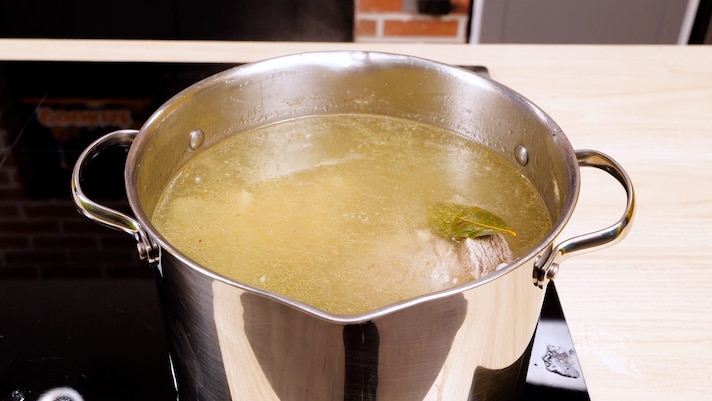
Place the stockpot over medium heat and gradually bring the water to a boil.
As the liquid heats, a layer of foam will begin to collect on the surface. This is a natural part of cooking meat and bones in water.
Once the broth begins to boil, immediately reduce the heat to low.
Allow the broth to simmer gently for approximately 3 hours.
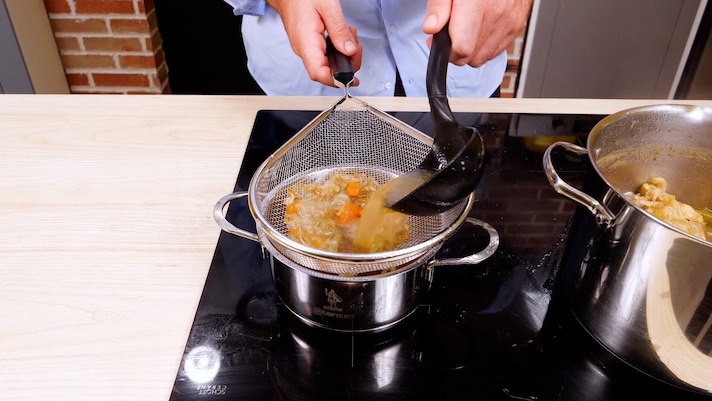
After approximately three hours, remove the stockpot from the heat.
Carefully lift out the cooked beef and set it aside if you plan to serve it with the broth.
Remove the bones and larger pieces of vegetables, then pour the remaining liquid through a fine-mesh strainer into a clean saucepan or heatproof container.
This step removes any small pieces of vegetables, spices, or other solids, leaving a smooth, golden broth.
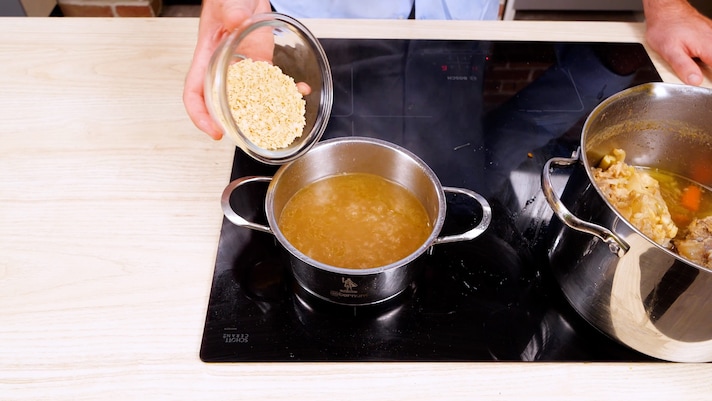
If you want to serve it in the traditional Italian style, return a portion of the broth to the stove and bring it to a gentle boil.
Add your favorite pastina and cook according to the package instructions.
If you want to serve it in the traditional Italian style, return a portion of the broth to the stove and bring it to a gentle boil.
Add your favorite pastina and cook according to the package instructions.
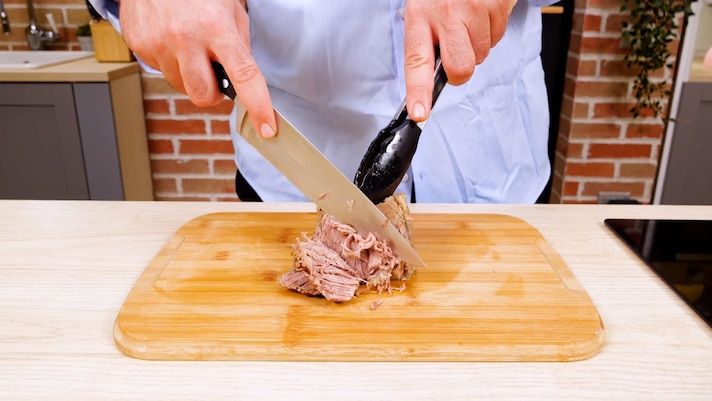
Meanwhile, use two forks to shred some of the reserved cooked beef, removing any large pieces of fat or tough connective tissue.
Meanwhile, use two forks to shred some of the reserved cooked beef, removing any large pieces of fat or tough connective tissue.
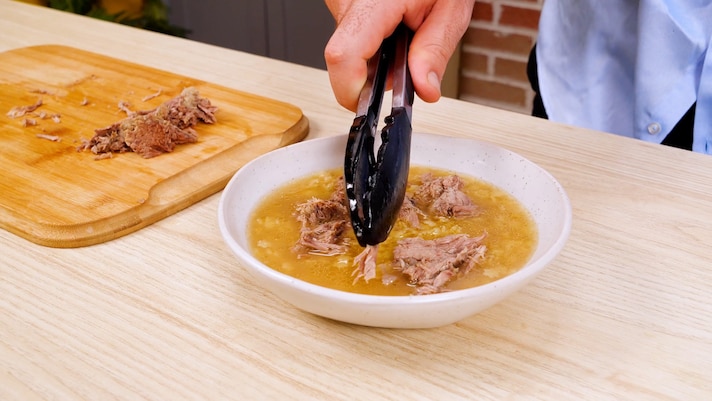
Ladle the hot broth and pastina into serving bowls and finish with a generous spoonful of shredded beef.
Serve immediately while still steaming hot.
Ladle the hot broth and pastina into serving bowls and finish with a generous spoonful of shredded beef.
Serve immediately while still steaming hot.
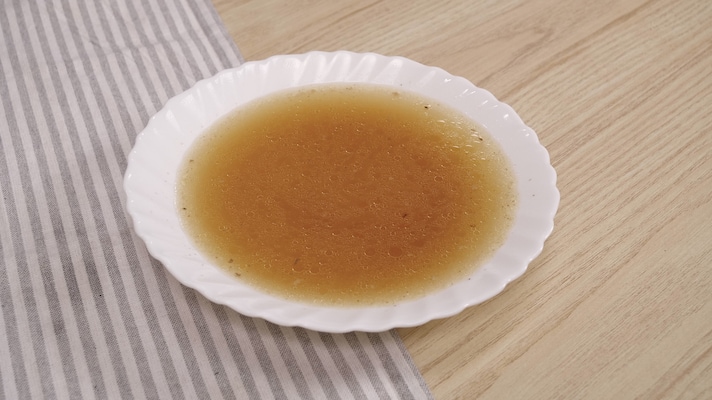
Alternatively, use your homemade beef broth as a flavorful base for risotto, tortellini, vegetable soups, gravies, and slow-cooked dishes.
Alternatively, use your homemade beef broth as a flavorful base for risotto, tortellini, vegetable soups, gravies, and slow-cooked dishes.


