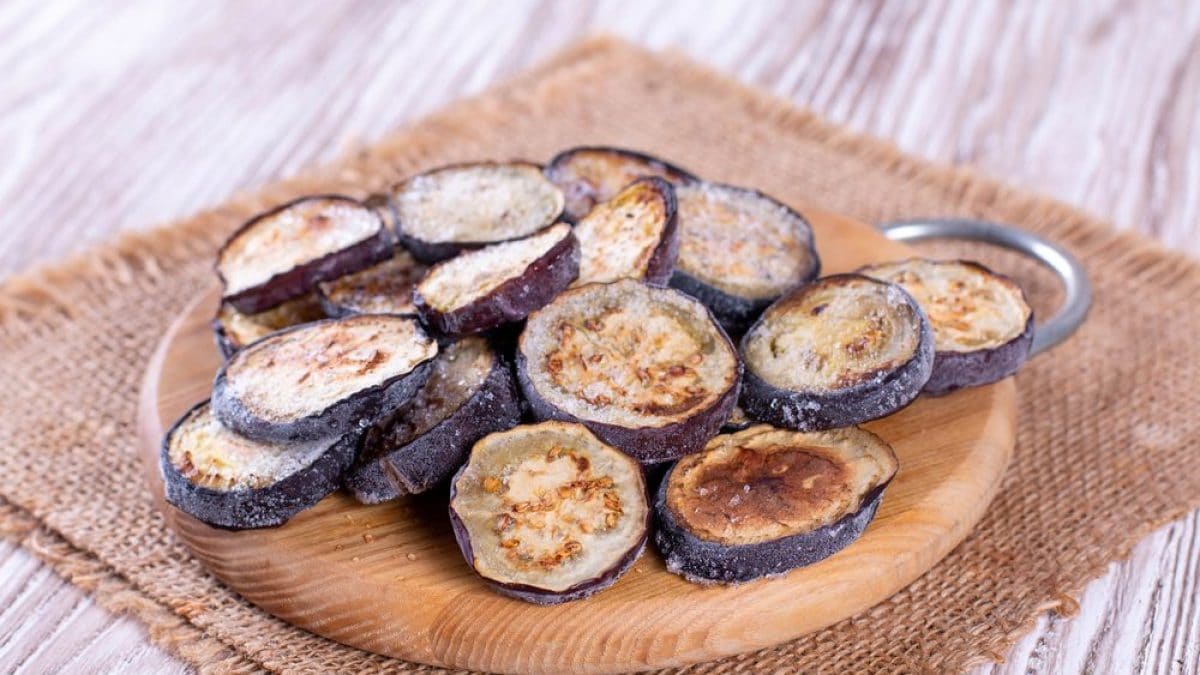
The queen of summer crops, eggplants are a highly prized vegetable, available in a variety of delicious recipes. From appetizers to first courses, from side dishes to main courses, and even the ever-popular eggplant parmigiana, eggplants are a cornerstone of Mediterranean cuisine.
Although they're available year-round, eggplant season par excellence is summer, especially between July and September, the months when crops are at their peak. This is why this is the best time to stock up on quality eggplants and preserve them until winter. But how can you preserve eggplants? The answer is simple: just freeze them. Eggplants can be stored in the freezer both uncooked and cooked, using a variety of techniques. You just need to take a few precautions, because they're a vegetable with a high water content and must be frozen and thawed properly to avoid spoiling. Here are some tips and tricks for always having eggplants available in the freezer.
Can Eggplants Be Frozen?
Eggplants are a type of vegetable that lends itself well to freezing, although a few precautions are necessary. Like many vegetables, eggplants are over 90% water and have a spongy structure that tends to absorb liquids. This means that, both during freezing and after thawing, the consistency inevitably changes: the flesh becomes softer and less firm than the fresh product.
Freezing causes ice crystals to form inside plant cells. During thawing, these crystals break part of the cell walls, releasing water and causing a loss of firmness. This is a normal phenomenon affecting many water-rich vegetables, but it's particularly evident in eggplants due to their delicate structure. For this reason, frozen uncooked eggplants are perfect for preparations such as parmigiana, sauces, creams, stuffings, caponata, ratatouille, or pan-fried side dishes, but they are less suitable for grilling or for use in recipes where firmness is important.
Even within the eggplant category it is necessary to make distinctions, because not all varieties of the vegetable are suitable for freezing: it depends on the firmness of the pulp, the quantity of seeds and the water content.
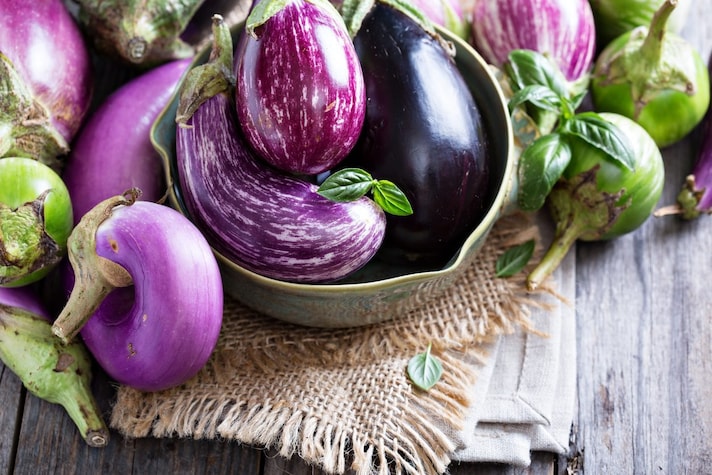
Long purple eggplants are among the most suitable because they have fairly firm flesh, few seeds, and a regular texture that tolerates freezing well. They are particularly suitable for sauces, sautéed vegetables, or baked dishes. Round purple eggplants, often used in parmigiana, also offer good results because their meaty flesh maintains a good structure after blanching and then freezing. Oval black eggplants, widely available in supermarkets, are one of the best choices thanks to their firm flesh and limited seeds: they are versatile and lend themselves to practically any preparation after thawing. White eggplants, sweeter and more delicate, can be frozen without problems, but their texture tends to become slightly softer, which is why they are preferable in creamy recipes or those that require long cooking times.
Very large varieties or those harvested at an advanced stage of ripeness are less suitable: they generally contain a greater quantity of seeds and a spongier pulp, which absorbs more water during freezing and loses its consistency more. Regardless of the type of eggplant chosen, remember that it is essential to freeze only fresh, firm specimens with smooth, shiny skin, free of bruises or soft parts.
How to Freeze Uncooked Eggplants (And When to Blanch Them)
You can freeze raw eggplants easily, but be careful to follow a few steps that help preserve their texture, color, and flavor. Careful preparation helps limit the formation of ice crystals and makes eggplants easier to use when needed.
- Prepare the eggplant. Wash the eggplant, dry it thoroughly, remove the stem, and cut it into your preferred shape: slices, cubes, or sticks.
- Leave the peel on and pat the pulp dry. Avoid removing the peel, as it helps keep the pulp intact. Then pat the cut surfaces with paper towels to remove excess moisture.
- Freeze them first on a tray. Arrange them in a single layer on a tray lined with parchment paper and transfer them to the freezer for a few hours, until completely frozen.
- Transfer them to bags or containers. Once frozen, divide them into food-safe bags or airtight containers: this way, the pieces won't stick together and you can only use the amount you need.
- Use them without completely thawing them. Uncooked frozen eggplants are especially suitable for slow-cooking recipes, such as sauces, soups, stews, creamed vegetables, or stuffing, and can be added directly to the pan or oven.
- Blanch them if you want to preserve them better. For best results, immerse them in boiling water for 2-4 minutes, immediately cool them in ice water, and dry them thoroughly before freezing. This step is recommended if the eggplants will be kept in the freezer for several months, or if they are sliced and intended for pan-frying.
How to Freeze Cooked Eggplants
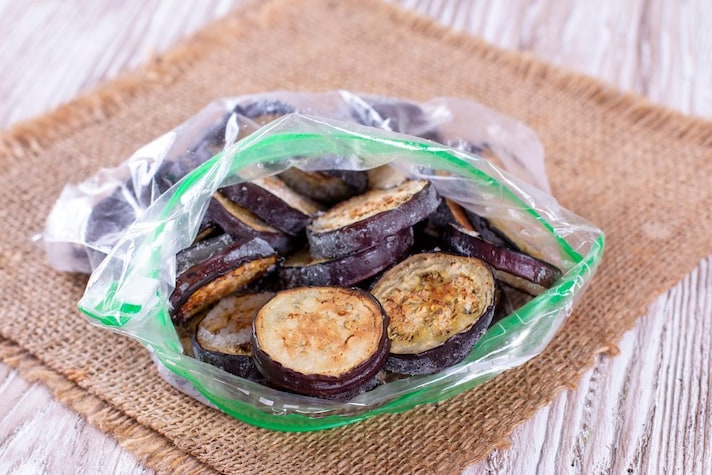
Cooked eggplants are ideal for freezing: cooking modifies the flesh's structure even before exposure to low temperatures, making the loss of texture that occurs during thawing less noticeable. For this reason, freezing grilled, fried, or baked eggplant is an excellent solution for having a ready-made base for numerous recipes or simply for preserving a plentiful harvest without waste. Whatever cooking method you choose, the first step is to let the eggplant cool completely before storing it in the freezer. Placing hot food in the freezer encourages the formation of condensation and ice crystals, which can compromise the quality of the product and also alter the temperature of other stored foods.
Once the eggplants are completely cool, pat them lightly with paper towels to absorb any excess liquid released during cooking. Arrange them in airtight containers or freezer bags, alternating layers with small sheets of parchment paper. This simple trick prevents the slices from sticking together during freezing and allows you to use only the amount you need without having to defrost the entire package. It's best to freeze them plain, without adding oil, garlic, parsley, or other seasonings, which can lose some of their flavor during prolonged storage in the freezer. Seasonings can be added when ready to eat, once thawed and slightly reheated.
Eggplant keeps very well in the freezer, even when used as part of complete recipes. Eggplant parmigiana, caponata, stuffed eggplant, involtini, flans, and even eggplant-based sauces can be frozen after they've cooled completely, preferably in ready-to-use portions. Here too, we recommend dividing the preparation into smaller portions: this way, you'll only need to defrost the amount you need, avoiding waste and maintaining better quality. When you're ready to eat, simply refrigerate the preparation for a few hours or reheat it directly in the oven or in a pan, depending on the recipe.
How Long do Frozen Eggplants Last, How to Thaw and Use Them
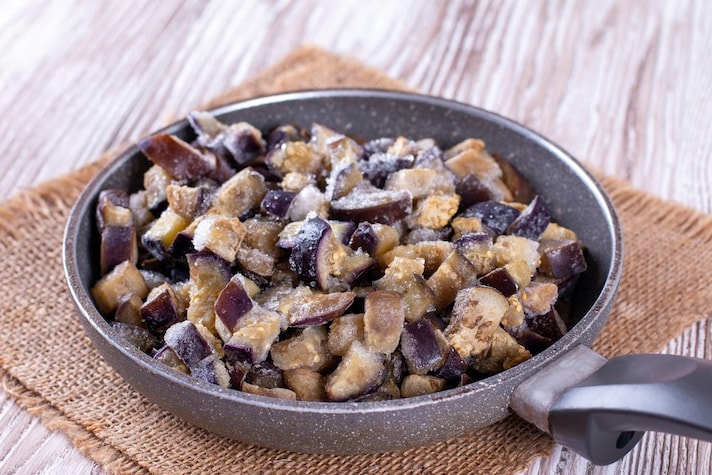
If kept at a constant temperature of around 0°F/-18°C, eggplants maintain good quality for around 8-10 months. From a food safety standpoint, they can last even longer if the cold chain is not interrupted, but as the months pass, flavor, color, and texture tend to progressively deteriorate. Once thawed, it is best to consume them within 1-2 days and not refreeze them unless they are thoroughly cooked again. To store eggplants in the freezer, both classic freezer bags and airtight plastic food containers are fine. If using bags, try to remove as much air as possible to prevent them from spoiling during freezing. If using containers, remember to leave some space between the eggplant and the lid, as they will expand in the freezer. Always remember to label the container with the freezing date, so you know when you froze them and when you should consume them.
Thawing is an often overlooked step, but it can make a difference in the final quality of eggplant. Since eggplants are particularly rich in water, it's completely normal for them to appear softer and release a certain amount of water once thawed: this isn't a sign of deterioration, but a natural consequence of the freezing process. The method for thawing them depends primarily on how they were stored and the type of recipe you intend to prepare. If the eggplants were frozen uncooked, in most cases it's not even necessary to wait for them to fully thaw: you can add them directly to the pan or oven, especially if they're diced or thinly sliced. This limits the loss of liquid and prevents the flesh from becoming excessively soft before cooking.
When the recipe calls for soft eggplant, such as for creams, soups, sauces, or fillings, you can follow the cold chain rule and slowly thaw them in the refrigerator for a few hours. Before using them, pat them gently with paper towels, without squeezing them too hard, to eliminate excess moisture while still maintaining some of their texture. Cooked eggplant, such as grilled, baked, or fried, can be defrosted in the refrigerator or reheated directly. For ready-made dishes, such as parmigiana, caponata, stuffed eggplant, or flans, they can be reheated directly in the oven at a moderate temperature or in the microwave using the defrost setting.
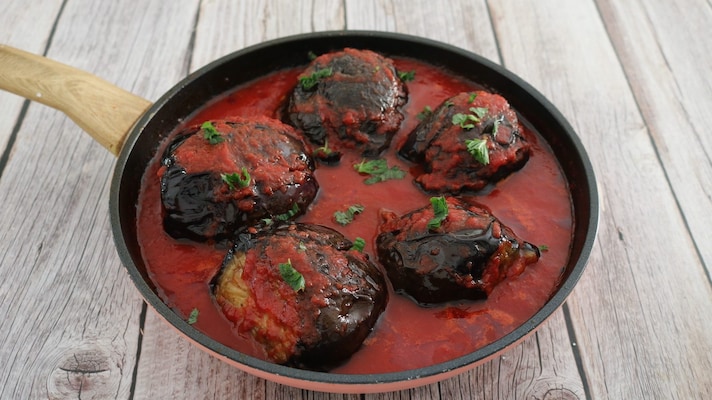
From a culinary standpoint, frozen eggplants can be used in a wide variety of recipes, especially those requiring medium-long cooking times. If you freeze them raw, they're ideal for making pasta sauces, vegetable ragùs, minestrone, soups, ratatouille, vegetable curries, and stewed and stuffed side dishes. In all these preparations, the final texture takes second place to the flavor, which remains virtually unchanged if frozen correctly. Even cooked eggplants are very versatile. For example, if you grilled them before freezing, you can easily thaw them and season them with extra virgin olive oil, garlic, herbs, and vinegar for a classic appetizer, or you can use them as a filling for sandwiches, wraps, and focaccias. They're also excellent in lasagna, flans, savory pies, or as a base for rolls filled with fresh cheeses, ricotta, or ham.
If the eggplants were fried, however, they will have lost some of their original crunchiness but will still retain a rich flavor and pleasant texture thanks to the second cooking. They are perfect for pasta timbales, baked pasta dishes, moussaka, and other dishes in which they are re-grilled, regaining some of their lost texture. Baked and frozen eggplants also lend themselves to numerous uses: they are perfect for blending and transforming into spreads, vegetable mousses, and sauces, or added to couscous, grain salads, risottos, and pasta dishes. If stored already diced, they become a ready-made ingredient for enhancing pizzas, focaccias, and frittatas.
;Resize,width=767;)
