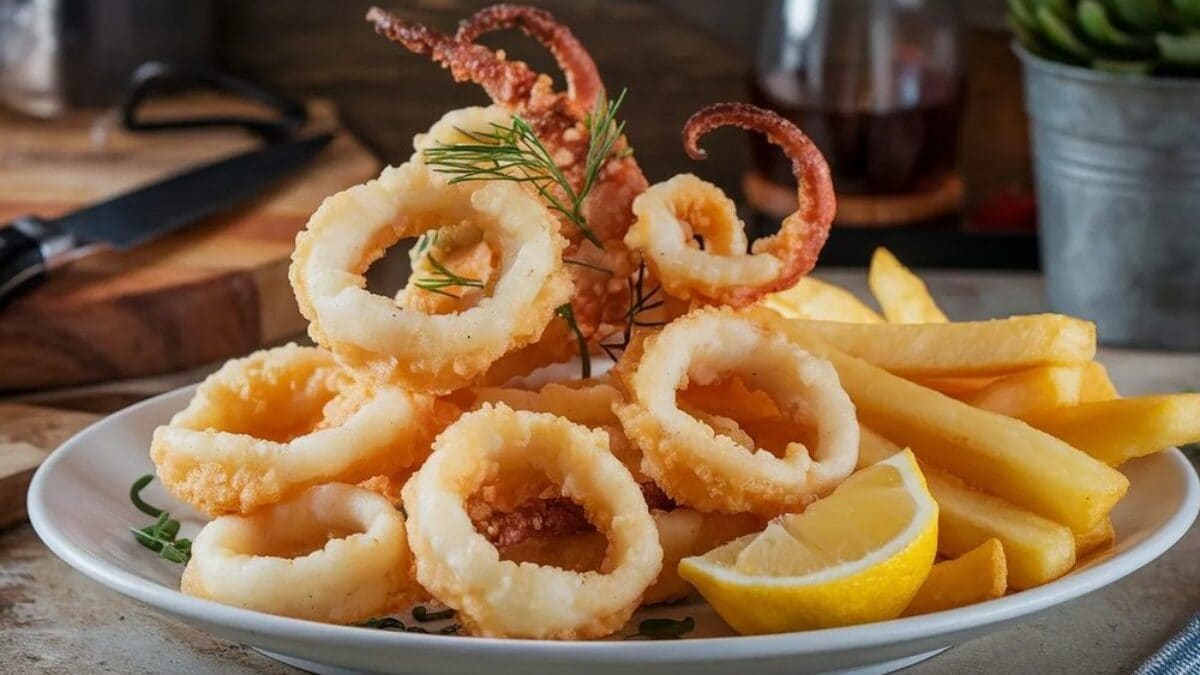
Frying is one of the culinary delights and banes of all things: with poetic license, let's put the positive noun first, because a perfectly fried dish is always a feast for the eyes and the palate. But we can't forget that "everything fried is good" only if it's cooked to perfection, resulting in a light, crispy, and dry result. For this very reason, on social media, television, the internet, and in recipe books, you can find countless tricks, tips, and methods for achieving the perfect fry. Among these, you may come across a technique that involves dipping calamari rings (one of the iconic foods) first in flour, then in water and ice, and finally in hot oil. Let's see how it's done and whether it's useful.
The Technique Explained Step By Step
First, you need to clean the calamari, as you would with classic fried calamari rings, detaching the tentacles from the mantle, removing the eyes and the rostrum (the central tooth), and removing the innards from the sac and any remaining cartilage. Then, pull the skin off with your hands. Rinse carefully to completely clean the mollusks, pat dry to remove excess moisture, and cut into rings of the same size. Then, proceed as follows:
- Coat the rings in all-purpose flour, taking care to cover them evenly and shaking them to avoid more flour sticking to them than necessary which would lead to the formation of lumps.
- Prepare the seed oil and make sure it reaches the right temperature for frying, between 340°F/170°C and 355°F/180°C.
- Immerse the calamari briefly (1-2 seconds) in a bowl of cold water and ice cubes and drain them just as quickly.
- Dip the squid in the oil and fry until golden.
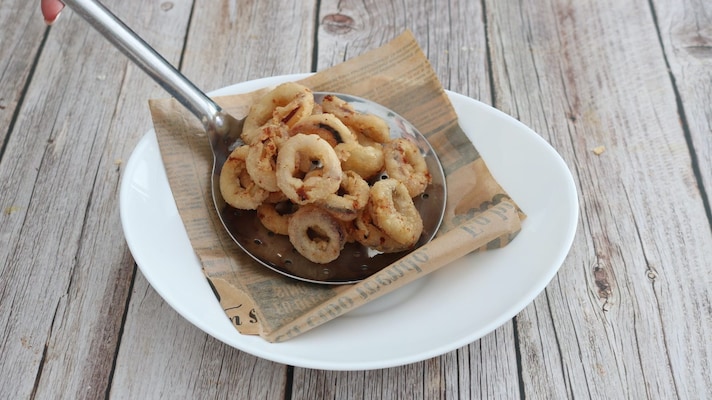
- Remove with a slotted spoon and transfer to paper towels or absorbent paper.
Benefits and What to Look Out For
As you can see, this is a very simple method that uses the principle of Japanese tempura, in which the frying is very light and dry thanks to the sole mixture of ice water and flour used to make the batter. The effect obtained is similar: the "thermal shock", with the flour that has been lightly dipped in the cold liquid and immediately placed in the hot oil, helps create a thin, irregular coating on the fish, which gives it a very crispy texture. This alternative works with small elements, such as calamari rings, and all small fish such as red mullet, cod, sole, as well as sardines and prawns. The recipe by a starred chef from Campania combines all-purpose flour with rice flour (another point in common with tempura) as it is a flour very rich in starch, gluten-free and which absorbs little oil, guaranteeing a non-greasy result.
In short, it's a technique everyone can use, but it does have some tricky parts that can lead to errors. Let's dispel any doubts: the flour coagulates when mixed with water and doesn't dissolve, but it's important not to leave the fish in the bowl for too long, as it's not soaking, but just a few seconds. Furthermore, don't underestimate the next step, draining the calamari before adding them to the oil: this is crucial to avoid the risk of a few drops of water ending up in the boiling oil, causing it to splash and potentially causing burns.
Why Doesn't The Oil Splash?
This is a technique anyone can master, but it's natural to wonder whether adding water to hot oil could cause a disaster. Don't worry: the wet flour instantly gelatinizes upon contact with the heat, creating a protective barrier around the fish (just like tempura) that prevents explosions in the oil. To ensure everything runs smoothly, just avoid the two main mistakes:
- Don't soak: the passage in the bowl lasts only a second, the flour doesn't have time to dissolve or come off.
- Drain well: Before placing the calamari in the pan, shake them thoroughly. This is essential to prevent any water from splashing into the boiling oil and causing burns.

