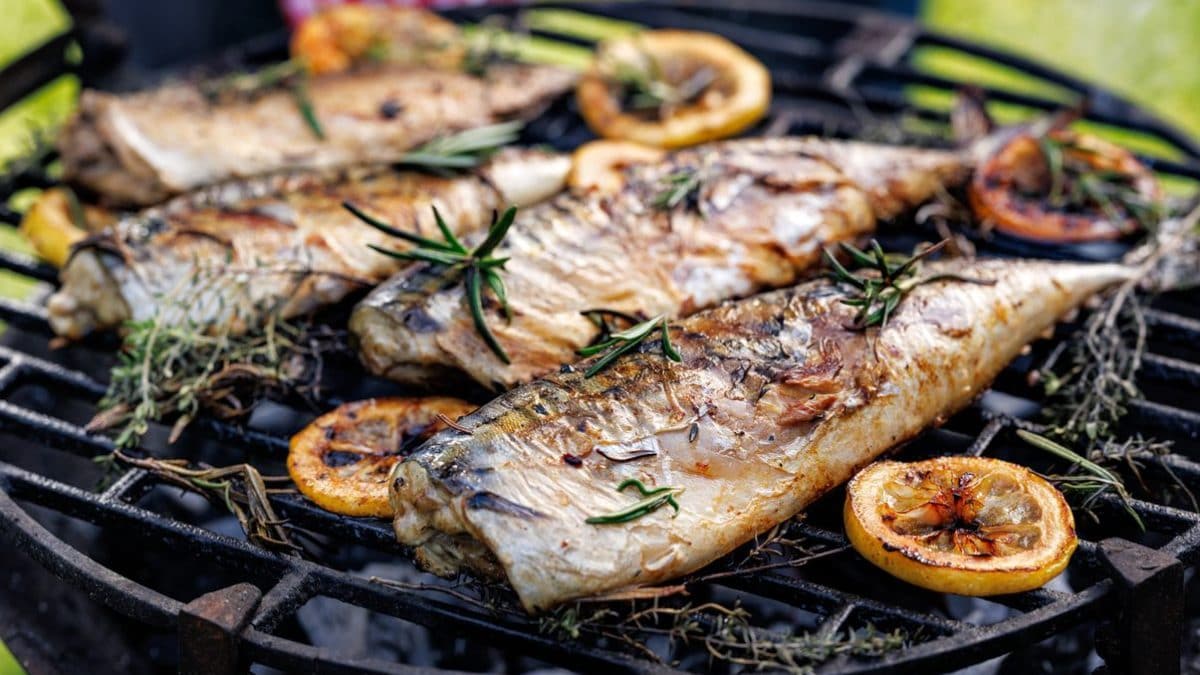
Tasty and delicious, grilled fish is the quintessential summer main dish, ideal for a dinner with friends or for a light and nutritious dish that will delight both adults and children. It's prepared with the freshest catch, chosen with the advice of your trusted fishmonger, and a mixed seafood menu, usually consisting of mollusks, crustaceans, fish fillets like salmon, tuna, or swordfish, and whole or filleted fish like sea bream, sea bass, or mackerel.
Apparently simple, grilling fish is a preparation that hides some pitfalls and which, for a perfect result, requires small, but essential, precautions: from choosing the right type to advice for a soft and succulent result, we reveal which mistakes to avoid and the tricks to become a true master of the grill. To achieve perfect grilled fish, it's important to follow a few essential rules. Let's look at them all in detail.
The Types of Fish Best Suited for Grilling
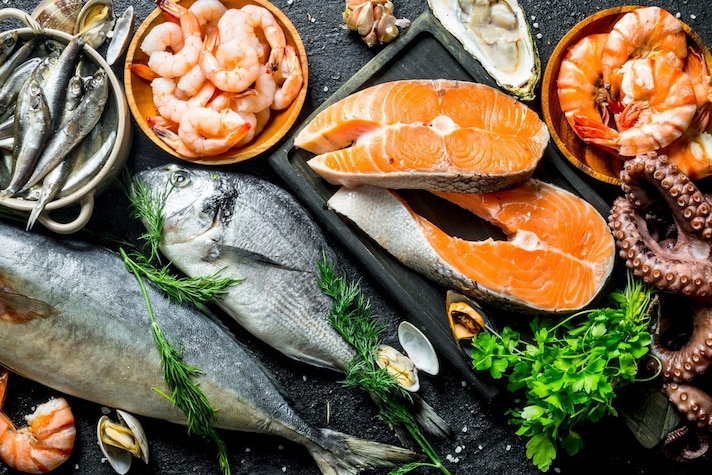
Not all fish species are suitable for grilling. The best ones have firm, compact flesh that can withstand high heat without flaking or sticking to the grill. It's also important to have a good fat content, which will ensure a moist, juicy, and non-stringy texture.
Fish fillets or steaks, such as salmon, tuna and swordfish, are suitable for grilling: with their robust structure and strong flavor, they are particularly well suited to this cooking technique.
The same goes for whole white-fleshed fish, such as sea bream, sea bass, white sea bream, and mackerel: the skin and scales act as a natural barrier, sealing in the juices and protecting the flesh from the direct heat of the flame: this way, they will remain particularly tender and succulent.
Shellfish, such as prawns, king prawns and scampi, are also excellent, as their shell acts as a protective "shield", keeping the internal flesh soft and delicate; fish skewers and mollusks, such as calamari and cuttlefish, are also excellent, choosing small or medium-sized ones and grilling them quickly to prevent them from becoming rubbery.
If you want to cook larger mollusks, such as octopus, it's best to blanch them in water (the cooking time will obviously depend on their size) to tenderize their flesh. It's best to avoid grilling very small fish, such as sardines and red mullet, as they tend to fall apart easily. In any case, it's best to place them in the cooler areas of the grill and oil them gently to prevent them from sticking.
Another key aspect is the freshness of the fish, which must be at its best: in this regard, let your trusted fishmonger advise and guide you (even regarding cleaning if you're not particularly familiar with it). The first and most immediate indicator of its quality is the smell: fresh fish should give off a pleasant aroma of the sea, saltiness, and iodine.
The flesh must be firm and elastic, while the scales must adhere well to the body, shiny and with an almost metallic or iridescent color; the gills must have a bright red-burgundy color and a good smell of seaweed, and the eyes must be convex, bright and with black and "lively" pupils, not gray.
How to Clean and Marinate Your Fish
To ensure even and flawless cooking, cleaning fish is essential. Whole fish, such as sea bass or sea bream, should be carefully gutted and then rinsed thoroughly under running water.
The fins can be removed, while it is important that the scales are not removed: these act as a natural protective barrier against the intense and direct heat of the flame, preventing the meat from drying out or sticking to the griddle.
As for the fillets, however, it is important not to remove the skin, which will help keep them in shape, and to cut them to a thickness of at least 3-4 cm: in this way the meat will remain moist, pink in the center and particularly juicy.
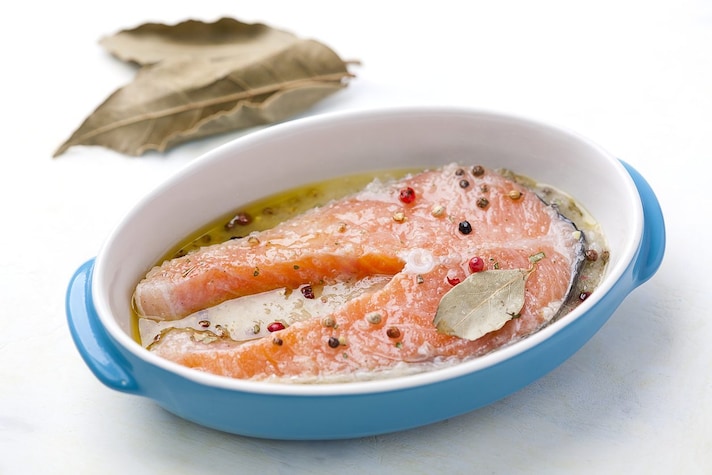
Once the fish has been cleaned and patted dry with kitchen paper, you can proceed with the marinade, a strategic step that will allow us to enhance its delicate flavor and keep it very tender.
The key ingredients are extra virgin olive oil, a fatty substance that helps create a golden, succulent crust on the surface, citrus juice (or even vinegar or white wine, if you're feeling a little more daring), aromatic herbs and spices, to further enhance the natural flavors. Salt, however, should always be added at the end of cooking: salting the fish before cooking will allow the internal juices to escape, making the meat dry and flaky.
If the product is fresh and of excellent quality, a simple mix of extra virgin olive oil, lemon juice, and parsley will suffice. However, depending on the seasonings you choose, you can experiment with new and original combinations: Mediterranean herbs like rosemary, thyme, and sage are excellent for this cooking technique; mint pairs beautifully with swordfish, while fennel pairs beautifully with bluefish, for example.
These can be added to marinades, inserted into the cavities of whole fish or at the end of cooking as a final garnish.
Once completely thawed, frozen fish should be immersed in the marinating liquid, gently massaged, and then placed in the refrigerator in an airtight container. The marinating time, generally shorter than for meat, varies from a minimum of half an hour for smaller cuts to 1-2 hours for larger, whole fish.
How to Grill Your Fish
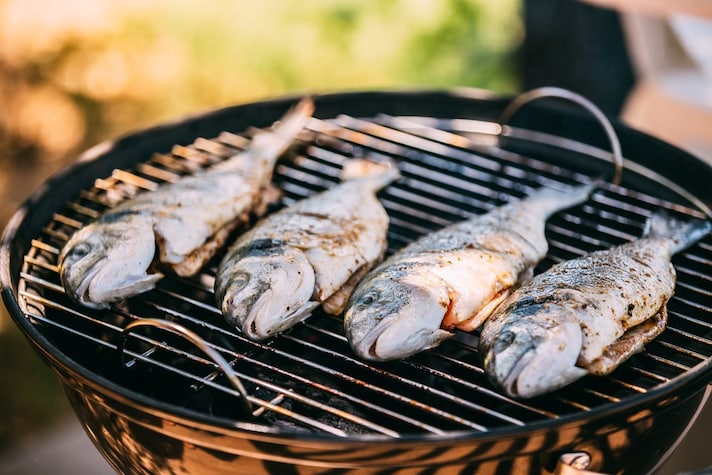
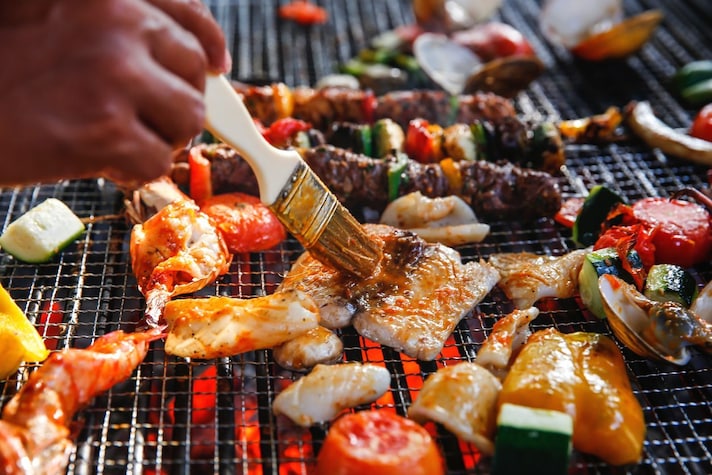
We've reached the crucial moment: cooking the fish. First, make sure the grill is perfectly clean and then position it at least 10-15 cm away from the coals, which should be very hot but not burning.
Grilling is obviously an art that is refined with experience, but some guidelines are essential. For gas grills, the optimal temperature is around 355-392°F/180-200°C; for charcoal grills, it's important that the coals are glowing and even, covered with a layer of white ash and without any open flames that would burn the fish and compromise the final result.
Whole or large fish need moderate cooking, so that they are well cooked inside and not burnt on the outside, while small fish, such as mackerel or sardines, should be placed in the least hot area of the grill.
Fish generally cooks quite quickly: steaks only take a few minutes per side, medium-sized whole fish about 10 minutes per side, and shellfish and squid 4-5 minutes per side. Small fish like sardines or mackerel cook in about 3 minutes per side.
To prevent this from sticking, it is essential that the grill or griddle is very hot and, if desired, you can also grease it lightly with a drizzle of extra virgin olive oil.
Once the fish is placed on the grill, let it cook thoroughly on one side and flip it over with a spatula or turner only when a light golden crust has formed. Avoid using forks or other sharp utensils to flip it, as they could leak the delicious internal juices, making the meat less tender and flavorful.
Mistakes to Avoid
To ensure you impress your guests and create a flawless fish barbecue, it's important to avoid making these gross mistakes:
- choosing the wrong type of fish or one that is too small, which would tend to fall apart during cooking;
- removing the fish scales or using slices that are not thick enough (which must be at least 3-4 cm);
- not marinating the fish (or leave it to marinate for too long) and not draining it thoroughly before placing it on the grill: the oil dripping onto the grill can cause flames or black smoke, compromising the final taste;
- grilling with very hot embers, which would burn the outside of the fish leaving the inside raw, or, conversely, on a warm and not perfectly hot plate;
- Losing control of the cooking process can result in dry, stringy fish; it's crucial to stay focused and always stay close to the grill.
- salting the fish before or during cooking;
- turning the fish too early, before the golden crust has formed on the surface, and with a non-specific utensil, such as a fork or other sharp object (this could pierce the meat, causing the juices to leak out and ruining the final flavor and consistency);
- overcooking fish. If overcooked, it becomes dry and loses its delicate flavor and inviting tenderness;
- and finally, a piece of advice: when buying, don't skimp on the quantities, and consider about 250-300g of fish (net of waste) for each diner.
The Right Pairings
A flawless grilled fish obviously deserves the right accompaniment, one that doesn't overpower it and accentuates its full flavor and aroma. Side dishes should be simple and fresh, like grilled zucchini or eggplant, or pan-fried peppers. Avoid overly spicy or strong flavors, which could overwhelm the delicate taste of the main course.
A rich mixed salad with tomatoes and olives, which pairs beautifully with fish like swordfish, calamari, and shrimp, is also a great choice. Serve with a few slices of lightly toasted homemade bread. For a richer and tastier side dish, accompany your grilled sea bream or sea bass with a casserole of room-temperature vegetables, a potato salad, or some delicious grilled potatoes.
If you like, you can also garnish the grilled fish fillets with a fragrant, delicate sauce that will add freshness and aroma. Try a classic citronette, an emulsion made with extra virgin olive oil, lemon juice, salt, and pepper, or an orange sauce that will enhance the flavor of shellfish or fish fillets like tuna and salmon.
;Resize,width=767;)
