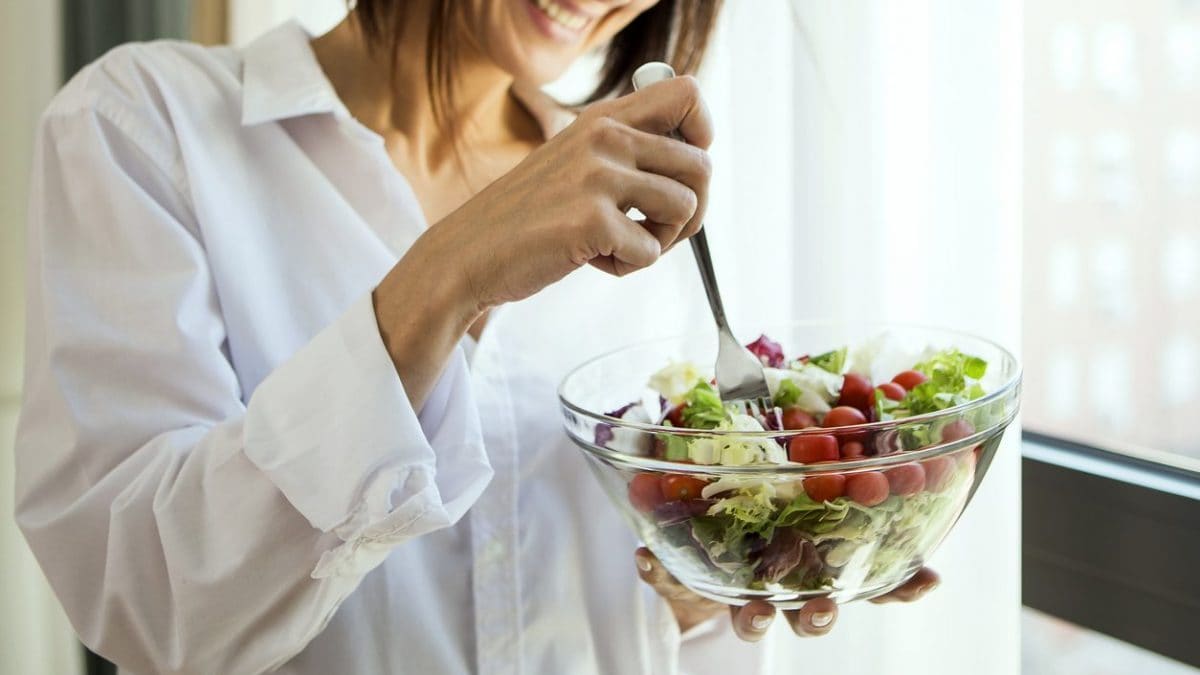
Fresh, pleasantly crunchy and quick to prepare, the salad is one of the most popular and appreciated spring and summer (and not only) preparations: it can be made in a few minutes, it is not too difficult to digest, as long as you choose the various ingredients with a little care, and it does not necessarily require turning on the oven and stove.
It's also an excellent alternative to cold cuts and cheeses, which we shouldn't overdo, and it allows us to add a good dose of plant-based fiber, vitamins, and minerals, micronutrients essential for our body's well-being. The risk, however, is making gross mistakes, such as mixing too many different protein sources, using low-quality products, or combining foods incorrectly.
For this reason we asked for the help of Dr. Simone Gabrielli, biologist and nutritionist, who will explain to us how to compose tasty, but also light and perfectly balanced salads, ideal for keeping us full for a long time and performing both physically and mentally.
What Nutrients Should You Include For a Perfect Salad?
"Salad is a fantastic dish: fresh, light, rich in fiber, vitamins, and minerals, but on its own it's not enough to make a complete meal," Gabrielli immediately points out. To transform it into a single dish, it's important to add a source of carbohydrates and a source of protein.
"Then you add good fats: extra virgin olive oil is the best, but dried fruit or avocado are also good, but don't overdo it because if we water it with oil we risk turning it into a calorie bomb." Let's look at the individual nutrients in detail:
1. Fibers

To create a healthy and nutritious salad, it's important to start with a green base, choosing from the various types of leafy vegetables the garden offers. We can choose from lettuces, the most well-known and popular, such as romaine, canasta, lollo, or iceberg lettuce, but also endives, such as curly endive and Belgian endive, chicory, and radicchio: more bitter and rich in iron, they perform a valuable liver cleansing action.
Arugula, a herbaceous plant belonging to the large cruciferous family, is also excellent. It is characterized by a pleasantly pungent aftertaste and a strong diuretic effect. Less exploited, but equally exceptional, are wild salads, wild herbs richer in antioxidants than cultivated ones, which can enrich dishes with ever-changing fragrances and nuances of flavor.
Once you've decided on the base, you can have fun coloring it with carrots, red or yellow cherry tomatoes, radishes, cucumbers, peppers, courgettes, beets, celery… "The more vegetables we add, the more micronutrients we ensure, as well as making the dish more beautiful and tasty."
2. Carbohydrates

For a complete and filling one-pot meal, carbohydrates are a must. If the salad has a green base, we can complement it with a few slices of whole wheat, spelt, rye, or rice bread, boiled potatoes, or whole grains such as brown rice, spelt, barley, or a pseudocereal such as quinoa, buckwheat, or millet.
In general, we try to favor whole grain and organic carbohydrates, rotating them as much as possible. In addition to making our diet satisfying and never monotonous, we ensure the best possible nutritional profile.
If we don't have fresh bread or the ability to boil rice or pasta, we can occasionally replace them with good-quality baked goods, such as crackers, croutons, and breadsticks, which are very convenient and practical, but often rich in salt and hydrogenated fats.
For this reason, it's recommended to carefully read the nutrition label, choosing those with the lowest salt content, made with whole-wheat flours and good-quality oils. Extra-virgin olive oil is best, but high-oleic sunflower oil is also fine, as it's less susceptible to oxidation caused by the high temperatures of the oven.
3. Proteins

If we want to feel full for a long time, protein should be included in every meal. Adding a good amount of protein, whether animal or plant-based, will make us feel satisfied without weighing us down. Which protein should we choose?
The possibilities are endless, but it's important to choose carefully: among plant-based sources, we can opt for pre-cooked legumes, such as chickpeas and beans, which are very well suited to salads; we can choose to buy dried legumes, to cook and store in the refrigerator, or, if we're really in a hurry, those preserved in glass jars and organically grown; you can also add tempeh or tofu, sautéed in a pan with a drizzle of oil and a splash of tamari sauce.
Among animal proteins we can choose lightly hard-boiled organic eggs, with well-set whites and melting yolks, grilled chicken breast seasoned with spices and herbs to taste, natural tuna preserved in glass jars, smoked wild salmon, feta, primosale, parmesan and pecorino flakes.
Among the cured meats, you can include prosciutto, bresaola, or turkey, at most once a week, avoiding products containing nitrites, nitrates, and sugars. However, you should avoid canned or jellied meats, sausages, and fatty soft cheeses, such as mozzarella: the latter would take too long to digest.
4. Fats

To complement our salad, we certainly can't leave out healthy fats, essential for our well-being, but also for making any dish more palatable and satisfying. The best choice is always extra virgin olive oil: rich in monounsaturated fatty acids, it should be considered a food in its own right, to be exploited for its extraordinary nutritional qualities.
Just think that a drizzle of it raw, added to a serving of vegetables, promotes the absorption of some fat-soluble vitamins, such as A and D, which would otherwise be lost. It is recommended to store the bottles in a dark place, away from heat sources, to best preserve the organoleptic and nutritional qualities of the extra virgin olive oil, and avoid clear glass or plastic containers.
Seed oils should be avoided: those traditionally available on the market are refined and rich in pro-inflammatory substances. If you want to add flaxseed or pumpkin seed oil to your salad, it's important to choose organic, cold-pressed oil, and store it in the refrigerator (these products spoil easily, especially in hot weather).
Another important source of fat is avocado, a tropical fruit composed almost entirely of monounsaturated fats. An excellent source of oleic acid, it is rich in minerals, particularly potassium, magnesium, zinc, manganese, and phosphorus, as well as folate, vitamins E, K, and C. Its high content of healthy fats and fiber also makes it very satiating and satisfying: for this reason, if consumed appropriately and in moderation, it can be consumed even by those following a low-calorie diet.
You can add a handful of oilseeds, such as pumpkin, sunflower or flax seeds, or dried fruit, such as walnut kernels, almonds and hazelnuts, to our salads, which will also give them an irresistible crunchy note.
As mentioned, our salad should not be excessively high in fat: otherwise, it could become a real calorie bomb. An incorrect dosage of lipids could significantly increase its energy value and turn the salad into a dish that is anything but diet-friendly and light.
As a general rule, consider a tablespoon of oil —or other "fatty component"—per serving and try not to mix more than two different types to avoid overcompensating for digestion: due to the heat and high temperatures, the stomach needs more time to process fats.

Tips and Ideas for Balanced Salads
To create a filling, satisfying, and nutritionally balanced salad, it's important to follow a few essential rules. First of all, try to vary the vegetables as much as possible, playing with different colors and textures, and opting for seasonal, reliable produce (a sun-ripened tomato harvested in summer will taste completely different than a greenhouse-grown one grown in January).
Let's never forget the crunchy component: this, besides giving our salad an extra boost, will also make us feel fuller. Some examples? Carrots in ribbons, cucumber slices, raw pepper strips, toasted almonds, crunchy chickpeas, watercress or alfalfa sprouts, snow peas or green beans lightly blanched in water, homemade croutons, and so on.
To make this dish visually appealing and packed with nutrients, let's experiment with the colors of our vegetables, adding boiled beetroot, Tropea red onion, baby carrots, red and yellow cherry tomatoes, green, red, or yellow peppers, and roasted sweet potatoes as a carbohydrate source, to name just a few. As mentioned, don't underestimate the right amount of seasoning: avoid pre-made sauces and dressings, often made with low-quality ingredients, and add extra virgin olive oil, diced avocado, or a mix of mixed seeds.
Let's not forget a pleasant acidic note, which will also aid digestion: lemon juice, apple cider vinegar, pomegranate vinegar, wine vinegar, balsamic vinegar, making sure they do not contain additives, colorings or sugars, umeboshi acidulant and tamari sauce, a fermented product based on soy sauce.
If you love creamy textures, you can make a homemade sauce based on natural Greek yogurt or tahini, to which you add lemon juice, grainy Dijon mustard and a drizzle of extra virgin olive oil, ideal with fish salads, grilled chicken or soft-yolked eggs.

We harness the power of aromatic herbs, such as basil, mint, parsley, and chives, and for the savory component we use exclusively whole sea salt, preferably organic; rich in mineral salts, it is extremely useful for replenishing the micronutrients lost through sweating and should always be preferred to traditional refined or iodized salt.
If you want to create a tasty dish with pleasantly contrasting flavors, both sweet and savory, you can also add a little fruit: diced watermelon to pair with spinach and feta, mango slices to pair with shrimp, fig wedges with prosciutto, grapes with gorgonzola and walnuts. Adding fruit, without overdoing it, will make the salad fresh and appealing. "We can also eat fruit at the end of the meal," suggests Gabrielli, "considering that an average portion is about 150 grams."
As mentioned, to make our salad truly filling, don't forget the protein content, which can come from both plant and animal sources. If you don't have any particular digestive issues, you can mix a maximum of two sources, balancing the amounts.
If you want a highly diuretic preparation, simply add vegetables such as fennel, which has strong carminative properties, celery, cucumber, and arugula, which, like all bitter vegetables, aids digestion and stimulates the liver. You can also flavor with spices, such as cumin and fennel seeds, avoiding pepper and chili pepper, which would require more digestion at high temperatures.
;Resize,width=767;)
