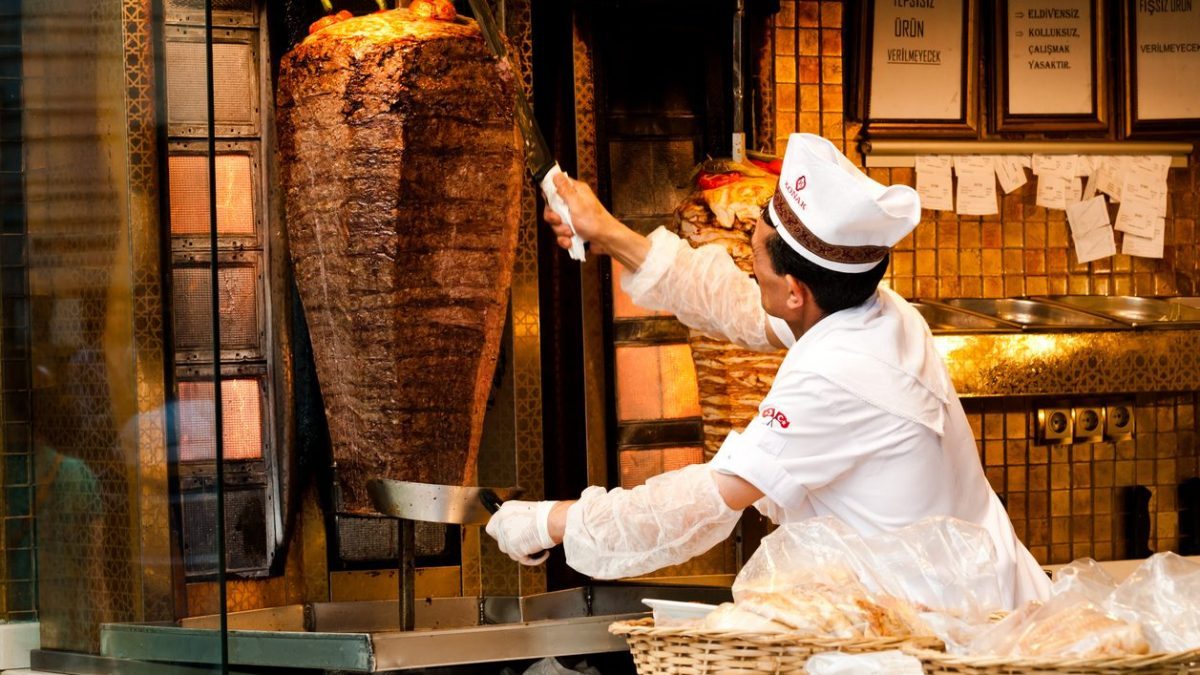
Every time you hear the word kebab, you think of the quintessential quick (and satisfying) meal. Just imagine the scene when, perhaps after a night out, you're ravenous and you let the spicy aroma wafting through the air guide you. It's the very smell of the food your trusted kebab seller is preparing, and you can't ignore it this time either. So you approach the counter, gaze at that succulent kebab slowly rotating on the skewer, and already anticipate your stuffed piadina. But suddenly, that Hamlet-like doubt from which there's no escape assails you: "Is this really a quality kebab, or just another one thrown in to fill you up quickly?" The truth is, as you might have guessed, not all kebabs are created equal. Some will win you over with juicy meat, fresh vegetables, and rich sauces; others, however, leave a bitter taste in your mouth and perhaps even a suspicious thirst soon after. This is where the secret comes in: learning to recognize the right signs to distinguish a perfectly made kebab from one made with subpar ingredients. Today, we'll show you the tricks to recognizing a perfect kebab so you can make sure you don't make the wrong choice next time.
What is Kebab and Why Does Everyone Like It?
There are so many stories to tell about kebab. A dish that is born and reborn, and that fundamentally unites everyone. Let's start by recounting its origins: it is a Middle Eastern dish, whose name derives from Persian and can be simply translated as "roasted meat." Its popularity is immense: a simple, hot, spicy, filling, tasty street food that adapts incredibly well to a wide variety of palates. Its origins appear to be linked to the Middle Ages, when Persian soldiers would pierce the meat with their swords and cook it over a campfire.
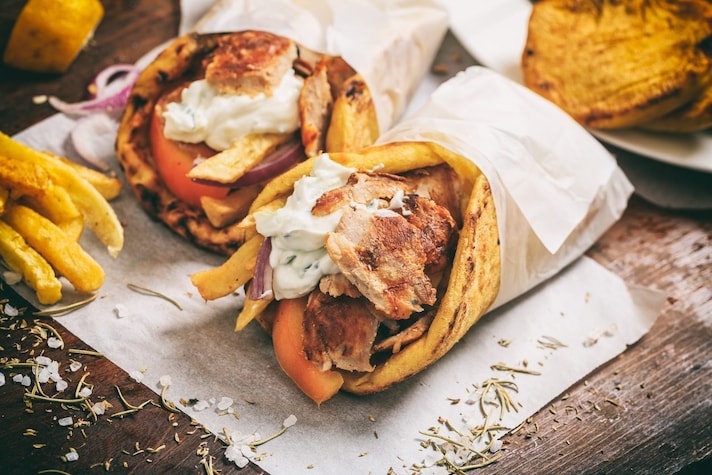
In ancient times, kebabs didn't use pita bread or sauces. They were served with white rice, naan, or unleavened bread. We know that Turkey is the great birthplace of this dish, and it's clearly still a serious business here today. It was in Turkish cities that the kebab as we know it today was born, wrapped in a flatbread and modified according to local traditions.
What Cuts of Meat Should Be Used For a Quality Kebab?
In the U.S., we're obsessed with food, and as soon as something exotic or difficult to identify arrives, it's pilloried. For several years, kebabs have been the target of fake news, which has reduced purchases, especially among older customers. In our country, kebab shops, like all other restaurants, are required to follow food safety regulations enfored by the FDA.
Let's start by explaining that this is a delicious dish and very simple to make. Remember that a great kebab is made with just lamb, mutton, beef, or poultry (chicken or turkey), plus water, salt, and spices. In short, there should be only four ingredients.
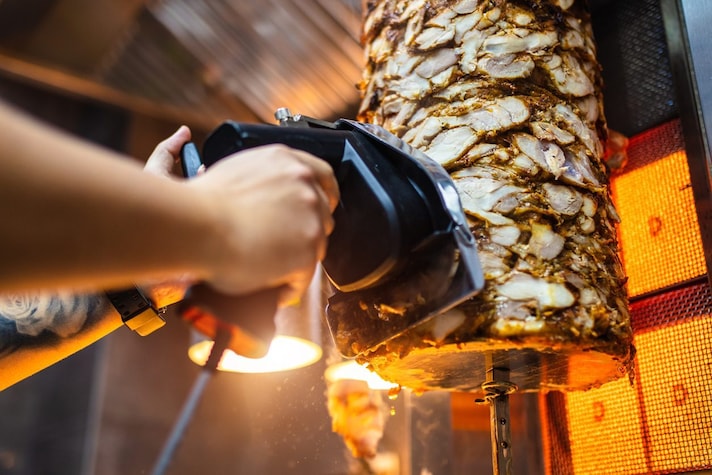
Unfortunately, it's impossible for customers to trace the ingredients list, but as with any dish, the longer the product label, the poorer the final quality. The best restaurants use only the finest cuts of the animal, which are arranged in layers on the spit. This ensures a more authentic flavor profile and a more inviting appearance.
How to Recognize a High-Quality Kebab
Let's start with the color: a good kebab is dark, a sign of slow and even cooking. We recommend wary of overly light kebabs, which often indicate a poorly prepared or low-quality skewer.
If you also notice the meat being layered, with distinct cuts, you're on the right track. If you see that the entire mixture is a single , smooth, and uniform block of meat, it means it was industrially prepared using ground and blended meat.
Another crucial factor to consider is the cleanliness of the place where you're purchasing your kebab. If you see messy napkins thrown on the floor, a dirty structure, crumbs lying around, and overflowing trash cans, it means the place is neglected, and this could affect the quality of the food. A clean and tidy place is the first sign of care and attention to the customer.
Marinating Meat, Flavor, Texture and Price
If you've followed the guidelines up to this point, you're well on your way to a satisfying, high-quality final product. Now let's move on to the flavor: the meat must be absolutely juicy and not dry. Furthermore, the aromas must have a balanced flavor.
Oversalted meat is a sign of products used to mask its poor quality or speed up thawing. A kebab cooked on a vertical rotisserie undergoes a lengthy marinade before cooking. If done properly, the meat takes on a new flavor, remains juicy even after long cooking times, and has a more refined taste.
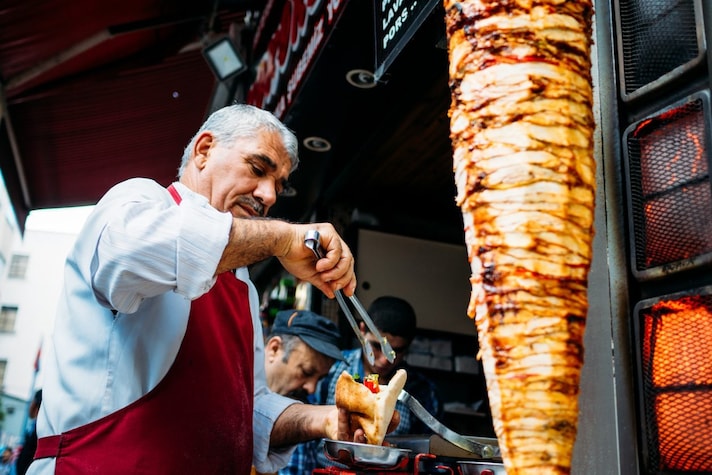
A good kebab should be a riot of flavors: pungent, spicy, and just the right amount of salty. It should have a tangy aftertaste, usually provided by a few drops of lemon juice, and a hint of spiciness—not from chili pepper, but from coriander. The vegetables should be plentiful and fresh: ripe tomatoes, crisp lettuce, fragrant onions, and traditional sauces like hummus, tahini, or tzatziki, rather than ketchup or commercial mayonnaise.
An overly cheap kebab could be hiding poor quality. Saving money means cutting back on key ingredients or processes. Conversely, a slightly higher price may be justified by better meats, fresh vegetables, and good hygiene.
Now you have the right tips to find the right kebab like a true connoisseur, to remember: dark color, layered and juicy meat, fresh vegetables, authentic sauces, cleanliness of the place and a slightly higher price than average.
;Resize,width=767;)
