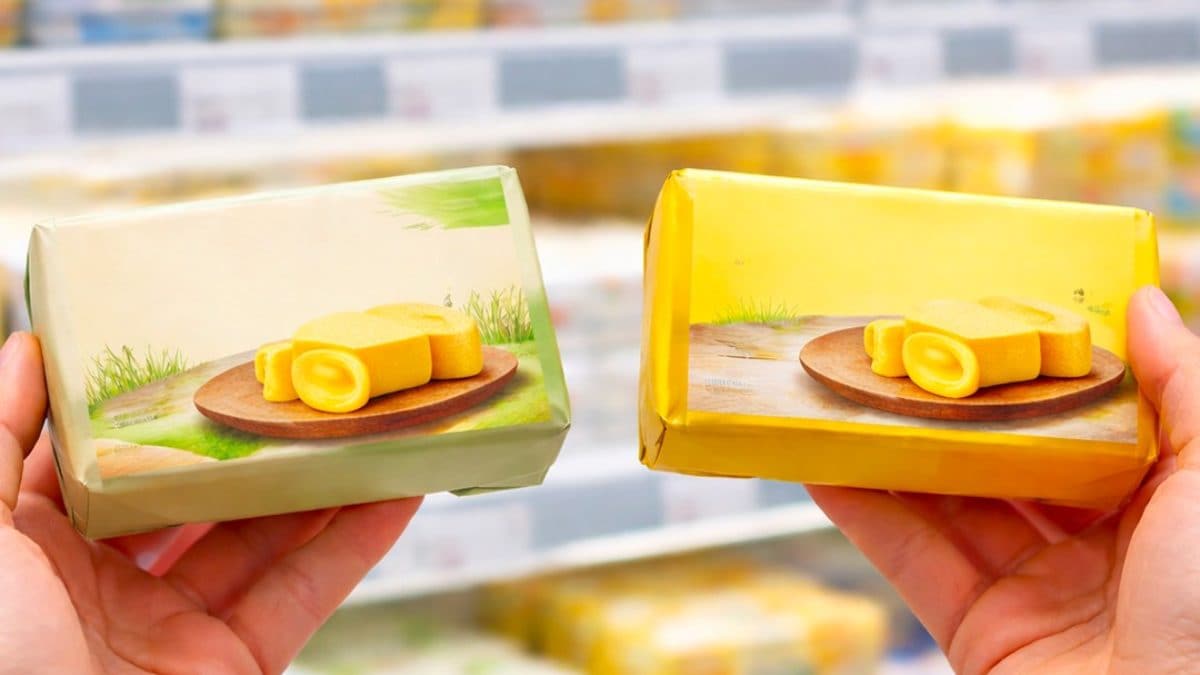
When you stand in front of the supermarket shelf and pick up a stick of butter, are you really choosing butter… or something that just looks like it? Because yes, not all butters are the same: some are made from high-quality cream, while others are the result of less noble processes, often linked to waste from the cheese production chain. The difference isn't just in price, but in nutritional quality, flavor, and even in the way that butter reacts in the kitchen. So how do you know which butter is good and which would be better left on the shelf?
Color can tell you something, but it's not enough: the real answer is in the label, if you know how to read it correctly. Today we will explain how to recognize quality butter when you're shopping and how to avoid those that are simply "butter" in name.
Centrifugation Vs. Skimming Method
To understand if a butter is truly good at the grocery store, we must start with a fundamental concept: not all butter is created equal. Even if the blocks on the shelf appear identical, there may be very different production processes behind them, which profoundly impact the final quality. Specifically, there are two main methods for obtaining cream from milk, which is then transformed into butter: centrifugation and skimming.
What's the best method? If you see the word "centrifuge" on the label, you're already on the right track. Indications such as "butter made from centrifuged cream" or "made only from fresh centrifuged cream" indicate a superior product, more aromatic and of better quality. In this case, the freshly milked milk is immediately placed in a centrifuge: in a few moments, the cream is mechanically separated. It's a rapid process that keeps the raw material intact, with the correct pH and without alterations. Precisely for this reason, no chemical intervention is necessary to correct the acidity. It's the typical Northern European method, not surprisingly famous for the production of excellent butters.
In the U.S., however, butter is often produced using the "cream-skimming" method. But what does this mean exactly? In this case, the cream does not come from "freshly milked" milk, but from the byproducts of cheesemaking. The milk used is left over from the production of Parmigiano Reggiano, Grana Padano, or other cheeses, which is left to rest in large vats. Over time, the cream slowly rises to the surface, or "flours."
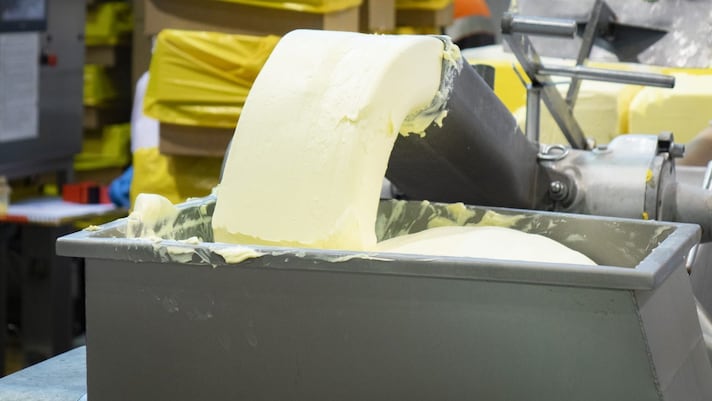
The problem is precisely time: during this long wait, the bacterial load increases, the milk acidifies, and the cream loses its aroma. For this reason, the raw material must be chemically corrected, adding substances like sodium bicarbonate or calcium hydroxide to bring the pH back to acceptable levels. It is then pasteurized, both to eliminate bacteria and to reduce unpleasant odors developed during exposure to air.
It must be said that centrifuged butter is also pasteurized, but in that case it is simply a safety measure required by law, not an intervention necessary to "fix" the raw material.
The end result? On the one hand, we have a noble butter, sweeter and more aromatic, obtained with little processing and starting from high-quality cream. On the other, a more processed and neutralized butter, with a flatter aromatic profile and a standardized flavor. And it is precisely this difference, invisible to the naked eye, that determines the true quality of the butter we bring to the table.
How to Check the Origin of Milk
Just because cream must be fresh doesn't mean all cream is the same. The quality of butter, in fact, depends not only on the extraction method, but also on the quality and origin of the milk it comes from. Here comes a common misunderstanding that arises when vague claims like “made with real cream,” “American-made,” or “locally sourced.” are printed on the labels.
U.S.-made butter is generally produced from domestic cream, often separated mechanically from milk, but that alone doesn’t guarantee superior quality. What matters more is the freshness of the cream, how quickly it is processed, whether it is sweet cream or cultured cream, and whether the butter meets high grading standards. The USDA grades butter as Grade AA, A, or B, based on flavor, body, color, and salt quality; Grade AA is the highest standard. So a label that says “made in the USA” is useful, but it’s not the whole story.
A better sign of quality is wording such as “made from fresh cream,” “cultured butter,” “European-style,” “small-batch,” or “USDA Grade AA,” especially when the producer clearly identifies the dairy source. By contrast, vague labels that don’t specify cream quality, butterfat content, or production method may still be perfectly fine for everyday cooking, but they don’t necessarily indicate a premium butter.
Yellow Vs. White Butter
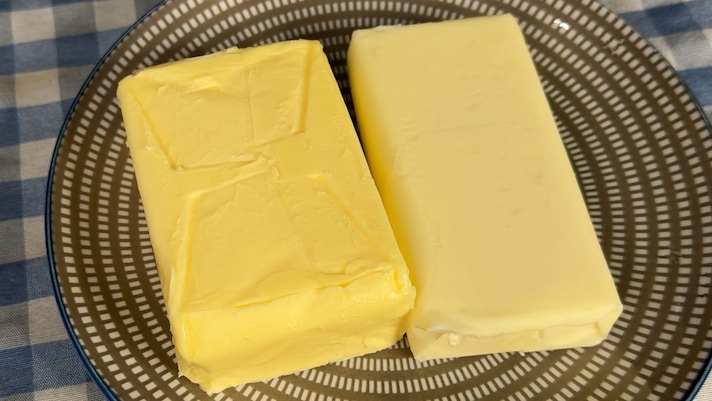
But can butter also be judged by its color? What's the difference between a white, almost pure block and a golden yellow one?
Generally speaking, yellow butter is a sign of superior quality. The reason lies in a natural molecule called beta-carotene, the same one that gives carrots their color. This substance enters the butter through the cow's diet: if the animal grazes outdoors and eats fresh grass and flowers, the milk will naturally be richer in beta-carotene. Consequently, the butter will have a beautiful straw-yellow color. Conversely, very white and pale butter suggests that the cow was raised in a stable, feeding primarily on hay and grains, which are low in beta-carotene.
However, color can also tell us something about the production method. Centrifugation, in fact, preserves the cream's natural pigments and properties much better. Creamed butter, on the other hand, undergoes longer and more aggressive processing, which tends to "fade" the product, making it lighter and less intense in color. In short: a beautiful natural yellow is often a sign of better raw materials and a more delicate process.
What is Clarified Butter?
By law, regular butter must be at least 80% fat, with the rest being water, lactose, and protein in the form of casein. Clarifying butter simply means gently heating it to evaporate the water and separate the solids. What remains is 99.9% pure fat. And that's why it's a very intense yellow, because the concentration of that beta-carotene we mentioned earlier remains entirely there in the block. But what are the benefits of clarifying butter?
- First of all, it has a higher smoke point, which means that while regular butter burns and turns black at 266°F/130°C, clarified butter starts to burn at temperatures above 392°F/200°C. This is because the proteins burn first, but in clarified butter, the proteins have been removed, leaving practically nothing but fat. It goes without saying, therefore, that if I need to make high-temperature preparations like a fried schnitzel, clarified butter is the best choice; in other cases, however, regular butter is fine too.
- Another sensible use of this butter is in pastry making, for example, because having practically no water inside it, it allows for extremely precise control over the hydration of the dough.
And what about everyday consumption? Weight for weight, clarified butter is higher in calories than regular butter because it's water-free. Clarified butter is more of a technical tool that can help us in the kitchen with certain types of preparations. A little fun fact: clarified butter is "naturally lactose-free." So, could it be an alternative for those with lactose intolerances? Well, yes, even though all butter is naturally lactose-free. Or almost.
Is Lactose-Free Butter Really Necessary?
In reality, butter contains naturally very low quantities of lactose, less than 0.1%. For this very reason, by law it can already be considered “lactose-free”.
The reason is simple: during the processing of butter, the whey, the liquid part of the milk that contains lactose, is separated and eliminated. At the end of the process, the block remains almost exclusively fat.
So why are there butters labeled "lactose-free"? Is it just marketing?
The answer is: yes and no. From a regulatory standpoint, to be able to claim "lactose-free," the manufacturer must carry out constant checks to ensure that the 0.1% threshold is never exceeded. In practice, this doesn't change the product itself, but it increases the level of assurance for the consumer.
So, if you're lactose intolerant, what should you do? The answer here is subjective, because lactose tolerance varies greatly from person to person. Some individuals, particularly sensitive, may experience discomfort even with very small amounts. The advice is simple: try it gradually and evaluate your response.
If you're among those with a very sensitive digestion, butter labeled "lactose-free" may be a safer choice. Alternatively, you can opt for ghee, which contains virtually zero lactose. In all other cases, regular butter is perfectly fine.
What's Really Inside of "Light" Butters?
We said that, by law, butter must contain at least 80% fat, which is why we always find this indication on the label. But then how do "light" butters exist?
The first thing to know is that terms like "light," "light," or "reduced calorie" are more marketing than science. They don't have a clear nutritional meaning. By law, "light" simply indicates a product whose energy value is at least 30% lower than the standard version. And this is where reading the label as a whole becomes crucial.
That said, it's true that light butter has fewer calories than regular butter of the same brand. How is this achieved? Very simply by adding water. Essentially, you reduce the fat content and increase the water content. A light butter can contain up to 41 grams of fat, compared to 82 grams for a regular butter.
But didn't we say that to be called "butter" you need at least 82 grams of fat? Yes, but there are specific exceptions provided by the legislation, designed specifically for these products. As long as the fat percentage is clearly indicated in the name, it is possible to go below the standard values. That's why you can find on the shelves:
- a “three-quarter butter”, with a fat content between 60 and 62%;
- a “half butter”, with a fat content between 39 and 41%.
The key point to remember is this: with light butters, you pay for less fat and more water, along with a good dose of communication. It's then up to you to decide if it's truly the right choice for you.
Vegetable "Butters" And Margarine
In reality, technically, plant-based "butters" don't exist. Although we commonly think of them as plant-based butters, by law they're not allowed, or rather, they can't be labeled "butter" on the packaging. And in fact, the names we read are things like "spreadable fat blend" or "margarine." But what is margarine, then? And is it really the absolute evil we've always been told? Shouldn't plant-based butters be "healthier"?

It's true that these are vegetable fats, but that doesn't mean they're automatically healthier—quite the opposite. Margarine is an industrial invention created to be cheaper than butter. It's an emulsion of vegetable oils like sunflower, rapeseed, palm, and coconut, and water. The historical problem with margarine was the hydrogenation process, a chemical process used to transform liquid oils into solid fats. This chemical process, however, created the infamous "trans fats," fats with an abnormal structure that our bodies couldn't handle very well.
Fortunately, there are now laws that set a maximum limit for these fats in products, so the industry has had to adapt. Therefore, almost no margarine contains hydrogenated fats anymore, so we can rest assured that we can consume it with greater peace of mind. For example, if we follow a vegan diet and therefore cannot consume traditional butter, margarine is fine, but remember that it is still an ultra-processed product.
Are Peanut or Cocoa Butter Actual Butters?
In the United States, the term “butter” is legally defined by the FDA and federal standards of identity as a dairy product made from milk or cream and containing at least 80% milkfat. However, American regulations also recognize longstanding traditional names such as peanut butter and cocoa butter, which are permitted because consumers do not reasonably confuse them with dairy butter. In fact, peanut butter even has its own federal standard of identity under 21 CFR § 164.150, which specifies that it must contain at least 90% peanuts. This is why products like peanut butter, apple butter, and cocoa butter can legally keep the word “butter” in their names despite not being dairy products.
So, What Does the Label Tell Us About Butter?
- Production method: butter produced from cream extracted by centrifugation is more aromatic and valuable than that obtained by skimming.
- Milk origin: American milk doesn't always indicate quality in butter. Look for specific grades, but avoid blends.
- Color: Yellow may indicate that the cow has grazed outdoors eating fresh grass and flowers, and therefore the butter is of higher quality.
- Clarified butter: This is a very useful product for certain technical preparations, but it's not a miracle food. For everyday use, regular butter is fine.
- Light butter: yes, they're lower in calories, but thanks to the addition of water. In short, it's more of a marketing gimmick than anything else.
- Vegetable "butters" and margarine: thanks to the new regulations, they're no longer demonized as they once were. However, they're still ultra-processed foods. They're fine if you can't eat animal products; otherwise, it's better to stick with regular butter.
;Resize,width=767;)
