It's probably happened to you at least once: while cleaning artichokes for one of the many recipes featuring them, unsightly dark spots appear on your hands, especially on the fingertips, because that's where the skin and the leaves come into contact most. In this case, it's all due to oxidation, the same reaction that darkens artichokes when cut, so placing them in a bowl of water and lemon during preparation is recommended. Other vegetables are also known to leave marks on your hands (and not only), just think of berries or spices like turmeric: let's see why this happens and how to fix it in the most natural way possible.
1. Artichokes
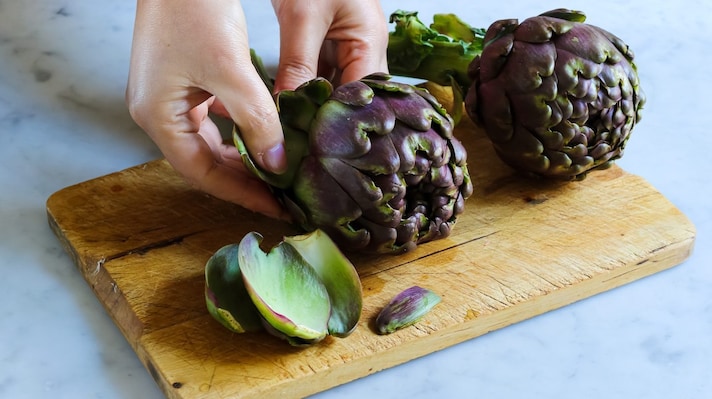
Let's start with artichokes, which, when in season in winter and spring, depending on the variety, are widely used in the kitchen, thanks to their versatility. Whether you eat them raw or cooked, they require careful preliminary cleaning, often considered tedious, as you need to remove the toughest outer parts (which should not be thrown away, as they are perfectly recyclable waste) and the fuzzy inner hairs. The black color that appears on your hands is a consequence of the oxidation of the polyphenols present in the vegetable, substances beneficial for health as they counteract cellular aging, but which react upon contact with air by darkening, just as they do on the vegetable. For this reason, the advice is to always use gloves that protect the skin, otherwise once the stains have formed, act immediately: rub half a lemon on the affected area and then rinse with soap, you can also use warm water and baking soda to immerse your hands in, or make a scrub with corn flour, rubbing delicately and finally applying a moisturizing cream.
2. Eggplants
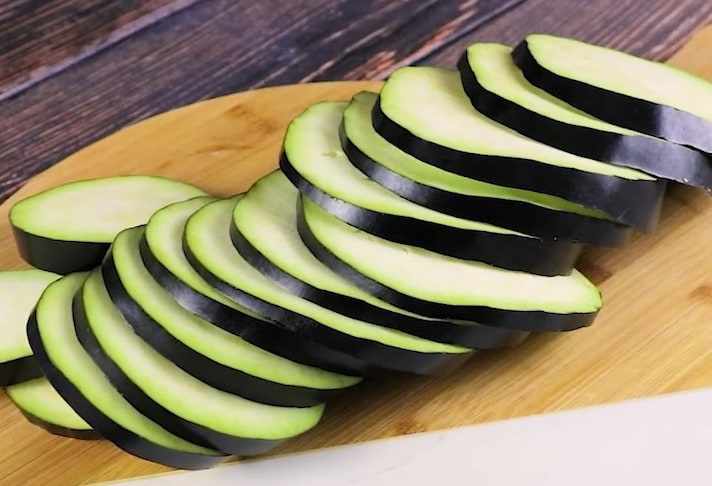
Eggplants also contain phenolic compounds that can oxidize upon contact with air, which is why we add them immediately after the artichokes, even though the effect is a less pronounced blackening than the previous one, which occurs both on the fingers and on the flesh of the vegetable. In short, once your hands are brown, they become perfect again by soaking them for a few minutes in a solution of water and vinegar.
3. Beets
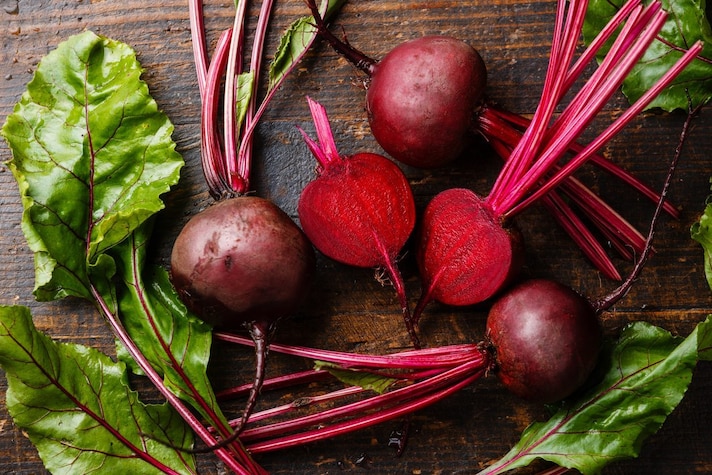
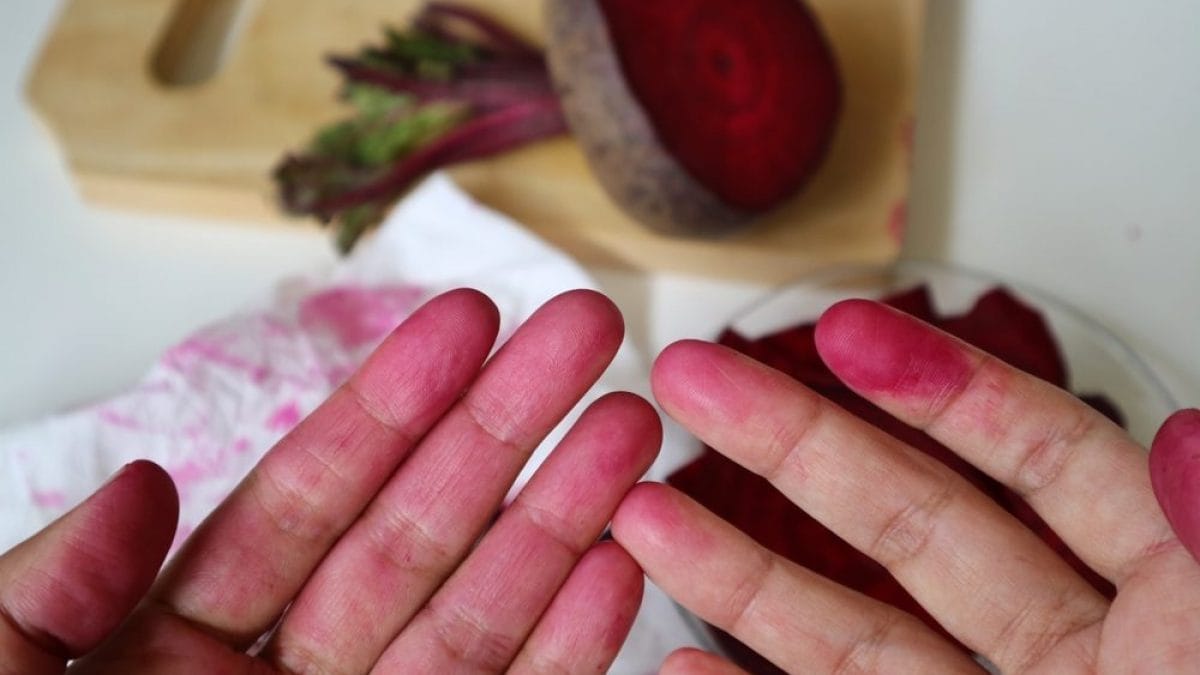
Here's a vegetable that immediately strikes you with its ability to stain, leaving a very noticeable red-purple color on your hands, as well as on utensils, fabrics, and surfaces. This vegetable is used as a natural food coloring because of its betanin content, an organic compound that gives it its characteristic hue. Being water-soluble, it dissolves in water and therefore has the advantage of being easily removed from the skin if you act quickly. What does this mean? As soon as you get your hands dirty, wash them immediately with soap and water. If the color has penetrated deeper, you can massage your hands with baking soda or coarse salt, then rinse them. Don't forget the action of lemon, which, when mixed with lemon, can help remove colored pigments.
4. Berries
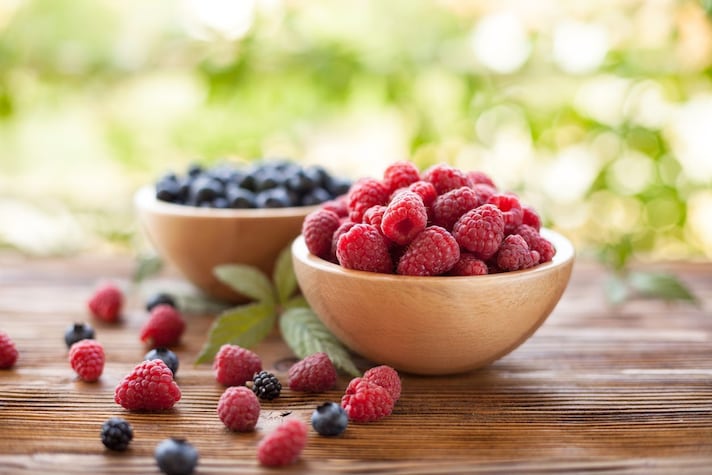
Speaking of pigments that stain skin and fabrics with their shades, there are anthocyanins: these molecules are part of the flavonoids, have important antioxidant properties and are also responsible for the red, purple and blue colors that characterize certain foods, including berries, such as blackberries and raspberries. These too are water-soluble organic substances, which can be easily removed under running water, washing with regular soap. To increase the effectiveness of the result, you can first massage the stained areas with lemon juice or white wine vinegar, always taking advantage of the stain-removing effect of their acidic components. Finally, remember to rinse your hands well with a delicate cleanser.
5. Black Grapes
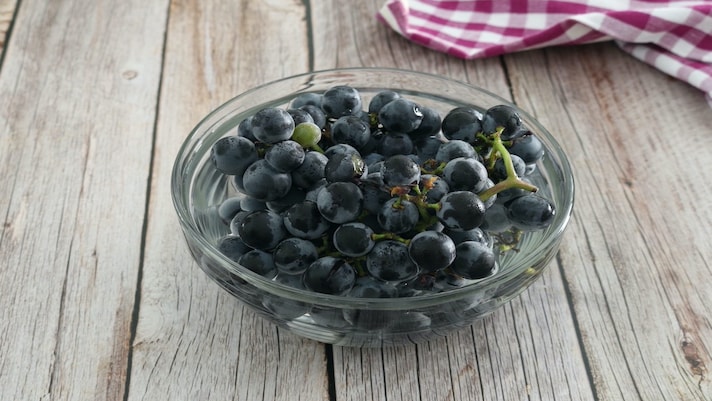
When making jams or desserts with black grapes, you may have noticed that the skin can turn purple: as with berries, wash immediately, because it's best not to let the juice dry, as this will make the stain more difficult to remove. What to do? If the color persists, warm water acidulated with lemon or vinegar and holding your hands in it works well, or create a paste with water and baking soda and rub it on the stained areas, creating a slightly abrasive action.
6. Turmeric
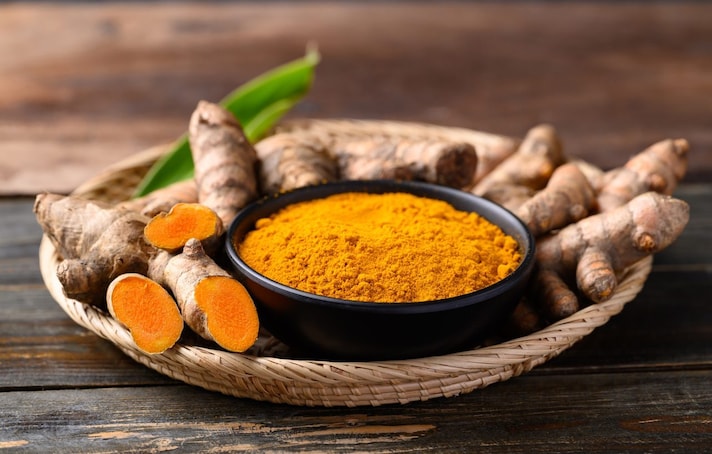
We conclude with a spice known for being the most staining of all (it is also used as a natural coloring). Turmeric‘s intense yellow color is due to curcumin, a fat-soluble pigment that doesn't dissolve in water and easily adheres not only to skin (prevent it by wearing gloves), but also to clothing, dishcloths, wooden utensils, and other porous surfaces that absorb it, such as cutting boards. The most reliable remedy? Smear a little toothpaste on it and let it sit for 5 minutes, then rinse with soap and water.
;Resize,width=767;)
