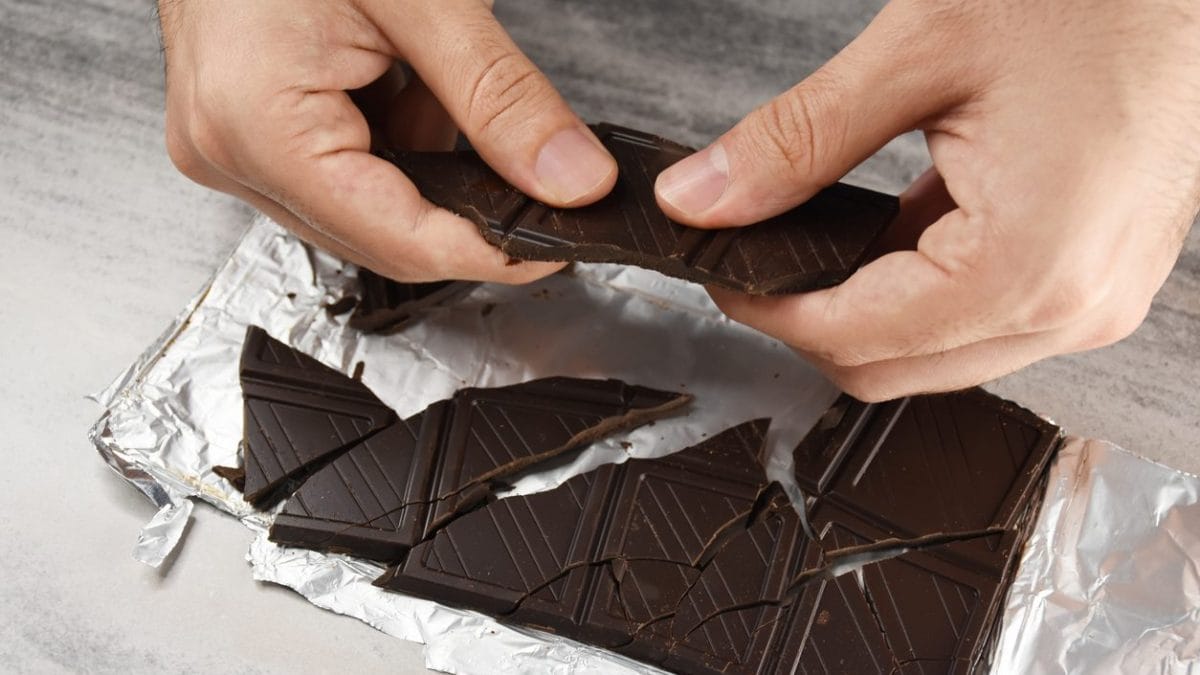
Milk, dark, filled, or plain: a chocolate bar is one of those little daily indulgences no one can give up. A comfort food par excellence, it's also one of those ingredients you should always have at home to prepare a wide variety of desserts. Unfortunately, summer isn't a great friend to this delicious product. Chocolate doesn't react well to high temperatures; in fact, it's very sensitive: when exposed to temperatures above 60°F/15°C, the cocoa crystals change and recrystallize, melting the product or otherwise causing it to lose its flavor and consistency.
Does this mean you have to give up chocolate until October? Absolutely not! You just need to learn how to store it properly during the summer months, so you can always have it available and intact, just like the day you bought it.
The Best Solution? Cellar or Pantry
The best way to store chocolate, whether milk chocolate (the most sensitive to heat) or any other type, is to store it in a cool place, where the temperature fluctuates between 50/10 and 60°F/15°C. If you have a cellar available, that's the perfect environment because not only is it cool but it also has a good humidity level. This factor is also essential for chocolate, because an overly humid environment would ruin its properties (the ideal environment should not exceed 50-55%).
If you don't have a cellar, you can opt for a pantry, but choose one that is not exposed to direct sunlight, that is not glass-enclosed, or that is not placed near the oven or stove: in both cases, the chocolate would absorb too much heat and therefore spoil or melt.

Fridge, Yes or No?
Let's dispel a popular myth: your instincts tell you that, if it's hot, the best place to keep chocolate to prevent it from melting is the fridge. This, however, is completely wrong. Chocolate is sensitive not only to high temperatures, but also to very low ones. Typically, the interior of the refrigerator varies from 32/0 to 44°F/7°C, which causes a white film called "blooming": the humidity and cold act on the sugar in the chocolate, which, crystallizing on the surface, gives it its white color.
This isn't a sign that chocolate has expired (other factors indicate when it should no longer be consumed) and isn't harmful to your health, but it can alter its flavor and aroma. It's therefore best to avoid storing chocolate in the refrigerator. If you really have no alternative, place it in an airtight container and store it in the lowest, least cold part of the refrigerator.

Can Chocolate Be Frozen?
If you need to store large quantities of chocolate or want to keep it on hand for baking, the perfect solution is to freeze it. Yes, chocolate can be stored in the freezer, in an airtight container, without losing its flavor or characteristics. The only precaution you need to take is not to thaw chocolate at room temperature (in fact , you should never do this with any food) because the temperature change would ruin it. In this case, you can place it in the refrigerator and wait for it to gradually thaw.
;Resize,width=767;)
