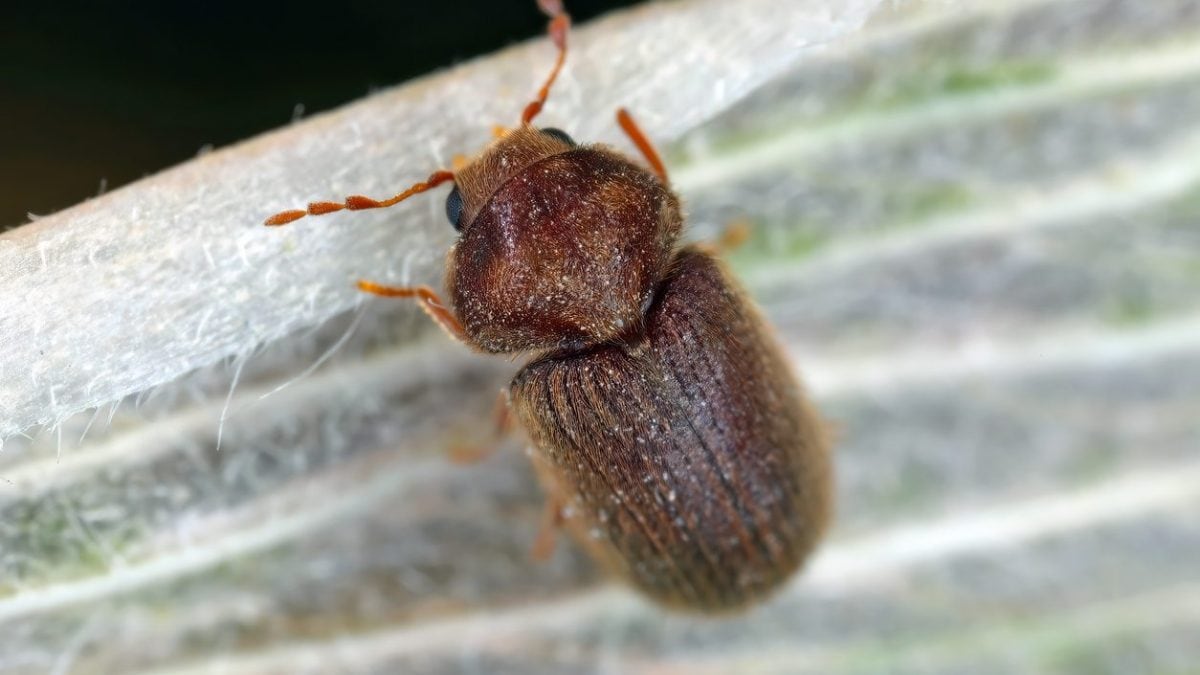
Every time we return home after a restoring holiday, the pantry may have been closed for over a fortnight. It's precisely during this time that the drugstore beetle, a small insect, can take advantage of the situation to establish itself. These tiny parasites feed on starchy products like bread, flour, biscuits, pasta, cereals, and spices, and the near-stagnation of domestic environments encourages their development.
What is a Drugstore Beetle?
Stegobium paniceum, known as the drugstore beetle, is a small beetle measuring about 2-4 cm, which often causes serious infestations. It is widespread throughout the world but prefers countries with milder climates. It lives in the dark and therefore easily takes over household pantries or food storage areas. Its life cycle includes four stages: egg, larva, pupa, and adult.
The larvae cause the worst damage: curved like a letter "C" and covered in white hairs, they feed with extreme voracity and speed. As mentioned, they attack all foods such as flour, bread, or pasta, but can even damage organic materials such as books, paper, and fabrics if they contain starch or glue. They are essentially not dangerous to human health, but long-term infestations with larvae, excrement, and visible damage render the food unusable.
How to Store Food Properly For Your Return
The first rule to prevent the bread mite from establishing itself is to use airtight containers. Dry bread, biscuits, flour, pasta, and cereals should always be stored in airtight glass or rigid plastic jars. This is because cardboard or thin plastic containers offer no protection whatsoever: the drugstore beetle would easily pierce them.
Upon returning from vacation, you should carefully inspect every package left in the pantry. A small hole or suspicious dust is all it takes to understand that the product has been "contaminated." In these cases, to avoid any risk, it's best to immediately throw away the food, tightly sealed, and directly into the outside bins. This will prevent the beetle's life cycle from completing.

Cleaning cabinets like cupboards and pantry units is extremely important. After emptying them, vacuum the corners and remove any crumbs or flour residue. Then, sanitize the shelves with a damp cloth and vinegar, which acts as a repellent. Drugstore beetles thrive in damp, poorly ventilated spaces. Keep the kitchen well ventilated and, if necessary, use a small dehumidifier.
If the thought of a possible infestation of these tiny insects really bothers you, for more effective control, there are pheromone traps or specific insecticides. The most effective method, however, remains an integrated one that combines prevention, monitoring, and targeted interventions. A multi-layered strategy that reduces risks without overusing chemicals.
Our final piece of advice is to contact pest control professionals if your pantry is seriously affected. Specialized operators can apply more effective techniques, such as heat treatments or controlled fumigation, which can safely eliminate the infestation at its source.
;Resize,width=767;)
