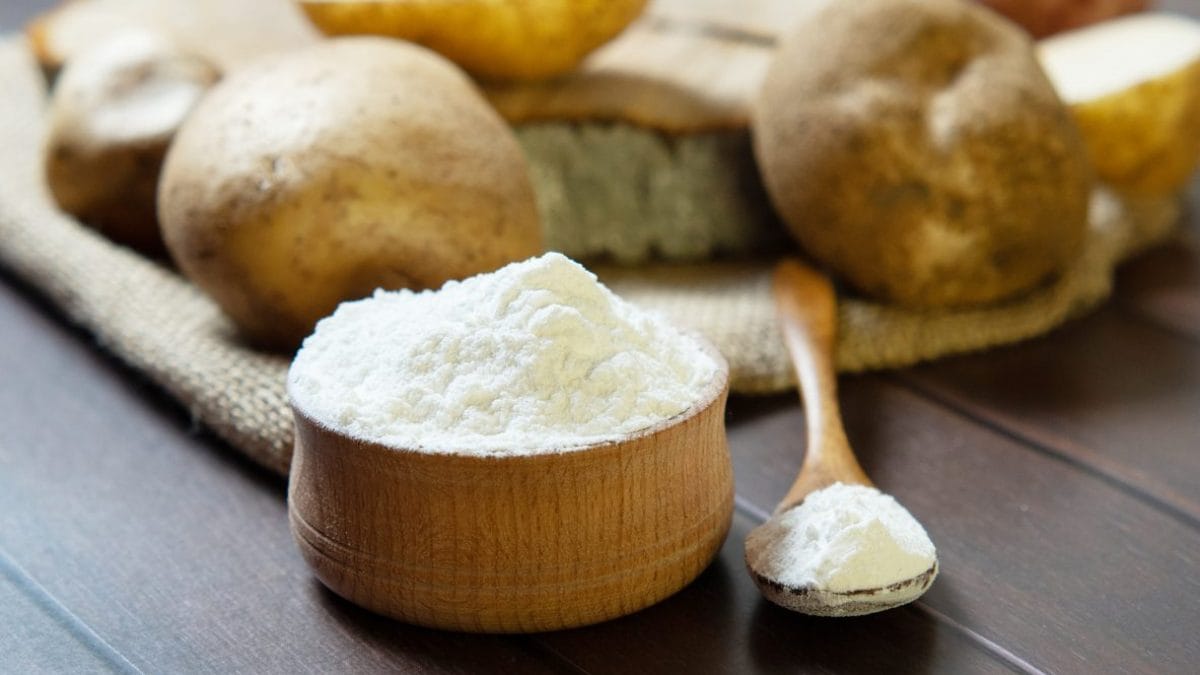
In the kitchen, it's primarily used to lighten dough, fluffier cakes and donuts, and make biscuits crispier thanks to its ability to retain moisture. It's also highly regarded as a natural thickener: it dissolves easily and helps create smooth, velvety creams without any aftertaste. It's therefore ideal for puddings, sweet or savory sauces, and soups. We're talking about potato starch, a starch extracted from tubers that appears as a clear, impalpable, odorless, and tasteless powder. Due to its versatility and long shelf life, it's often found in the pantry. What if it's missing? Don't worry, because it can be substituted: below, are several alternatives, from classic cornstarch to the more unusual tapioca flour.
How to Replace Potato Starch With Another Starch
We've just seen that potato starch is a product obtained by drying the starch from tubers. Instead, you can opt for another pure starch, such as cornstarch, also known as maizena and widely used in both cooking and baking for its thickening properties, used in creams (such as custard), puddings, sauces, gravies, and soups. It too is a gluten-free ingredient (always check the label, where you should be careful of any contaminants), with a fine consistency and neutral flavor, and is therefore considered a very valid substitute for potato starch: despite its differences, the replacement requires the same amount, and is very easy to put into practice.
Always a 1:1 ratio for two other less common products, but which can become precious allies. The first is rice starch, gluten-free and with a very fine white texture, it has a barely perceptible odor and a very delicate flavor. Its properties are many, so much so that it is also used in cosmetics for its soothing, calming and refreshing effects. As a food, however, it acts as a natural thickener and, in combination with flour, gives lightness to biscuit, donut, focaccia and plum cake doughs, just like potato starch does. The second, however, is frumina, which gives softness to cake and sponge cake doughs and promotes leavening, as well as being a binder: it is wheat starch and is obtained from soft wheat grains. Compared to the others, it contains gluten, but it always appears as a very white and (almost) weightless flour.

How to Replace It With Flour
One option is to replace the starch with flour, as even in this situation you're on the safe side by using the exact same quantities. If the recipe calls for a thickener, the best solution is traditional white flour: although the flavor is noticeable, it's still less so than almond or chestnut flour, which are better when mixed with other flours when making a dessert, giving the dough pleasant flavor and aroma. Rice flour is a good all-purpose flour, as it's neutral, gluten-free, and can be used alone or in combination. If you decide to use it, pay attention to the consistency of the dough you're used to making in the traditional way: you may need a little water or milk to adjust the density. Finally, here is oat flour, which has excellent nutritional properties and a medium-low glycemic index: although it is also a thickener, like starch it gives its best when mixed with all-purpose flour, as it helps the leavening of doughs that need to rise and gives crumblyness to crackers and biscuits.

Other Alternatives to Potato Starch
There are already many choices, but there are still more, even if they are less immediate to use than the previous ones. Coconut flour, for example, comes from the dried pulp of the fruit. It has a strong absorbent and thickening power and, for this reason, tends to harden preparations, in addition to being very caloric: the advice is to increase the liquid parts and, with reference to potato starch, reduce the quantity by about 15%, doing some experiments. With an exotic allure is tapioca flour, which more correctly falls under the definition of starch: tapioca, in fact, is the starchy product obtained from cassava and produces a white powder suitable for gluten-free baking, for the creation of tortillas and crepes, providing elasticity and giving body to creams, soups and sauces. In the latter scenario, the ratio will be 1:1, while if you use it in cakes or dough, add about 30%, slightly reducing the amount of other flours in the recipe. Finally, in extreme cases and only in savory dishes due to its saltiness and the typical flavor it provides, here's the unexpected ace up your sleeve: instant mashed potatoes, which work well in the same amount. If you have it at home, it will be a doubly lifesaver for your dinner.

