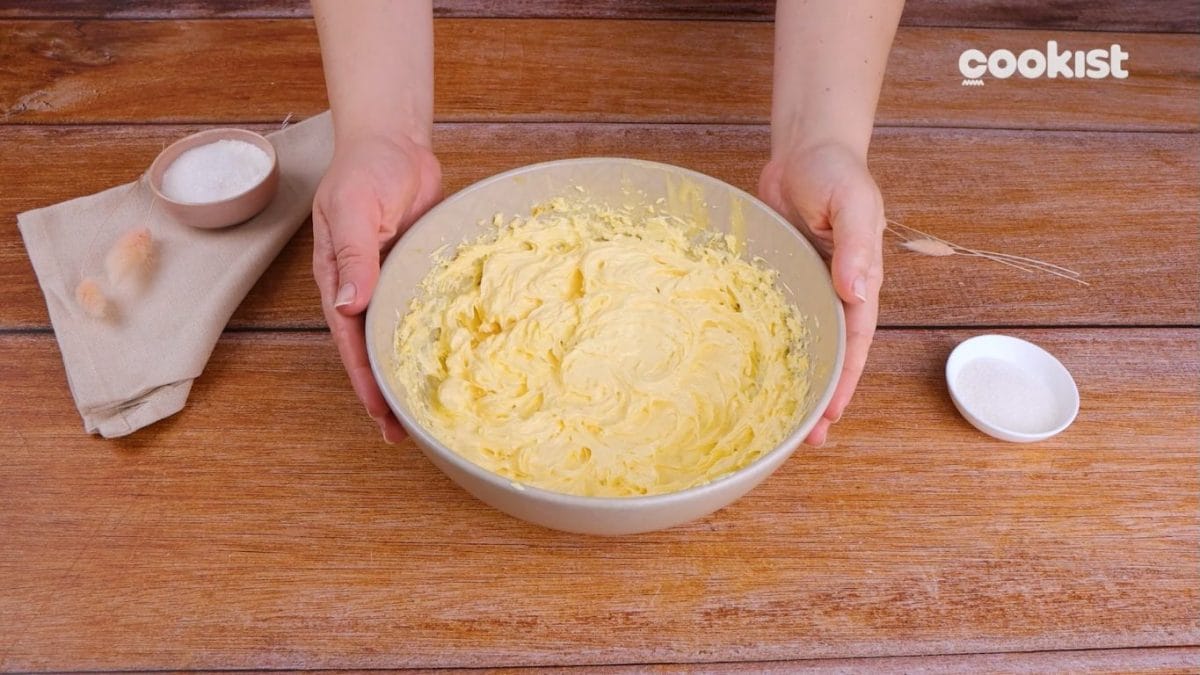
There is a quiet panic that every home baker experiences at some point. You spend hours baking the perfect vanilla cake layers, carefully measure your powdered sugar, and whip up a massive batch of silky, luxurious American buttercream. But when you step back to look at your masterpiece, it doesn't look like a pristine, winter-white cloud ready for a magazine cover. It looks… yellow. Like a tub of margarine.
This happens because the foundational ingredient of buttercream is, naturally, butter. And high-quality butter gets its beautiful golden hue from beta-carotene (which cows absorb from grass). While that yellow tint is a sign of delicious, rich dairy, it is a nightmare when you are trying to construct a clean, modern wedding cake or dye your frosting a vibrant primary blue (which instantly turns a muddy green when mixed with yellow).
Fortunately, you don't have to sacrifice that rich, buttery flavor by swapping it for bland vegetable shortening. Instead, you can borrow a brilliant secret from the beauty industry: color correction.
The Science of the Color Wheel
If you have ever used green primer to cover redness on your skin or purple shampoo to keep blonde hair from turning brassy, you already understand how this hack works. On the classic color wheel, purple and yellow are direct complementary colors. This means they sit directly opposite each other. In the physics of light and color theory, when you mix two exact opposites together, they visually neutralize each other, creating a clean, balanced shade of gray or white.
By introducing a microscopic, almost imperceptible trace of purple pigment into your yellow-tinged buttercream, you essentially delete the warm yellow undertones, instantly tricking the human eye into seeing a stark, bright white.
The Step-by-Step Color Correction Protocol
Because this hack is incredibly powerful, precision is key. If you are too heavy-handed, you will end up with a bowl of sad lavender frosting.
Step 1: Whip the Butter First
Before you even touch the food coloring, let mechanical aeration do some of the heavy lifting. Pop your room-temperature butter into your stand mixer fitted with the paddle attachment. Beat it on medium-high speed for a full 3 to 5 minutes before adding your powdered sugar. Whipping butter incorporates millions of microscopic air pockets. As these air pockets multiply, they reflect light differently, naturally lightening the yellow color to a pale ivory.

Step 2: Add Your Sugar and Flavorings
Slowly add your powdered sugar, heavy cream, and flavorings. For the whitest possible base, swap out your dark, amber-colored vanilla extract for clear vanilla extract. Standard vanilla extract will add a warm brown hue that fights against your whitening efforts.
Step 3: The "Toothpick Spearing" Method
Now, it is time for the magic. Take a jar of violet or purple gel food coloring (gel is crucial here; liquid food coloring is too diluted and will ruin your frosting's consistency). Dip the very tip of a clean toothpick into the gel. You want a speck of color no larger than a pinpoint. Swirl the toothpick directly into your buttercream. Turn your mixer to a low speed and let it stir for 1 to 2 minutes to fully distribute the pigment.
As the purple blends with the yellow, watch closely. The warm yellow tones will fade away before your eyes, leaving behind a clean, professional-grade white. If it still looks a tiny bit ivory, add one more microscopic speck and mix again.

What to Do If You Go Too Far
If you get a little too enthusiastic and your buttercream starts looking gray or distinctly lavender, do not panic. The fix is incredibly simple. Because we are working with color opposites, the cure for too much purple is—you guessed it—more yellow. Simply scoop out a tablespoon of regular, uncolored butter, melt it slightly so it incorporates easily, and mix it into the batch. The natural yellow beta-carotene in the fresh butter will absorb the excess purple, steering your frosting right back into the white zone.
Alternatively, if you want to push the brightness even further without risking a gray tint, you can add a squeeze of white gel food coloring (like titanium dioxide) to block out any remaining shadows and give your cake a brilliant, reflective shine.
;Resize,width=767;)
