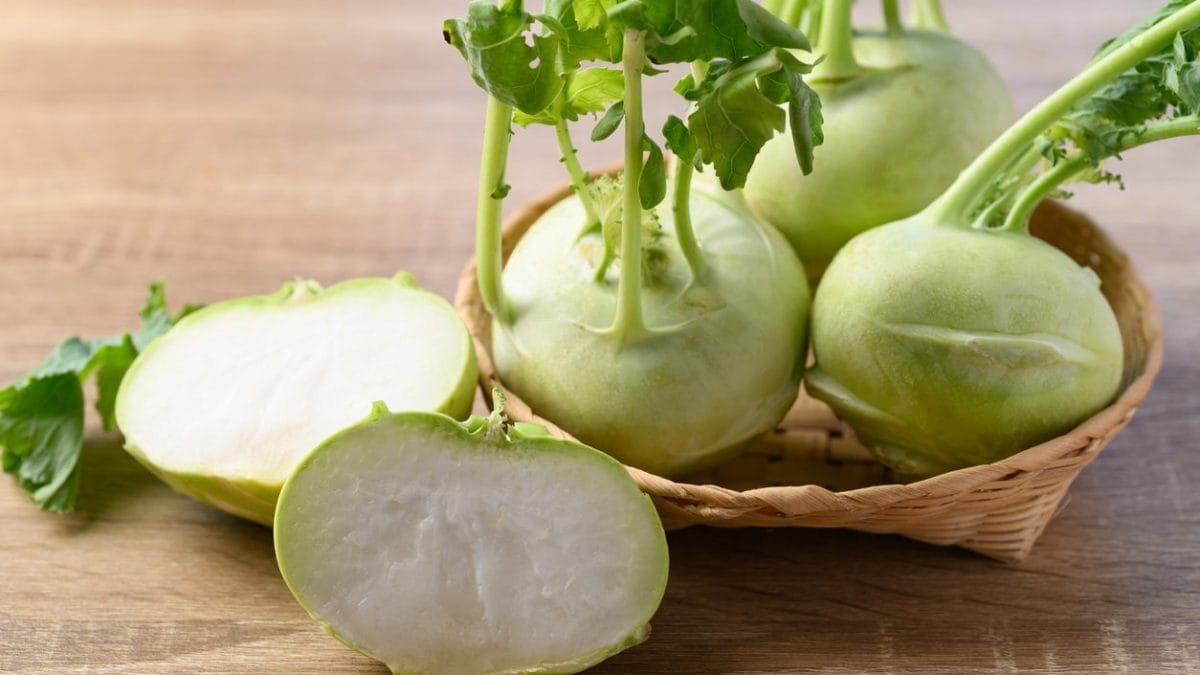
A (still) little-known vegetable, kohlrabi actually has an excellent calling card: it is part of the large cruciferous or Brassicaceae family, along with the more well-known cauliflower, broccoli, and Brussels sprouts. Compared to its peers, it has a delicate, sweetish flavor, making it particularly versatile in the kitchen, suitable for eating raw, in carpaccio and salads, or cooked, for example in cream soups or baked. Like other cruciferous vegetables, however, it is a champion of health benefits, rich in vitamins (vitamin C above all), minerals, and antioxidants. Let's discover its properties and how to enhance it in some delicious dishes.
What is Kohlrabi?
Its scientific name is Brassica oleracea var. gongylodes and it is native to Asia: it is known as kohlrabi or German turnip, as it is very widespread as a crop in Germany and Austria. Of this vegetable, the swollen bulbous stem is eaten, which resembles that of a turnip in shape and consistency, firm and crunchy, with slightly flattened ends: in nature it can appear in three shades, white, light green and purple. Not to be confused with celeriac (Apium graveolens var. rapaceum) which is in all respects a variety of celery and belongs to another botanical family, that of the Apiaceae or Umbelliferae.
Properties and Benefits
Like most brassicas, kohlrabi boasts significant nutritional value thanks to its high content of fiber, vitamin C and other vitamins (A, B1, B2, B5, B6, and E), minerals (particularly potassium, calcium, magnesium, zinc, and iron), and antioxidants, especially in the purple variety, given the higher presence of anthocyanins. Furthermore, the pulp is rich in starch, sucrose, fructose, and glucose. A recent study summarizes the main benefits recognized for this vegetable, which are as follows:
Supports The Immune System
Vitamin C (ascorbic acid) is found in significant quantities in kohlrabi. It contributes to the defense and function of the immune system and has an antioxidant effect, protecting cells from damage caused by free radicals.
It Helps Intestinal Regularity and Has a Satiating Power
Another element kohlrabi is rich in is fiber: present in the pulp, it aids digestion and intestinal regularity and helps maintain a sense of satiety. For this reason, it is a useful vegetable in low-calorie diets, including those aimed at weight control.

Source of Essential Amino Acids
Kohlrabi contains a significant quantity of essential amino acids, that is, those that our body is unable to produce on its own and must take in through food.
Friend of the Heart, Bones, Teeth and Muscles
Thanks to minerals such as potassium, calcium, and magnesium, kohlrabi is a good ally for the heart because it helps maintain normal blood pressure, supports bones and teeth, and promotes proper muscle and nervous system function. Zinc, which plays an antioxidant role, is also important.
Delicate Flavor
We consider this characteristic a virtue worth considering. Unlike its bitter-tasting cousins, kohlrabi has a mild and pleasant flavor, likely due to its higher content of hydrophilic (i.e., water-soluble) amino acids, which makes it more palatable.
Contraindications
Kohlrabi has all the benefits of cruciferous vegetables —if not more—but at the same time it also has some of the typical "defects" of these vegetables. Who should moderate their intake or consult their doctor? Those suffering from irritable bowel syndrome and gastrointestinal disorders, as it can cause flatulence and bloating, given that it contains fiber and the sulfur compounds typical of cabbage, which could lead to intestinal fermentation. Those with thyroid problems should also be careful: the goitrogens naturally present in brassicas—only when consumed in excessive quantities, combined with an iodine deficiency —can promote hypothyroidism. It's important to know that cooking and balanced portions as part of a healthy diet shouldn't cause any concerns, but it's always best to consult a specialist.
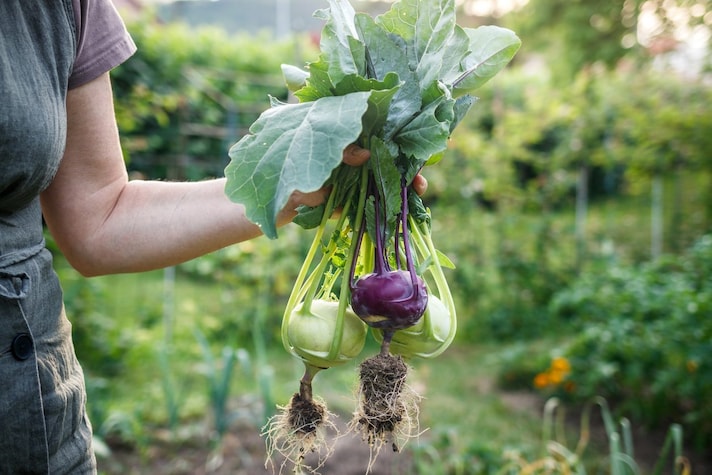
How to Cook Kohlrabi
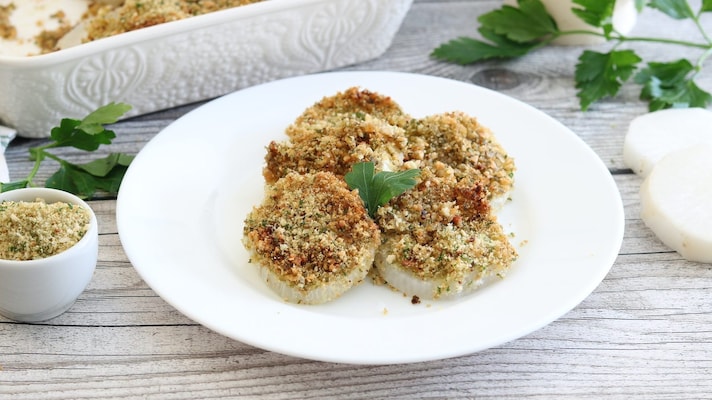
Kohlrabi is less common than other cruciferous vegetables at the supermarket or greengrocer, but if you find it, don't miss out and try it in several simple and tasty recipes, often with a gourmet touch. The recommendation is not to overcook it, so it retains its firmness and nutritional qualities. It can therefore be boiled or steamed for a light and aromatic side dish, seasoned simply with oil and salt. Sliced, cut into circular sections after removing the tougher outer layer, it is perfect for baking: deliciously with béchamel sauce, or au gratin with breadcrumbs flavored with almonds, capers, and parsley. Kohlrabi is an ideal base for creams and soups, blended with potatoes to give it a creamy texture, and garnished as desired with dried fruit, such as hazelnuts, to enhance its sweetness, or sour cream, or in raw dishes, including carpaccio and salads, together with blue cheeses such as gorgonzola, pears, green apples, walnuts, or paired with freshwater fish, such as char and trout: the combination is particularly successful because it gives freshness.
;Resize,width=767;)
