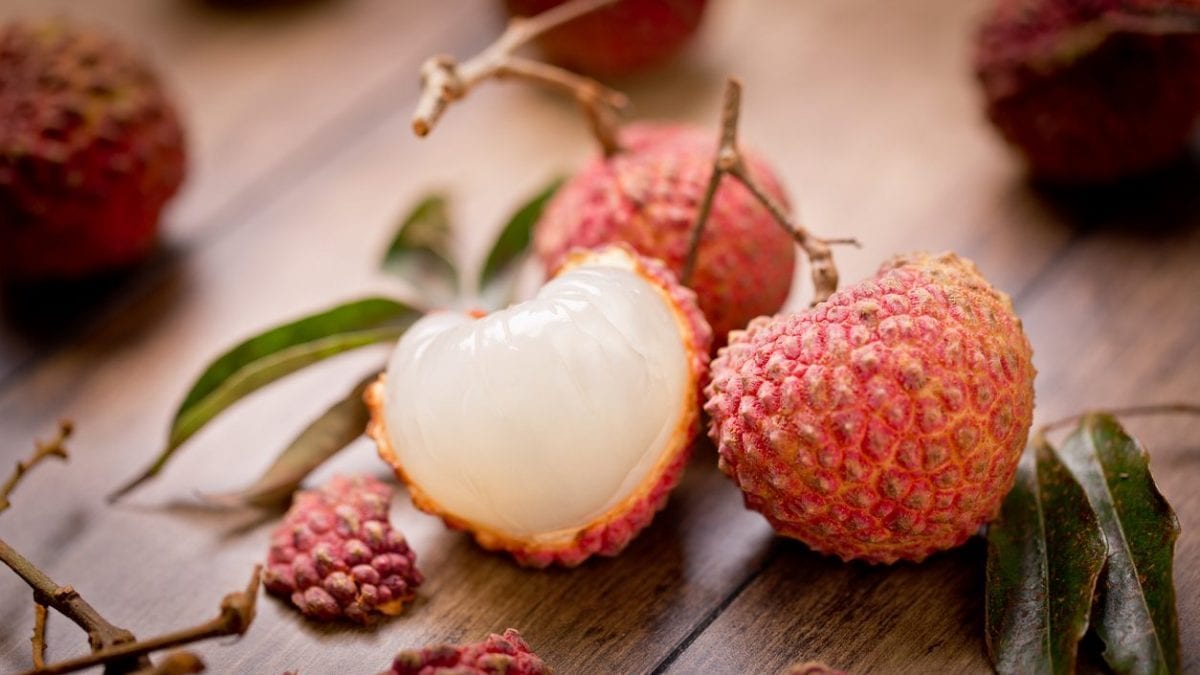
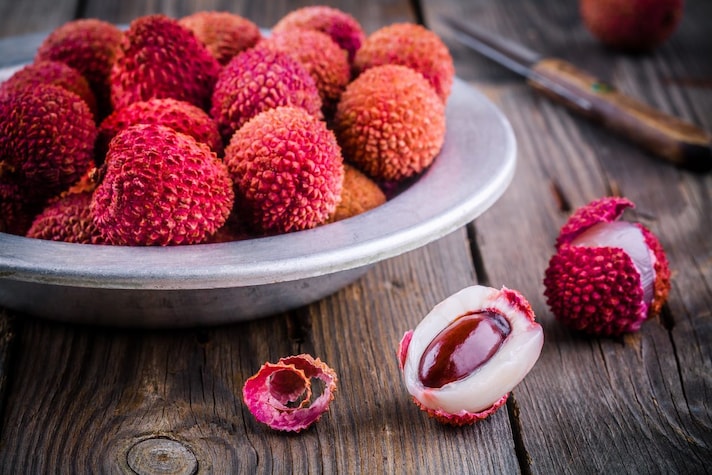
Lychees are the fruit of the tropical and subtropical plant belonging to the Sapindaceae family, genus Lichi, native to Southeast Asia and southern China. Small and round, they are practically impossible to miss: their main characteristic is an unmistakable red peel with curious angular protuberances, a casket that hides a white and incredibly sugary pulp, as well as an inedible oval stone.
The tree, of ancient origins, can grow to a height of 10 meters, has a short trunk and a rounded crown. It flowers in the winter months, and it is between November and January that we can easily purchase lychees, present on our fruit and vegetable stands. It's no coincidence that they are increasingly appearing among the fruits that conclude Christmas meals. But why are these small fruits becoming increasingly popular in the U.S.? Mainly because they are delicious, so sweet and sugary that they can be eaten fresh, but they are also perfect for use in small pastries, such as ice cream or sorbets: simply remove the peel, discard the inedible seed, and use the exquisite white pulp.
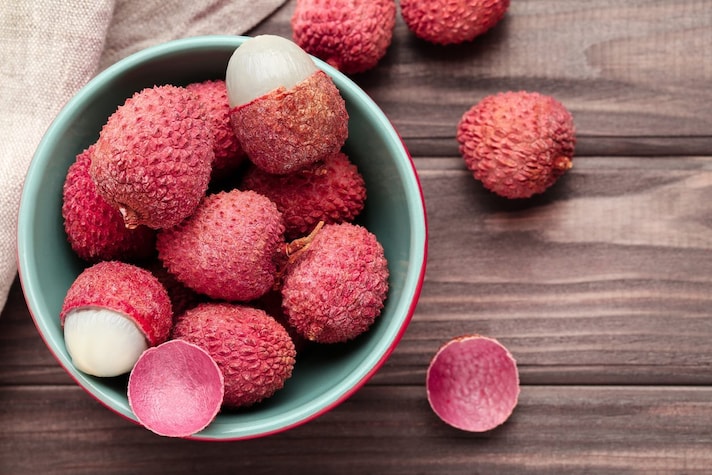
There's another reason you should include lychees in your diet, besides their undeniable goodness: these small fruits are very good for you, rich in vitamins and minerals, excellent allies for the heart and intestines, and good friends for those who prefer a healthy and balanced diet. Let's learn more about these curious and delicious Chinese fruits.
Lychees' Properties and Benefits
Small and with a decidedly curious shape, lychees, or litchis, are fruits with an interesting nutritional profile: first of all, they are very low in calories, about 60 kcal per 100 grams of edible pulp, making them particularly suitable for those following a weight-loss and low-calorie diet. They are rich in minerals, particularly copper, magnesium, and potassium, and are particularly high in vitamin C. They are high in fiber, low in sugar, and contain negligible amounts of fat. When included as part of a balanced diet and consumed in moderation, lychees can offer several health benefits: here are some of them.
1. Important Source of Vitamin C
The primary benefit of lychees is their significant vitamin C content, a vital vitamin for our body as it contributes to the normal function of the immune system and the production of collagen, a protein essential for healthy skin, blood vessels, and joints. Lychees are a true powerhouse of this vitamin, whose effect is further enhanced by the presence of vitamin B, a combination that makes lychees antioxidants, beneficial for eyesight, a friend to the immune system, and a great help for the skin, especially for elasticity and firmness.
2. Antioxidant Action
Lychees are a good source of antioxidant compounds, particularly flavonoids and polyphenols: two very important substances that help counteract the action of free radicals and are associated with a protective effect against cardiovascular disease and cellular aging. This translates into a preventative effect against diseases arising from oxidative damage, but also supports skin health, especially when combined with the vitamin C present in the fruit.
3. Allies of The Gastrointestinal System
Lychees are excellent allies of the gastrointestinal system thanks to their good fiber content, which promotes regular digestion and promotes proper intestinal transit, helping maintain good bowel movements. Furthermore, the fruit also has a fairly high water content, which is important for promoting hydration and the elimination of toxins from the body, promoting proper kidney and urinary tract function.
4. Support Cardiovascular Health
The potassium in lychees plays a crucial role in regulating blood pressure because it helps maintain the balance between sodium and water in the body, thus reducing the risk of hypertension. This element, combined with the polyphenols found in the fruit, helps improve blood circulation and reduce inflammation, further supporting heart health.
5. Anti-Inflammatory Effect
Thanks to their richness in vitamin C and antioxidants, lychees have a good anti-inflammatory effect: these substances, in fact, are excellent allies of the immune system, especially in the development of antibodies aimed at defending the body from infections and seasonal illnesses such as flu and colds, strengthening natural defenses.
Lychees' Contraindications
Lychees are generally safe and well-tolerated by most people. In rare cases, they may cause mild allergic reactions, such as itching or redness, especially in those already predisposed (potential cross-reactions with latex/pollen). The only thing to watch out for is moderation in the amount of fruit consumed: being very rich in fiber, excess consumption could have the opposite effect and trigger gastrointestinal disorders.
Caution should be exercised when consuming lychees if you have diabetes or blood sugar control issues: although these fruits are known for their blood sugar-stabilizing effect thanks to fiber and polyphenols, they also contain sugars. Therefore, if you have these conditions, it's best to consume them in moderation, preferring ripe ones and avoiding an empty stomach to avoid blood sugar spikes or hypoglycemia (in any case, it's always best to consult your doctor about this). It's also best to seek medical advice if you're taking anti-inflammatory, antiviral, immunomodulatory, or painkilling medications, as interactions may occur.
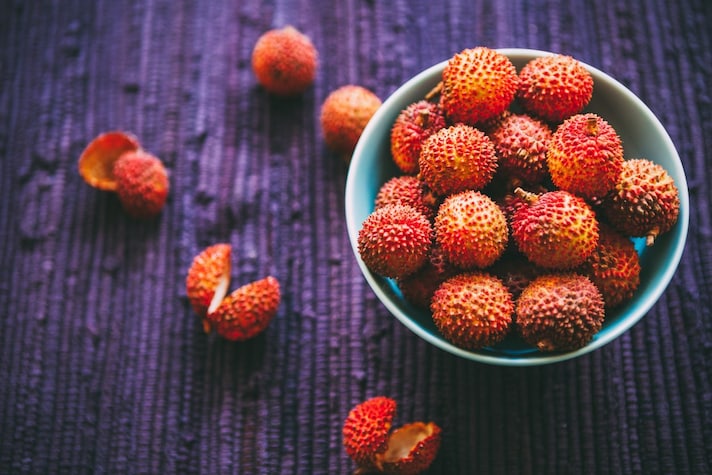
Finally, we would like to highlight a rather rare risk associated with excessive consumption of lychees, particularly unripe ones or those eaten on an empty stomach, which is linked to the specific condition of malnutrition. It has been noted that malnourished individuals in countries like India, especially children, who consume large quantities of lychees on an empty stomach develop indigestion, leading to hypoglycemia, neurological problems, metabolic shock, and convulsions.
;Resize,width=767;)
