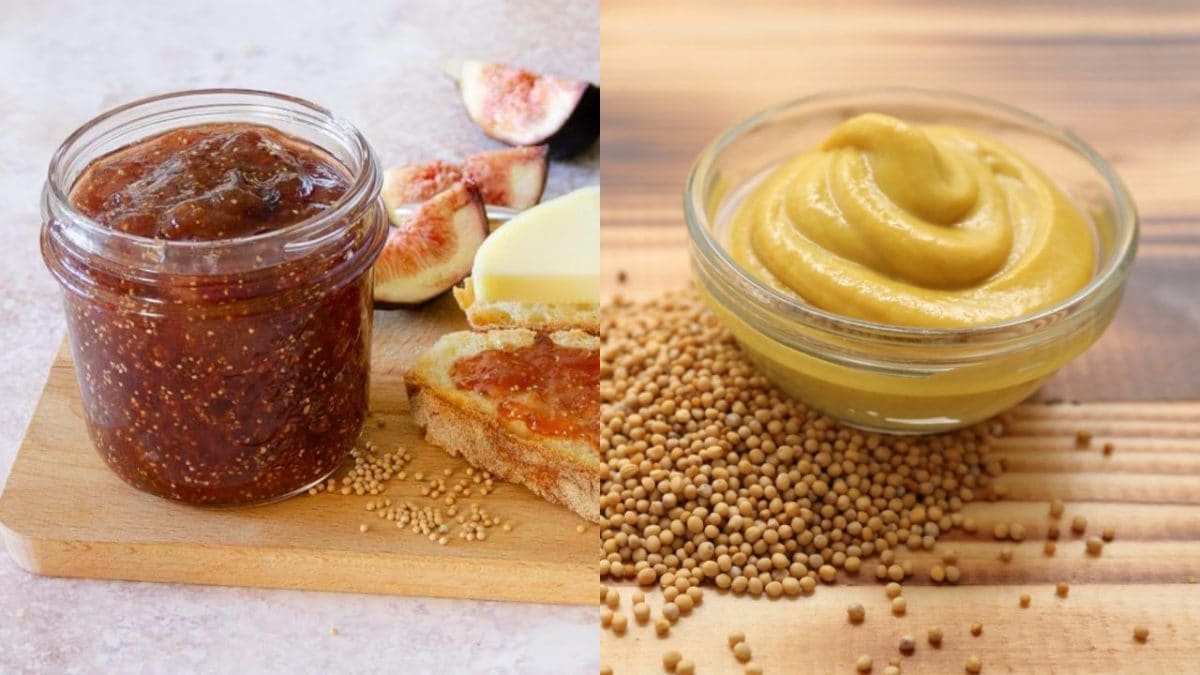
One is a sauce, while the other is a fruit preserve, yet these two specialties tend to be confused with each other. We're talking about mustard and mostarda, highly prized condiments that, once you understand what they are and how they're made, are impossible to confuse. What's misleading, however, is a real lost-in-translation that has its roots in the Middle Ages. Let's clarify.
What is Mustard?
Creamy, aromatic, spicy: mustard is a very popular yellow sauce, so much so that it even has its own Pantone shade – which internationally is called moutard. It is used to season salads, sandwiches, and meat dishes in general, such as chicken and sausages: it is commonly found on supermarket shelves next to ketchup and mayonnaise, but it can also be made at home with a little patience. The main ingredient is the seeds of the plant of the same name, which perhaps not everyone knows belongs to the large Brassicaceae or cruciferous family, like cabbage, broccoli, arugula, and horseradish: Sinapis alba produces the white seeds, while Brassica nigra produces the brown seeds.
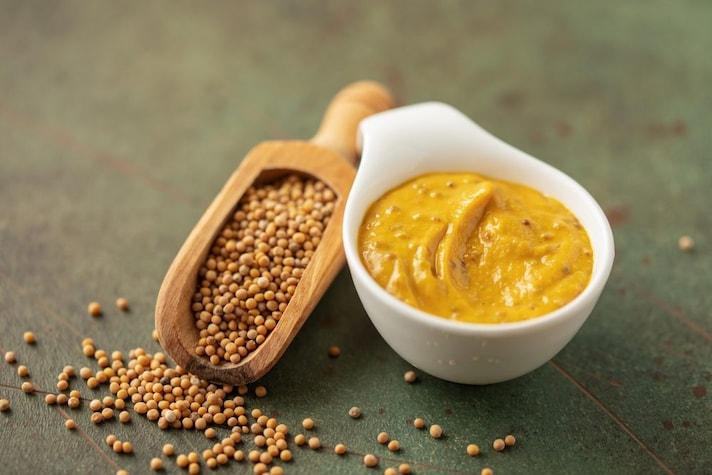
What they have in common is the rather pungent flavor derived from their extract: in the former it is the warm and enveloping sinalbin, in the latter it is the more intense sinagrin. They can be pounded in a mortar, pulverized, left whole, or mixed with apple cider vinegar, cane sugar, water, salt, and citric acid to create blends with smooth or coarse textures, with soft or stronger notes depending on the variety, such as the so-called mustard à l'ancienne with its crunchy grains, or Dijon mustard, which takes its name from the city where this sauce was first developed in the form of the paste we know today. In fact, in the past, the mustard plant, including its seeds, leaves, and flowers, was used by the Egyptians and Romans not only as a seasoning for food, but also for medicinal purposes, particularly for its anti-inflammatory and digestive properties.
What is Mostarda?
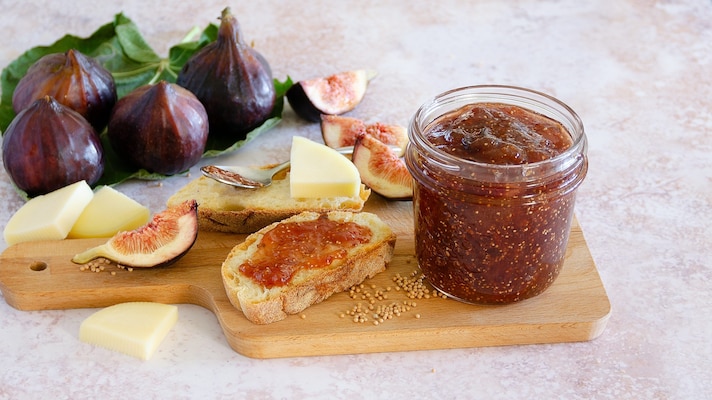
When we think of mostarda, we immediately think of the sweet variety, which features mixed fruit, whole or in chunks (figs, cherries, oranges, lemons, apples, peaches, apricots), steeped in a sugar syrup and characterized by a pleasant spicy note: the tang comes from the use of mustard, specifically its essence. Mostarda, in fact, isn't originally a sauce, but is a fruit preserve that enriches boiled meats, cotechino sausages, and platters of cured meats and cheeses. Typical of Northern Italy, there are many variations: the Cremonese one is decidedly spectacular and delicious, but in most cases the mostarda has a consistency similar to that of a jam, with the fruit cut into small pieces and left to macerate: in the Venetian mostarda, for example, the use of quince is very common, while the Mantuan mostarda with Campanine apples becomes one of the fundamental ingredients of the filling of the classic pumpkin tortelli.
What Are The Differences?
At this point it is possible to understand that the two specialties are not the same thing: mustard is a sauce where the main ingredient is seeds, while mostarda is a fruit preserve that generally includes mustard essence (a few drops are enough to give it its aroma) among its ingredients. To simplify, the first usually contains mustard seeds, apple cider vinegar, water and salt, while the second contains fruit, sugar syrup and mustard essence, with two completely different preparation methods. But where does the legitimate confusion arise? From a linguistic factor: in French, mustard is called moutarde, just as in English the translation is mustard. The reason is to be found in the past, when mustard was added to grape must: hence the Latin definition “mustum ardens", or “burning must”, referring to its extreme spiciness. Over time, the preparation took different directions, with France perfecting mustard (sauce) and Italy developing the tradition of fruit preserves which have retained the name of mostarda even though the must disappears in the process.
;Resize,width=767;)
