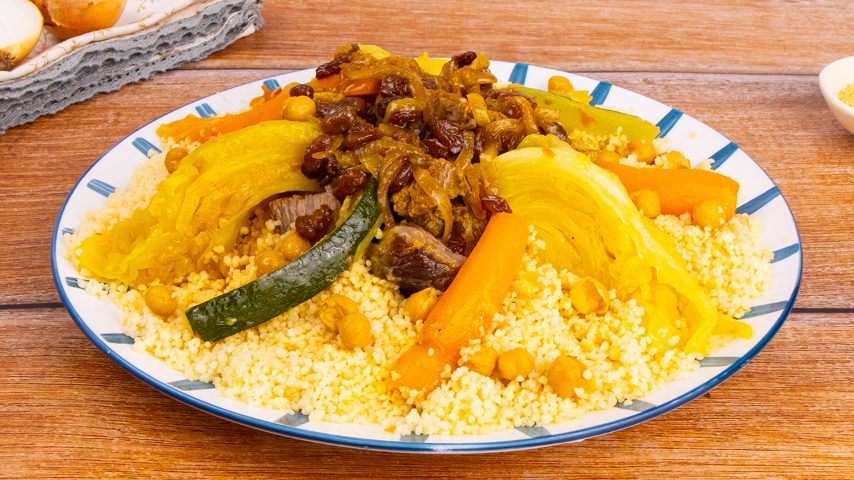
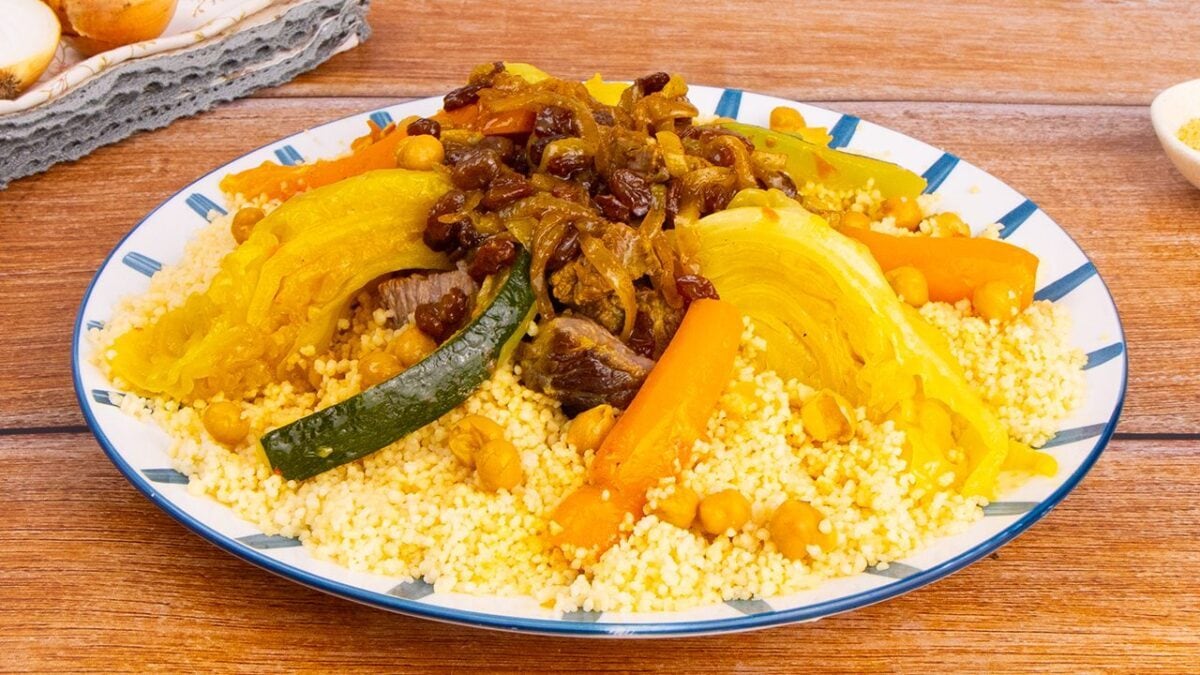
Moroccan-Style Couscous is a rich and comforting one-dish meal that combines fluffy steamed couscous with tender beef, colorful vegetables, chickpeas, and sweet caramelized onions. Full of spices and aromatic flavors, this traditional preparation brings together savory and sweet elements in perfect harmony.
Perfect for family meals, celebrations, and special occasions, Moroccan couscous is a generous dish designed to be shared and enjoyed together.
Why Everyone Will Love This Recipe
This couscous is loved for its incredible variety of textures and flavors. The tender meat, soft vegetables, fluffy grains, and sweet-and-spiced Tfaya onion topping create a dish that is both satisfying and balanced.
It’s also a complete meal made in one pot, combining protein, vegetables, and grains. The gentle spices add warmth without overpowering the natural flavors of the ingredients, making it a comforting dish for any occasion.
What Is Moroccan-Style Couscous?
Couscous is one of the most iconic dishes of North African cuisine, particularly associated with Morocco, Algeria, and Tunisia. Made from semolina grains, couscous has been prepared in the Maghreb region for centuries and is traditionally steamed over a flavorful stew until light and fluffy.
In Moroccan cuisine, couscous is much more than a simple meal: it is a symbol of hospitality, family, and sharing. It is often prepared for Friday gatherings and celebrations, with variations including different meats, vegetables, and sweet toppings. The addition of Tfaya, a caramelized onion and raisin mixture, reflects the Moroccan tradition of combining sweet and savory flavors with aromatic spices such as cinnamon and turmeric.
Cooking Tips
- Use a traditional steamer if possible because steaming the couscous over the stew allows it to absorb the aromas and flavors of the meat and vegetables.
- Fluff the couscous gently after steaming because separating the grains helps create the light, airy texture that defines a well-prepared couscous dish.
- Cut the vegetables into larger pieces because they should remain recognizable and maintain their texture while cooking in the stew.
- Brown the meat well at the beginning because this step develops deeper flavors and creates a richer base for the broth.
- Add the spices early in the cooking process because they have time to infuse the meat and sauce with their warm aromas.
- Cook the Tfaya slowly because gentle caramelization allows the onions to become sweet and tender without burning.
- Balance the sweet onion topping with the savory stew because the contrast between the two is one of the defining characteristics of Moroccan couscous.
- Serve the couscous immediately after assembling because the grains are at their fluffiest and the flavors are best enjoyed while warm.
Frequently Asked Questions
Can I Use Another Type of Meat?
Yes, Moroccan couscous can be prepared with different meats depending on preference and tradition. Lamb, chicken, or a combination of meats are commonly used alternatives, and each one gives the stew a slightly different flavor while maintaining the same aromatic style.
Can I Make This Couscous Vegetarian?
Absolutely. You can omit the meat and prepare a vegetable couscous using chickpeas, seasonal vegetables, and a flavorful spiced broth. The result remains hearty and satisfying thanks to the variety of vegetables and the aromatic seasonings.
Can I Use Instant Couscous Instead of Traditional Couscous?
Yes, instant couscous can be used for a quicker preparation. However, traditional steamed couscous has a lighter texture and absorbs more flavor from the stew because it cooks gradually over the aromatic broth.
What Is the Purpose of the Sweet Onion Topping?
The Tfaya topping adds a traditional Moroccan sweet-and-savory contrast to the dish. The caramelized onions, raisins, honey, and cinnamon complement the savory meat and vegetables, creating a more complex and balanced flavor.
Can I Add Different Vegetables?
Yes, Moroccan couscous is very adaptable and often changes depending on the season. Vegetables such as pumpkin, turnips, sweet potatoes, or green beans can be added to create different regional variations.
How to Store
Store leftover Moroccan-style couscous in airtight containers in the refrigerator for up to 3 days. Keep the couscous, stew, and Tfaya topping separate if possible to maintain the best texture when reheating.
How to Freeze
Freeze the cooked stew and couscous separately in freezer-safe containers for up to 1 month. Thaw in the refrigerator and reheat gently, adding a little broth or water if needed to restore moisture.
Ingredients
How to Make Moroccan-Style Couscous

To prepare Moroccan couscous, first transfer the beef pulp cut into bite-sized pieces into a non-stick pan with a sautéed onion, diced tomatoes, a pinch of ginger and turmeric powder, and a pinch of salt and pepper; then brown everything for 15 minutes, stirring often with a wooden spoon.
To prepare Moroccan couscous, first transfer the beef pulp cut into bite-sized pieces into a non-stick pan with a sautéed onion, diced tomatoes, a pinch of ginger and turmeric powder, and a pinch of salt and pepper; then brown everything for 15 minutes, stirring often with a wooden spoon.

Then add the pre-cooked chickpeas and 1 litre of water and let it simmer for about 20 minutes.
Then add the pre-cooked chickpeas and 1 litre of water and let it simmer for about 20 minutes.

Meanwhile, season the couscous with a pinch of salt and extra virgin olive oil.
Meanwhile, season the couscous with a pinch of salt and extra virgin olive oil.

Stir briefly and pour in the water.
Stir briefly and pour in the water.

Once the liquid has been absorbed, separate the couscous with your hands.
Once the liquid has been absorbed, separate the couscous with your hands.

Place it in the steamer basket lined with baking paper, arrange it on the pan with the cooking meat, cover with a lid and steam for 5 minutes.
Place it in the steamer basket lined with baking paper, arrange it on the pan with the cooking meat, cover with a lid and steam for 5 minutes.

At this point, transfer the couscous to a serving dish and add the zucchini, cabbage, carrots and parsley to the meat broth, then cover with a lid and continue cooking for another 20 minutes.
At this point, transfer the couscous to a serving dish and add the zucchini, cabbage, carrots and parsley to the meat broth, then cover with a lid and continue cooking for another 20 minutes.

When finished, turn off the flame and set aside.
When finished, turn off the flame and set aside.

In a non-stick pan, sauté the thinly sliced onions with a drizzle of extra virgin olive oil and a pinch of turmeric powder.
In a non-stick pan, sauté the thinly sliced onions with a drizzle of extra virgin olive oil and a pinch of turmeric powder.

Then add a pinch of cinnamon, the raisins and the honey, let it caramelize gently and remove from the heat.
Then add a pinch of cinnamon, the raisins and the honey, let it caramelize gently and remove from the heat.

Sprinkle the couscous with a ladle of meat broth.
Sprinkle the couscous with a ladle of meat broth.

Add the stewed beef pulp to the center.
Add the stewed beef pulp to the center.

Arrange the vegetables in a radial pattern.
Arrange the vegetables in a radial pattern.

Finish with chickpeas and caramelized onions.
Finish with chickpeas and caramelized onions.

Bring Moroccan couscous to the table and enjoy!
Bring Moroccan couscous to the table and enjoy!
;Resize,width=767;)
