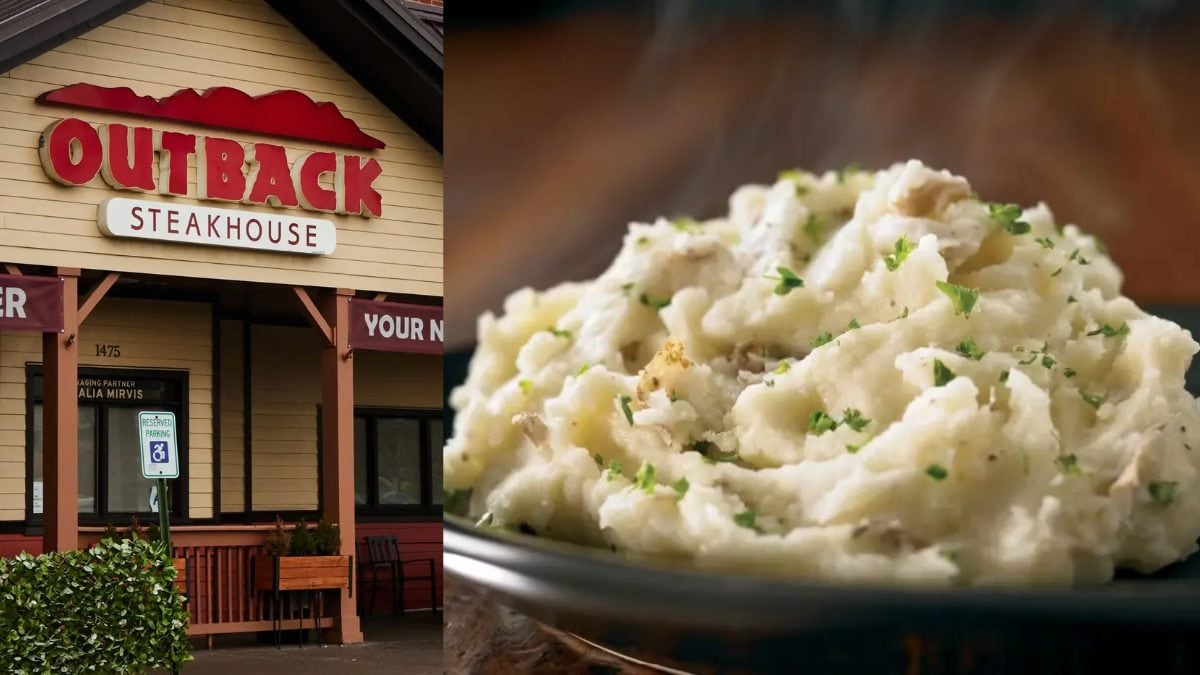
When we think of multi-million dollar restaurant lawsuits, our minds usually drift toward blazing-hot coffee or severe foodborne bacteria outbreaks. But for one casual dining giant, a massive legal battle is brewing over a staple steakhouse side dish that somehow ended up underfoot.
Outback Steakhouse is officially facing a $1.5 million civil lawsuit after a customer allegedly slipped on a dollop of mashed potatoes and fell face-first onto the restaurant’s hard flooring.
The legal drama stems from an incident dating back to May 14, 2023, at an Outback Steakhouse branch in Sterling, Virginia. The plaintiff, 56-year-old Tracy J. Renshaw, was dining with family members when she stood up to use the restroom. According to court documents, Renshaw stepped directly onto a "slippery foreign substance" that appeared to be mashed potatoes, causing her to lose her footing and suffer what she describes as "serious and permanent injuries."
The Anatomy of the $1.5 Million Claim
While the visual of slipping on a stray potato might sound like a slapstick comedy trope, the legal arguments and requested damages are dead serious. After waiting nearly two years to file, Renshaw officially logged her complaint in the Loudoun County Circuit Court, demanding a massive seven-figure payout to cover:
- Severe Physical Toll: The lawsuit states that Renshaw has suffered—and will continue to suffer—"great pain of body and mind" as a result of the face-first impact.
- Economic Damages: The $1.5 million sum is explicitly earmarked to compensate for her ballooning medical expenses, hospital bills, and a heavily diminished capacity to work and care for herself.
The core of the legal argument rests on the restaurant's "duty of ordinary care." The complaint accuses Outback employees of negligence, claiming they allowed an unhygienic and "unreasonably dangerous condition" to persist on the floor for too long without cleaning it up or erecting bright warning signs to alert unsuspecting foot traffic.
"[Outback] breached their duties of care and were negligent in that they allowed a slippery foreign substance to remain on the floor, failed to remove the foreign substance within a reasonable amount of time," the lawsuit alleges.
Outback Steps Up to Defend the Premise
Outback Steakhouse’s parent corporate entities aren't backing down from the fight. On May 27, 2026, the chain’s legal team filed a formal Notice of Removal, successfully escalating the case out of the local Virginia circuit court and into the Alexandria Division of the U.S. District Court for the Eastern District of Virginia.
Moving the case to federal court is a common strategic play for large corporations dealing with out-of-state plaintiffs, as Outback is legally registered as Outback Steakhouse of Florida, LLC. In their federal filings, Outback has aggressively denied any liability or negligence, leaning heavily on a few distinct legal defenses:
- The "Open and Obvious" Rule: Outback's lawyers argue that even if mashed potatoes were on the hard floor, the hazard would have been entirely open, obvious, and easily avoidable to any customer exercising ordinary care while walking.
- Lack of Knowledge: The chain maintains it had no prior knowledge of any spill in that specific walkway, meaning they could not have intentionally ignored a cleaning duty.
- The Corporate Shrug: In a bizarre twist of dense legal jargon, Outback stated it could "neither admit nor deny" that it ever even operated a restaurant location in Sterling, Virginia. While the location permanently closed its doors in August 2023 amid a wave of corporate downsizing, public review sites like Yelp heavily document its prior existence.
Winning slip-and-fall cases can be a notoriously uphill battle in the state of Virginia due to its strict contributory negligence laws. Under these guidelines, if a defense team can prove a plaintiff was even 1% at fault for not looking where they were walking, they can be entirely barred from recovering a single cent in damages.
;Resize,width=767;)
