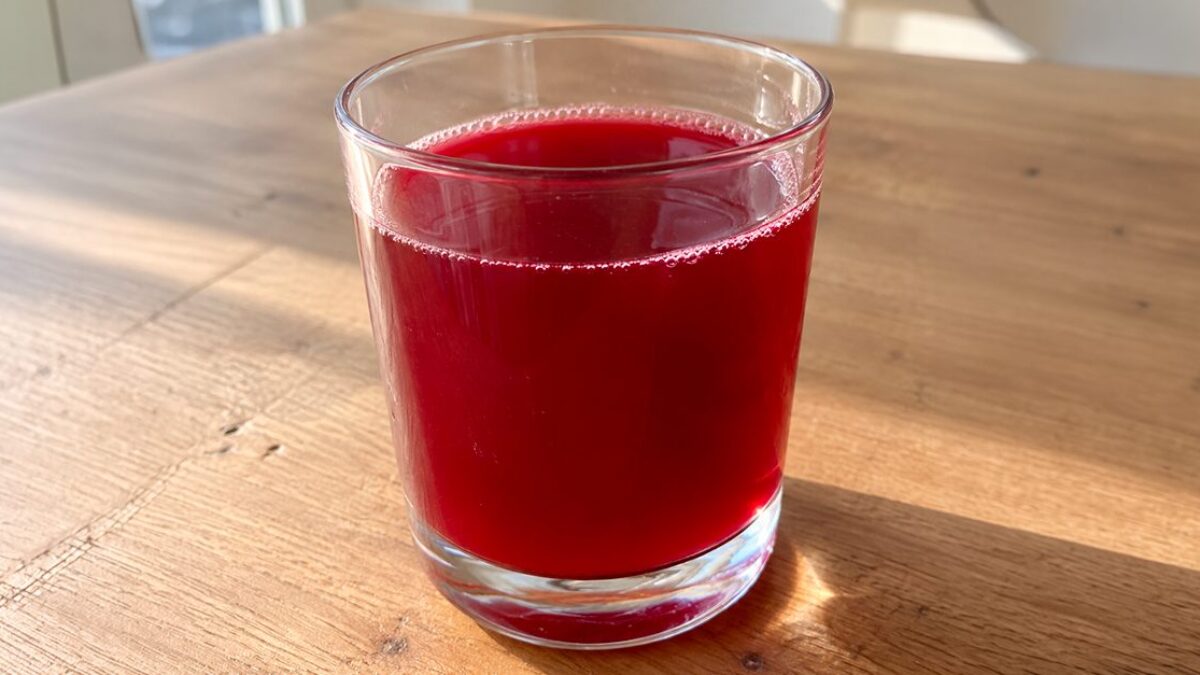
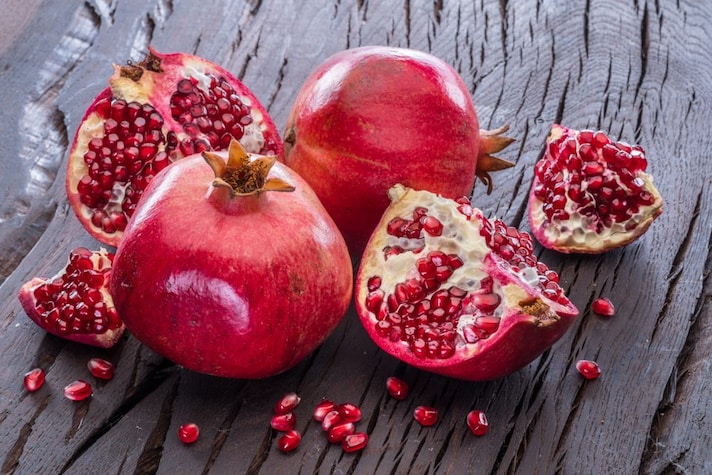
Autumn arrives and nature is colored by small trees with bright yellow leaves and numerous round fruits hanging from them, almost reminiscent of Christmas balls: we are talking about the pomegranate, belonging to the Punicaceae family.
Native to ancient Persia and currently cultivated commercially across vast regions of India, Iran, the Caucasus, and the Mediterranean, the pomegranate is beloved for its irresistible sweet-and-sour flavor and its culinary versatility. Its distinctive flavor makes its small red seeds perfect for both sweet and savory recipes: you can use them for everything from the famous juice to a delicate jam, from a refined risotto to a topping for a mixed salad.

But the pomegranate's unique properties don't stop there. Since ancient times, this fruit has been known for its powerhouse of health benefits, so much so that it has been used as a natural medicine for centuries. Rich in minerals, vitamins, and antioxidants, pomegranate is good for the intestines, heart, and immune system, to name a few. Let's take a look at all the reasons to consume it and the few contraindications to watch out for.
Pomegranate's Properties and Benefits
Don't be fooled by the tiny size of the numerous, slightly tart seeds that make up the pomegranate, hidden inside a round, apple-like shell (hence the name: melum-granatum, two Latin words meaning "apple with seeds"): they have incredible powers for the human body. It's no coincidence that the use of pomegranate as a medicine has very ancient roots: one of its first mentions dates back to the Ebers Papyrus of around 1550 BC, which describes how the Egyptians used pomegranate root as a vermifuge. Hippocrates later described the fruit as an anthelmintic, anti-inflammatory, to combat chronic diarrhea, and as an antibacterial for skin infections.
What makes pomegranate so special? Just reading its nutritional profile is enough to understand: rich in water and minerals including sodium, potassium, iron, and phosphorus, pomegranates are considered low in calories (about 70 kcal per 100 grams) and incredibly antioxidant. A true powerhouse of vitamin C and vitamin K, pomegranates are rich in tannins, polyphenols (particularly gallic acid and grenadine), and flavonoids, excellent for combating free radicals and cellular aging. They are also high in fiber, while containing almost no carbohydrates or lipids. How does all this nutrient richness translate into benefits for our bodies? Here are all the health benefits of pomegranates.
1. Purifying and Detox Effect
One of the greatest properties of pomegranate is its purifying effect, so much so that it often appears as an ingredient in detoxifying juices and smoothies. This is because pomegranate is very rich in water, which gives it a strong diuretic effect, but it is also rich in potassium, an element that strengthens the intestinal barrier and stimulates digestion, promoting the purification of the entire gastrointestinal tract.
2. Gut Support
Speaking of the gastrointestinal system: pomegranate is a great ally of the intestine, not only thanks to the aforementioned presence of water and potassium, but also thanks to its particular richness in fiber. It is precisely these components that have a particularly strong effect on the intestine, stimulating its proper function and having a protective effect on the gastric mucosa, alleviating certain problems such as diarrhea.
3. Antioxidant Effect
One of the properties for which pomegranates are best known is their antioxidant effect: like all red fruits and vegetables, they are full of antioxidants, meaning all those substances that can counteract the effects of free radicals, which are responsible for aging. The antioxidants contained in pomegranates are particularly flavonoids, substances that prevent premature aging and maintain the body's health. These, combined with the fruit's vitamin C, stimulate collagen regeneration, thus ensuring smooth and elastic skin. According to some recent studies, this ability to counteract free radicals and cellular aging makes pomegranates useful in preventing the onset of cancer cells and thus hindering the development of tumors.
4. Strengthens The Immune System
Thanks to its high vitamin C content, pomegranate is a valuable aid in strengthening the immune system. In particular, if consumed consistently and regularly, it has the ability to counteract the action of bacteria (and viruses), helping the body fight external pathogens, especially during the cold season, when we get sick more frequently.
5. Support Against Anemia
Among the various components of the pomegranate, iron also stands out, present in the fruit in rather high doses: for this very reason it is considered an excellent natural ally in preventing and fighting anemia.
6. Support of The Cardiovascular System
The presence of ellaic acid in pomegranates helps cardiac function and supports the entire cardiovascular system: in fact, it is able to counteract "bad" cholesterol in the blood and thus reduce the risk of the onset of various pathologies linked to it.
7. Useful During Menopause
Last but not least, this fruit is helpful for women in menopause because it can reduce some disorders related to this biological phase (it reduces hot flashes, mood swings, etc.) thanks to the presence of substances called phytoestrogens.
Pomegranate's Contraindications
Pomegranate has very few contraindications, but in some cases you should be careful about its consumption or at least limit it, obviously excluding cases of allergy, in which case it should be avoided. The fruit is generally suitable for any type of diet, but be careful if you are prone to obesity, suffer from it, or have general weight control issues: it's true that it's low in calories, but it's very high in fructose; for the same reason, be careful about its consumption if you have diabetes or urinary tract problems, as fructose can hinder the elimination of uric acid.
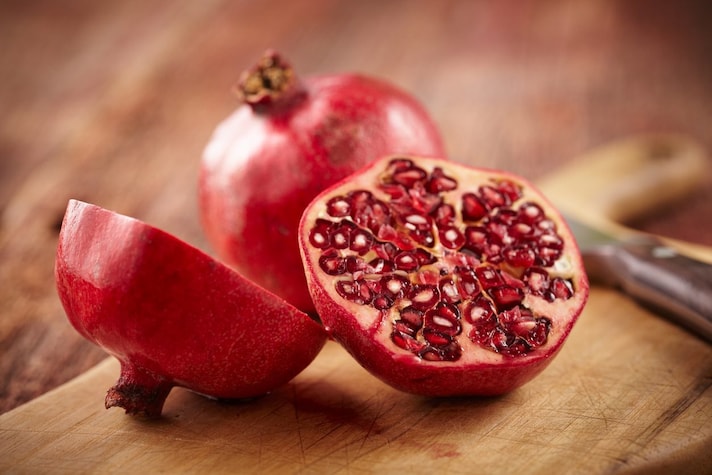
Furthermore, it's best to avoid excessive consumption to prevent gastrointestinal problems, due to its high fiber content. Excess fiber can have the opposite effect and trigger discomfort rather than preventing it. Be careful if you're undergoing any specific medication, as some substances in pomegranates can interfere with certain medications, particularly ACE inhibitors, antihypertensives, and anticoagulants, as well as those metabolized by certain liver enzymes.
;Resize,width=767;)
