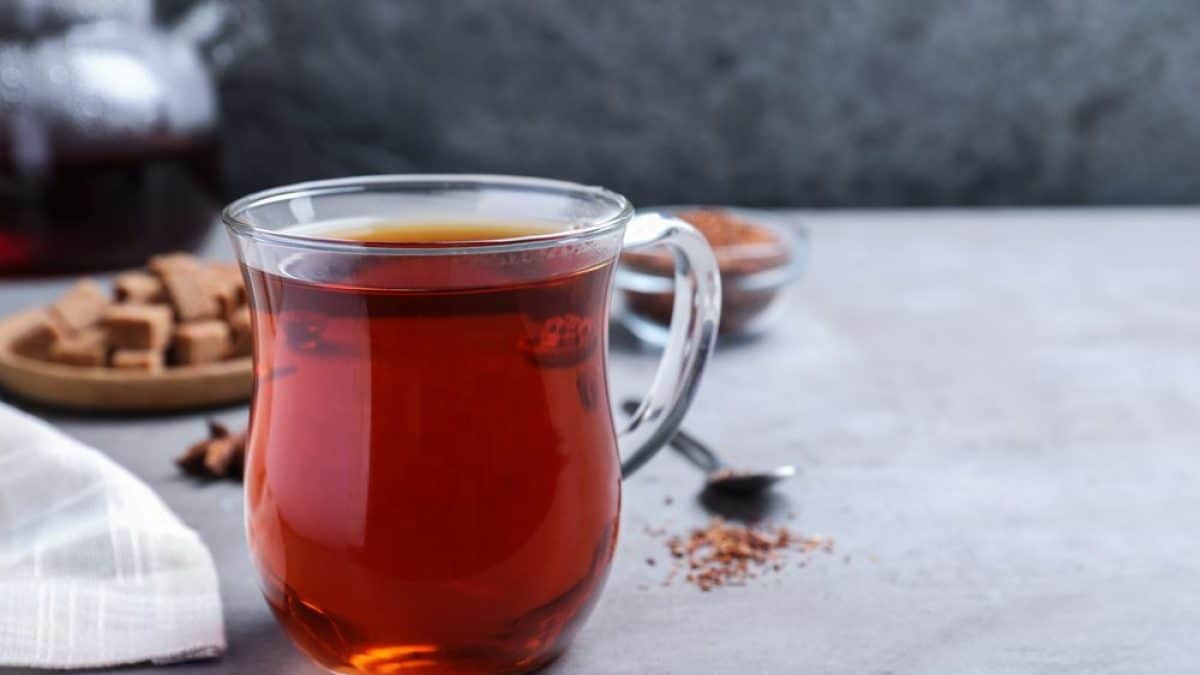
Rooibos is the common name of Aspalathus linearis, a shrub belonging to the Fabaceae family, the same family as legumes such as chickpeas, beans, and lentils. It is a plant that grows spontaneously in the mountainous region of Cederberg, in South Africa, where it is also cultivated: it appears as a bush that reaches a maximum of two meters in height, with thin, reddish branches and needle-like, bright green leaves and small, yellow flowers. In Afrikaans, the language spoken by the former Boer settlers, the term rooibos actually means “red bush,” from which the so-called “red tea” is obtained, which takes on this hue due to the oxidation process of the leaves during processing. Green rooibos, a variant that undergoes less oxidation, is also available on the market.
Botanically speaking, rooibos isn't a true tea, as it doesn't come from Camellia sinensis —known as the tea plant—but it's an equally popular infused drink around the world, known for its sweet flavor, its lack of caffeine (and therefore theine, since they are the same thing), and its various properties, particularly antioxidants. Let's discover its virtues, any potential contraindications, and how to best sip it.
Rooibos' Properties and Benefits
Rooibos rose to popularity in the early 2000s, thanks to Hollywood stars who included it in their anti-aging diets. But beware, it's not a miracle food, just like no other food. The plant contains several bioactive compounds, particularly polyphenols and flavonoids, known for their potential role in promoting the body's well-being. Studies have focused on its antioxidant properties, as a natural remedy for premature aging. It's also used in cosmetics, especially skin creams. One of the great advantages of rooibos is that it's caffeine-free, making it a very versatile drink suitable for everyone. Let's take a closer look at why you should drink it.
Antioxidant Action
The most well-documented peculiarity of this plant is its antioxidant power, which helps counteract free radicals involved in cellular aging processes. Rooibos is rich in polyphenols, and among the most studied is aspalathin , a molecule found exclusively in this plant in its unprocessed form, which is partially lost through oxidation, necessary for making the beverage. Green rooibos, precisely because the leaves are less subject to this process, has a higher concentration than red rooibos, which is however more common.
Support for Cardiovascular Well-Being
Some studies suggest that the bioactive substances present in rooibos – where in addition to aspalathin, polyphenols and flavonoids such as notophagin, quercetin, lutein and rutin stand out – may be helpful for cardiovascular health, promoting a possible favourable effect on the lipid profile, as well as having an anti-inflammatory effect useful for the functioning of blood vessels.
Absence of Caffeine
Unlike tea itself, which derives from Camellia sinensis, and coffee, rooibos is naturally caffeine-free. This means it can be consumed at any time of day, including in the evening, because it has no stimulant properties: it does not cause sleep disturbances or agitation. On the contrary, it can provide relief from migraines, alleviating their symptoms.

Low Tannin Content
Compared to traditional tea, rooibos contains lower amounts of tannins. Tannins are natural compounds found in many plants that, when consumed in high quantities, can irritate the stomach of some sensitive individuals. Because of its lower tannin content, rooibos is often considered a more digestively friendly beverage than tea.
Hydration Support
Drinking rooibos tea contributes to your daily fluid intake. It can help maintain adequate hydration, and because it's sweet, it doesn't require added sugar, meaning it's virtually non-caloric.
Rooibos' Contraindications
Rooibos is generally considered a safe beverage, not associated with any direct risks when consumed. It is always recommended to vary the intake and not consume large quantities. One study, for example, highlighted a rare case of liver damage in a 52-year-old man who regularly drank a herbal tea made from rooibos and bucco (Agathosma betulina, also native to Southern Africa and used for medicinal purposes), which improved only after discontinuing consumption. The same study concluded by emphasizing that there is no evidence of a definite cause-effect relationship, but that caution should always be exercised when consuming beverages made from herbs and vegetables in general. From this perspective, also be aware of possible interactions with certain medications: if you suffer from liver problems, diabetes, or cardiovascular disease, it is always best to consult your doctor.

How to Drink Rooibos
Rooibos is mainly consumed as an infusion, prepared with the dried leaves of the plant, which are found in tea bags or loose, especially the red variety. To make it, bring water to a boil and let it steep for about 5–7 minutes: unlike traditional tea, it doesn't become bitter if left to steep for a few minutes longer, so it's quite simple to prepare without any special preparation. It has an amber color and a pleasantly sweet flavor, similar to caramel. It can be drunk hot —no sugar needed, but you can also add a teaspoon of honey—and even cold, preparing it ahead of time as a refreshing summer drink, enriched, for example, with lemon zest, ginger, or mint leaves. In South Africa it is drunk with the addition of milk and the very well-known Rooibos Chai Latte is a preparation that recalls that of Indian chai tea, with tea, water, frothed milk (or a plant-based drink as a substitute) and various spices, such as cinnamon, cardamom or vanilla.


