
For a long time, those who choose a plant-based diet have known that nature holds incredible transformative powers, perfect for recreating dishes we've always loved. Think of a whole charred eggplant hiding a soft, silky center, or lion's mane mushrooms, which offer the same delicious texture as chicken. How do plants and mushrooms mimic a piece of meat so well? Interestingly, as experts point out, the secret lies not in protein, but in fiber. Today, combining chemistry, bioengineering, and culinary ingenuity, scientists and food startups are thoroughly studying these natural mechanisms to create increasingly compelling alternatives. The goal? To offer the same bite and satisfaction as a real steak, but starting exclusively from the earth.
Why Plants and Mushrooms Look so Similar to Meat
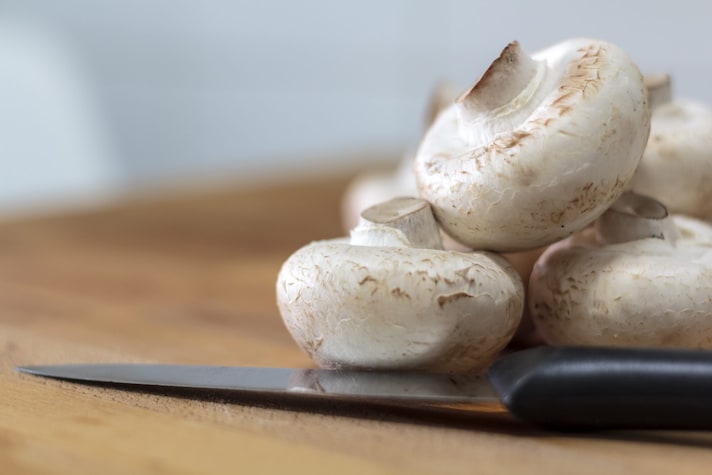
What makes a plant-based ingredient so "meaty"? It all comes down to its chemical structure. Mushrooms, for example, have cell walls rich in chitin, a tough fiber (also found in crab shells) that offers a pleasant resistance to the bite. Add to this glutamates, the umami-rich compounds abundant not only in mushrooms, but also in algae and tomatoes, which send immediate signals of satiety and fullness to our brain. If we then combine the famous Maillard reaction and spices like cumin, capable of releasing notes reminiscent of roasted fat, the illusion begins to take shape.
But there's a limit to what we can do in our kitchens: no matter how good it is, a cauliflower steak will never have the same structure as beef. This is where science comes in: a recent study published in Science of Food showed that to truly understand how meat behaves under the teeth, you have to analyze it in 3D, subjecting it to compression, tensile, and shear tests. The researchers found that for ground products, such as sausages and veggie frankfurters, the industry has already hit the mark: they have achieved a stiffness and bite virtually identical to their animal counterparts, and consumer taste tests have fully confirmed the laboratory data. The real hurdle remains the whole cut, such as chicken breast or steak: animal muscle, in fact, is complex because it has pockets of fat and a strong "mechanical asymmetry," meaning it offers much more resistance when pulled than when crushed. To solve the problem, startups are focusing everything on mycelium, the network of filaments at the base of mushrooms: this structure is capable of offering an innate fibrosity that closely resembles that of muscle fibers.
How to Recreate the Flavor of Meat
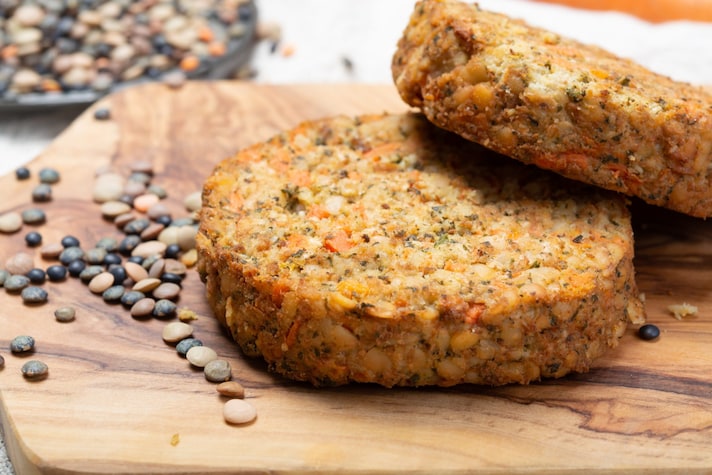
While texture plays a key role, flavor and aroma are what make us fall in love with a dish. To replicate the intense aromas of meat, science has rediscovered an age-old technique: fermentation. Researchers have discovered that fermenting sulfur-rich vegetables (like onions and garlic) with certain mushrooms triggers incredible aromatic compounds, capable of transforming the pungent aroma of onions into a deep, savory flavor incredibly reminiscent of roasted meat and sausages. Using these fermented broths as "flavor enhancers" can give any veggie burger a boost.
One last detail remains: the nutritional aspect. The historical success of meat is inevitably linked to its high protein content. To fill this gap, some specialized companies are starting to grow mushrooms on nutrient-rich substrates, obtaining crops with a protein content up to four times higher than normal. But for many in the industry, the goal is not just to match meat, but to surpass it: to combine the experience of a good barbecue with the benefits of fiber and immune-stimulating compounds.
;Resize,width=767;)
