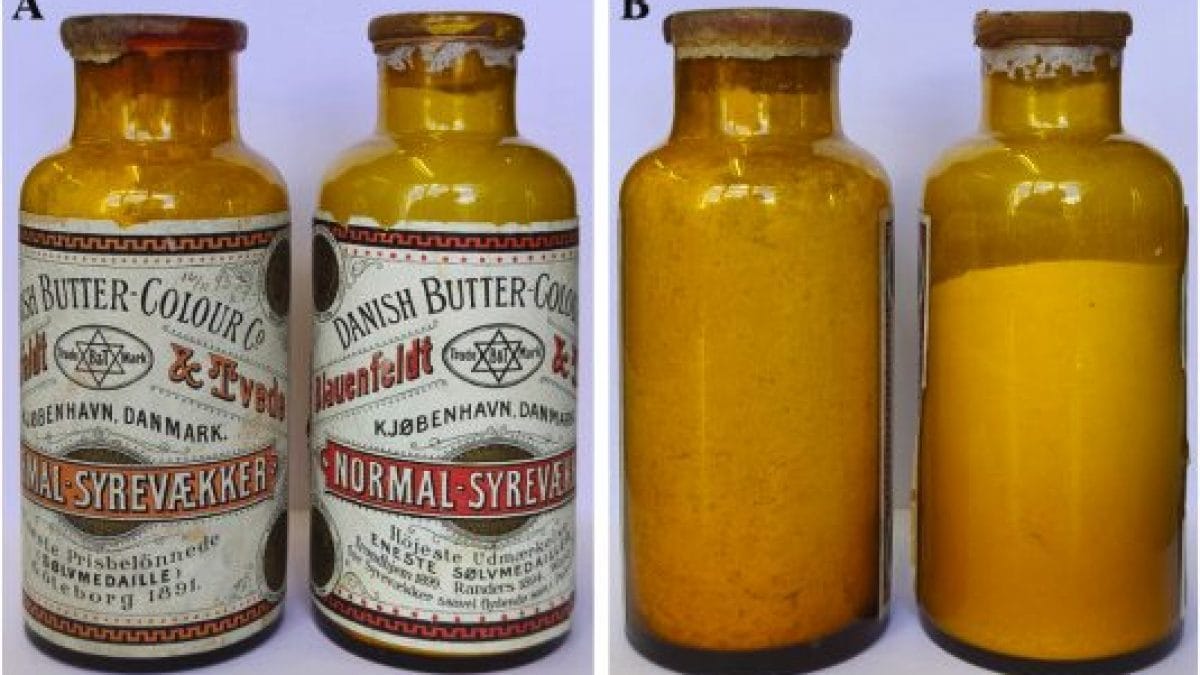
How many times, rummaging through old junk, have you found something that could hold value and a piece of history? Something more or less similar happened in Denmark. In the basement of a building in Frederiksberg, researchers discovered two small bottles forgotten for over a century. Inside were a whitish powder containing the remains of bacterial cultures dating back to the late 19th century. It turned out that those bacteria were used at the time to produce butter for export. A discovery that seems like something out of a novel, but which actually tells us about the evolution of European food production and the crucial role of microbes in our history.
What The Study Says
The research results were published in the International Dairy Journal under the title "Metagenomic analysis of 130-year-old Danish starter culture material." The scientists explain that they used metagenomic techniques, i.e., sequencing residual DNA, to reconstruct the original microbial composition of the butter. With this system, they were able to identify which bacteria were used to initiate the milk fermentation and which contaminants, international or otherwise, were present in the vials. The results were incredibly surprising. Among the identified species, Lactococcus cremoris stands out, a microorganism still used today in modern dairy production to acidify milk and kill harmful bacteria after pasteurization.

The presence of this bacterium confirms that by the late 19th century, the Danish industry had embarked on the path to standardization, focusing on more controlled cultures and reducing the risks associated with spontaneous fermentations. In those years, Denmark began exporting butter to England on a large scale, and to ensure its safety, the milk was first pasteurized and then "enriched" with bacteria called "starter cultures." These acted as a preservative and, through fermentation, added properties such as acidity, aroma, flavor, and texture.
The results of the analyses, however, don't just tell a story of progress. Research has also led to the identification of other, less desirable types of bacteria: Cutibacterium acnes, typical of human skin; Staphylococcus aureus, potentially pathogenic; and Vibrio furnissii, linked to intestinal disorders. In short, these unwelcome guests reflect the very poor hygiene conditions of the time, far from modern standards.
A Research With "Limits"
While this discovery holds a certain historical fascination, given that Denmark was transforming its dairy industry in the final decades of the 19th century, not everything is rosy. The study has limitations: it certainly cannot be determined with certainty whether the bacteria found in those bottles were still viable. After more than a century, some DNA has inevitably degraded, and it is not excluded that some species have been lost. Yet, the very fact that it was possible to recover and analyze such ancient genetic sequences demonstrates how microorganisms can retain memory over time, provided the preservation conditions are favorable.

Despite this, it was possible to understand how techniques such as pasteurization were beginning to spread during those years. Bacterial cultures were becoming an essential tool for ensuring the quality of Danish butter. Those two bottles forgotten in the cellar are therefore silent witnesses to an industrial and food revolution that laid the foundation for modern biotechnology. Today, those cultures no longer serve to produce butter, but they help us understand how the food we bring to our table is the fruit of centuries of experimentation and invisible battles between microorganisms. And, who knows, perhaps they remind us that science can also be born from what seemed destined to be forgotten.
;Resize,width=767;)
