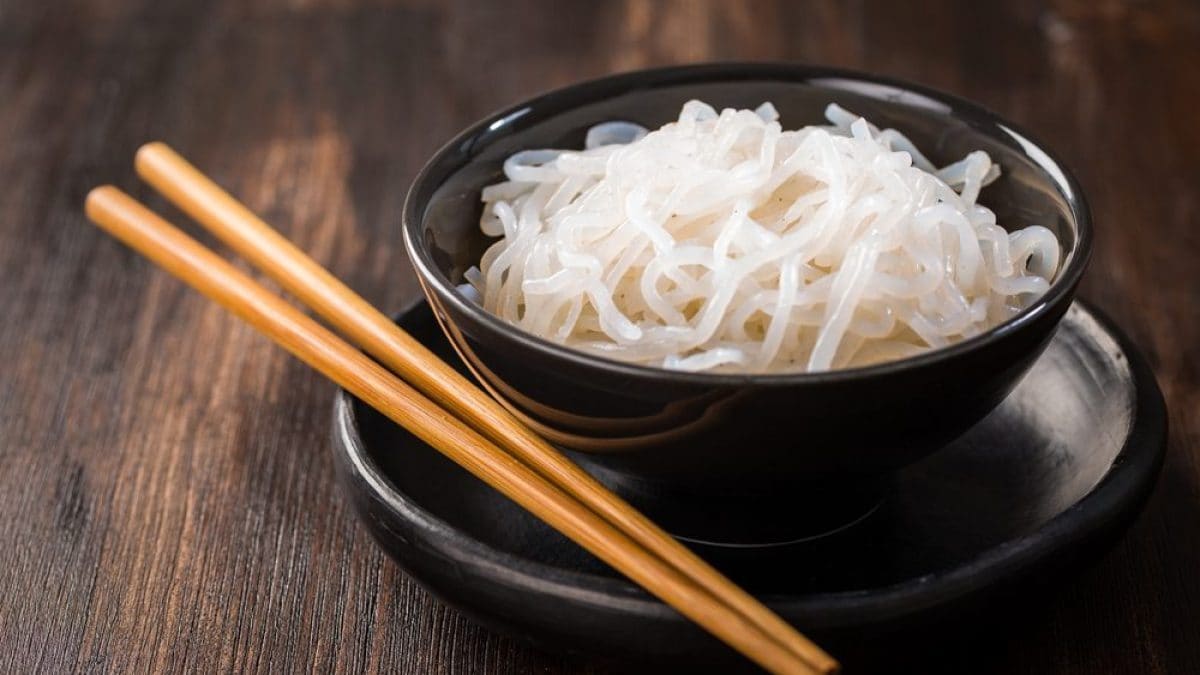
We're used to simply calling them noodles, but the name we use to identify these delicious Chinese or Japanese noodles actually encompasses several varieties. From buckwheat soba, the most popular in Western cuisine, to tasty durum wheat udon, to the famous instant ramen, spaghetti comes in a wide variety of forms and is a true staple of Eastern cuisine. Today we'll tell you about one of the most popular types of noodles, renowned for their lightness: shirataki, also known as "konjac noodles," named after the particular Asian plant from which they are made.
What Are Shirataki, The Thinnest Noodles
Known by various names, from "miracle noodles" to " konjac noodles," shirataki are the thinnest and lightest variant of the famous oriental spaghetti. The name, meaning " white waterfall," refers to a particular type of noodle made from an Asian root of Chinese origin called Amorphophallus konjac. Commonly known as "devil's tongue," it is a long, crimson-colored cob from which a flour rich in glucomannan is obtained, a substance highly prized in oriental medicine for its anti-cancer, detoxifying, slimming, and anti-inflammatory properties. This flour is used to create the ultra-thin shirataki noodles, with an almost impalpable consistency and a very white color. They are composed of 3% glucomannan and 97% water.

Shirataki Noodles' Properties and Benefits
Shirataki noodles are particularly popular in Asian cuisine because they have several beneficial properties for the body. First, they are very low in calories, and therefore can be consumed in large quantities without risk to your weight or health. They are highly digestible thanks to the presence of glucomannan, which also makes them very slow to digest: for this reason, shirataki noodles leave you feeling full for a long time, and are often recommended for those trying to lose weight, because they help you feel full without overeating.
The transparent konjac noodles also have a strong probiotic effect that nourishes the bacterial flora, making them an excellent aid in fighting inflammation, especially intestinal and gastric inflammation. Shirataki noodles, in addition to being almost completely carbohydrate-free, are also gluten-free, making them perfect for those with gluten intolerances.
How to Cook Shiritaki Noodles
Shiritaki noodles are now very easy to find in the U.S., in the international cuisine sections of most major supermarkets or in specialty shops. You can usually buy them in two versions: dried or soaked in their preserving liquid. They can also be found in "rice" form.

If you buy them dried, you need to rehydrate them by cooking them in boiling water for about 6-8 minutes, while if you find them in liquid, you simply need to rinse them before cooking. In both cases, the result is long filaments with a slightly gelatinous consistency, which, thanks to their neutral flavor, can be paired with various types of condiments.
The best way to prepare shiritaki is to use them in some traditional recipes: among the tastiest we suggest sukiyaki, a simple but flavorful dish based on thinly sliced beef, mushrooms, tofu and fresh eggs, best enjoyed in company.
Konjac noodles are also delicious as a classic hot noodle soup, flavored with popular ingredients like chicken, potatoes, and leeks: you can try making it following our recipe. You can also stir-fry them with vegetables for a fresh, vegetarian dish, adding plenty of soy sauce to give the dish an extra kick.
However you decide to cook shiritaki, always remember that the seasoning – whether broth or sauce – must always be very generous, because this type of spaghetti absorbs much more than the classic noodles we are used to.

;Resize,width=767;)
