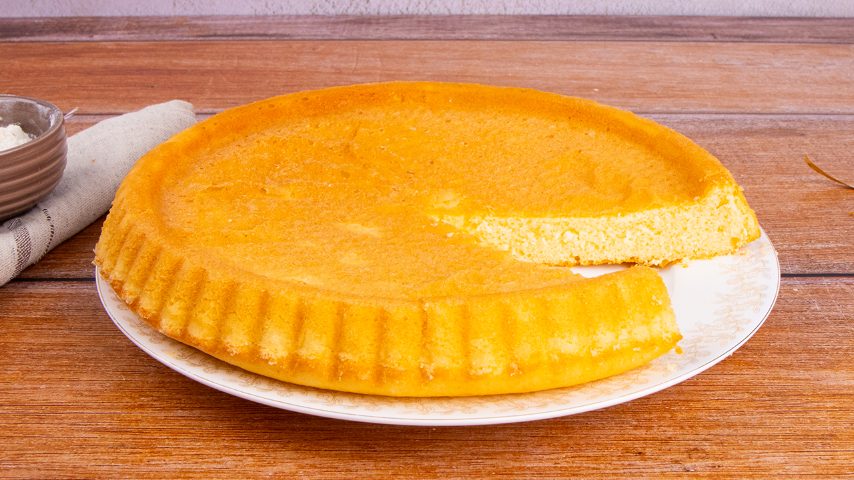
The soft tart cake base is that unfussy layer that is structured enough to carry creams, fruits, jams, or anything else you decide to place on top. It is a starting point for desserts that need a solid base. It fits perfectly as a dessert foundation, afternoon treat, or even a quick bake when you want something homemade without committing your entire evening.
What is a Soft Tart Cake Base
Instead of rich, layered pastries reserved for celebrations, families often leaned on basic batter cakes like this one as a practical foundation for whatever was in season, whether fruit preserves, fresh berries, or light creams. In many households, this type of cake base became the emergency dessert option, with ingredients that were so common that it could be made without planning.
Pro Tips for a Better Soft Tart Cake Base
- Flour and baking powder should be sifted to prevent uneven pockets in the batter. It also helps keep the texture consistent.
- Once flour is added, avoid overworking the batter. Stop as soon as no dry patches remain.
- A 26cm mold keeps the thickness balanced. Too small and it rises unevenly; too large and it becomes too thin.
- Level the batter before baking. A quick shake or gentle tap helps distribute it evenly so it bakes consistently.
- Don’t open the oven early. Early peeking can cause uneven rising and sinking in the center.
Frequently Asked Questions
Can I use this base for layered desserts?
Yes, this base holds its shape well enough for light layering. You can slice it horizontally if cooled completely. It works well with creams or fruit fillings.
Why did my cake base turn dense?
This usually happens when the batter is overmixed after adding flour. It can also come from under-whipped eggs and sugar. Another factor is skipping the baking powder or measuring inaccurately. Keeping the mixing gentle after the flour helps prevent this.
Why did the center sink after baking?
This often happens if the oven door is opened too early. It can also result from underbaking the center, and another reason may be too much leavening agent. Allow it to set fully before removing from the oven.
Can I add flavors to the batter?
Yes, light additions like vanilla or citrus zest work well. Keep additions subtle so the structure remains balanced and avoid heavy mix-ins that disrupt the batter consistency.
What makes this different from a regular sponge cake?
This version is slightly denser and designed as a base. It’s built for holding toppings rather than standing alone, and the oil gives a softer crumb over time.
How to Store Leftovers
Once fully cooled, wrap the cake base in cling film or store it in an airtight container. Keep it at room temperature for up to 2 days if unused, and for longer storage, refrigerate it for up to 5 days.
Ingredients
How to Make a Soft Tart Cake Base
;Resize,width=712;)
Add the eggs and sugar into a mixing bowl and whisk with an electric mixer. Once ready, pour in the milk and vegetable oil and continue mixing until smooth.
Add the eggs and sugar into a mixing bowl and whisk with an electric mixer. Once ready, pour in the milk and vegetable oil and continue mixing until smooth.
;Resize,width=712;)
Sift the flour and baking powder directly into the wet mixture. Stir gently until a smooth batter forms with no visible dry patches.
Sift the flour and baking powder directly into the wet mixture. Stir gently until a smooth batter forms with no visible dry patches.
;Resize,width=712;)
Pour the batter into a 26cm cake mold and level the surface lightly so it spreads evenly across the pan.
Pour the batter into a 26cm cake mold and level the surface lightly so it spreads evenly across the pan.
;Resize,width=712;)
Place in a preheated oven at 180°C/360°F and bake for 25 minutes.
Place in a preheated oven at 180°C/360°F and bake for 25 minutes.
;Resize,width=712;)
Transfer the soft tart cake base onto a serving plate and slice.
Transfer the soft tart cake base onto a serving plate and slice.
;Resize,width=767;)
