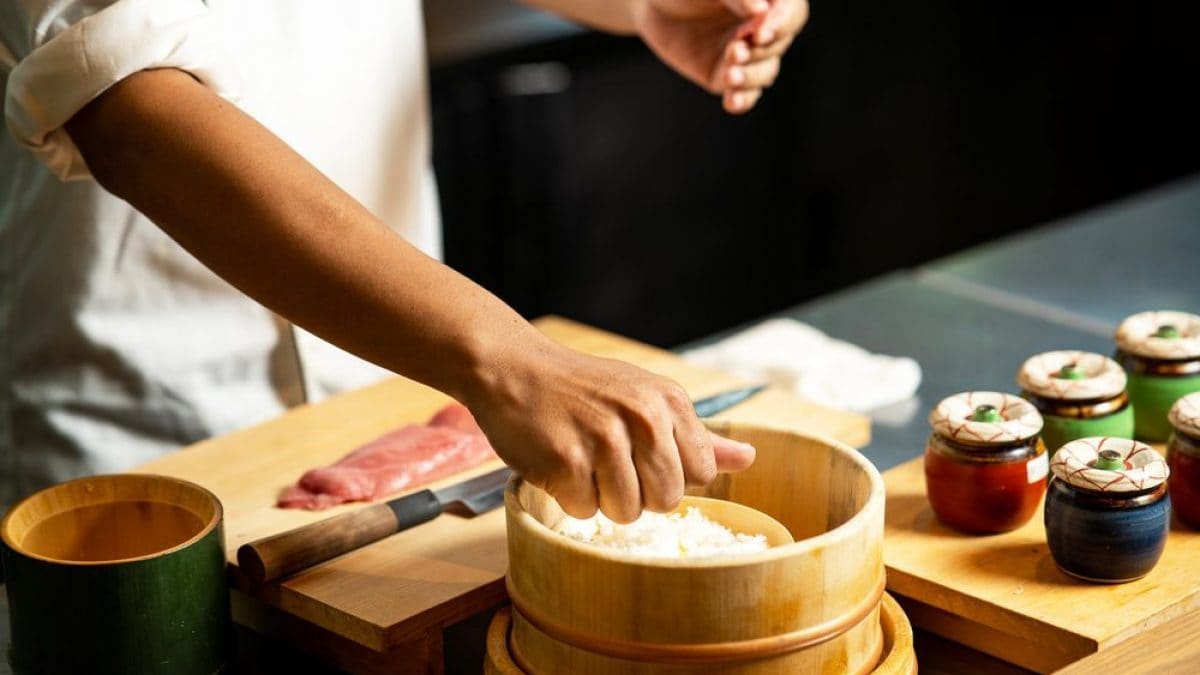
How many times have you said, " Shall we go out for sushi?". In recent years, sushi has become a veritable tradition, a trend that has unexpectedly won over many Americans and Westeners. Its spread has been so rapid and widespread that even the most skeptical have become huge fans. We're talking about the iconic dish of Japanese cuisine, which has even become a "category" on food delivery apps. From a traditional Japanese dish, sushi has now become a global gastronomic choice, enjoyed by everyone, from young and old, thanks to its simplicity, freshness, and versatility.
Although it has quickly conquered major Western cities, understanding how to eat sushi isn't exactly simple. Indeed, there's a whole phenomenology behind it, explained by great itamae (板前 – sushi masters), which allows even the least enthusiastic to avoid making a fool of themselves. For this reason, it's important to know sushi etiquette: a series of unwritten rules that help us enjoy the experience without a hitch. As we mentioned earlier, to best explore these recommendations, it's helpful to consult the advice of experts who, with their wisdom, reveal the secrets of a flawless meal.
Sushi's Origins, From Beijing to Tokyo With Hanaya Yohei
If you thought sushi originated in Japan, you're almost wrong. Its origins actually date back to China around two thousand years ago, where fish was preserved in fermented rice. This ancient technique, brought to Japan around the 7th century AD by Buddhist monks, evolved over time until it found its most refined form in the Land of the Rising Sun.
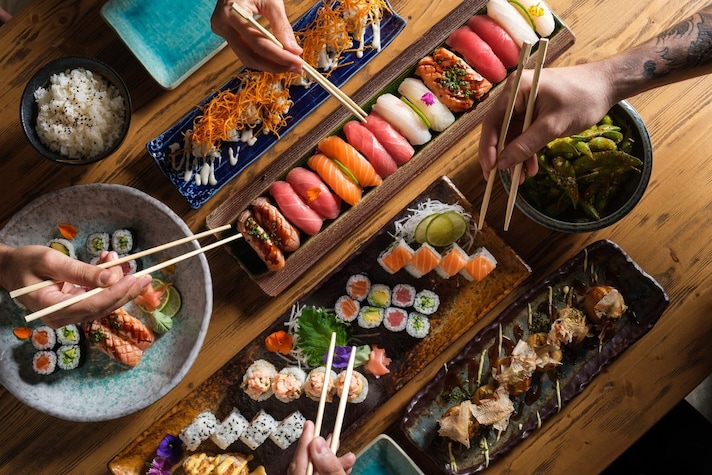
The real turning point, however, came in the nineteenth century, in Edo (now Tokyo), when Hanaya "Yoshi" Yohei invented nigiri, transforming sushi into a single bite of rice shaped by hand with fresh fish.
Another decisive change came after World War II, driven by two key factors. On the one hand, for hygiene reasons, sushi stopped being sold at street stalls and lost its fast food status, transforming into a more exclusive offering, served in restaurants. On the other hand, Yoshiaki Shiraishi, a Japanese restaurateur, entered the scene. Aiming to reduce costs and make sushi more accessible, he created kaiten-zushi, the famous conveyor belt sushi. A revolutionary idea that would soon conquer the West as well. From there, the step to global success was short: from the United States in the 1980s, thanks to yuppies and celebrities, sushi conquered the world and continues to this day.
The Rules to Follow for Eating Sushi "Correctly"
Etiquette is a set of rules to follow that dictates how to behave in different situations. Sushi etiquette, while not strictly conventional, has existed for several years. There are numerous dictates for eating it, and many of these rules were developed a decade ago by chef Susumu Yajima, head chef of Yajima Sushi in Shibuya, the iconic neighborhood in central Tokyo.
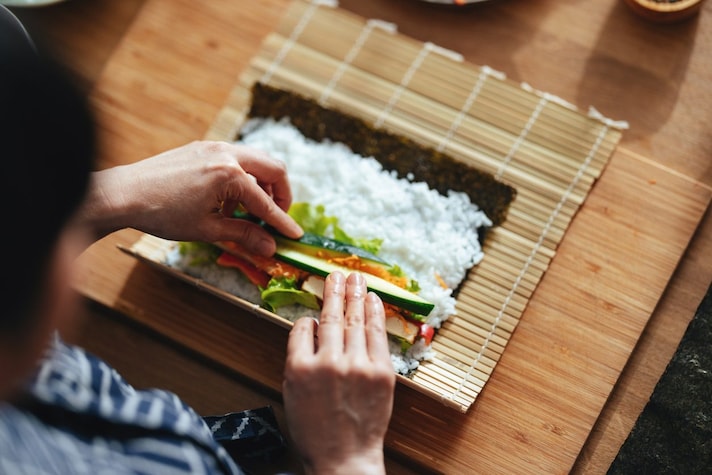
In short, eating this dish isn't just a matter of taste, but also of table manners. To avoid making a bad impression, it's helpful to follow some rules we'll include in this guide, handed down by great itamae, the chefs who specialize in sushi. Here are Master Yajima's "10 Commandments of Sushi," along with other little tips for becoming a perfect sushi connoisseur.
The 10 Commandments of Susumu Yajima
- An entire sushi meal should last 10 to 15 minutes.
- Eat sushi for lunch, not dinner.
- You also need to "smell" sushi, not just taste it.
- Eat sushi in a small restaurant with few seats.
- Use your hands to eat sushi, not chopsticks.
- Eat the sushi immediately so you can still feel the warmth of the rice.
- The chef adds the wasabi and soy sauce, you just have to eat it and not add any other condiments.
- Drink sake with your sushi, a small sip even while you're chewing.
- When eating sushi, you should focus on the flavor and not chat with those around you.
- Follow these rules, otherwise when you book at my restaurant I'll pretend it's already fully booked.
All these rules are the fruit of the master's experience. He himself has explained in several interviews that making sushi isn't just a job, but a hobby to be practiced all day, every day. "It's something I love," he explains. "I'll never tire of being a sushi man."
Other Little Rules to Follow
What you read above were the "commandments" drawn up by the chef, but we generally know that in the U.S. there is not yet a "courtly" culture surrounding sushi, which in Japan, however, is considered a true art form. In the U.S., many sushi restaurants follow the all-you-can-eat formula, but the quality of the food is often not the finest. In Tokyo and its surrounding areas, however, the concept of a "standing sushi bar" is very common, where sushi is eaten standing up, quickly, and often with your hands. This type of restaurant embodies the concept of a quick meal, in line with the first rule of the "Ten Commandments," according to which a meal should last no more than 15 minutes. It is an informal experience that represents a different approach to Japanese cuisine than that found in the U.S. or other parts of the world, where a similar concept is not yet widespread.
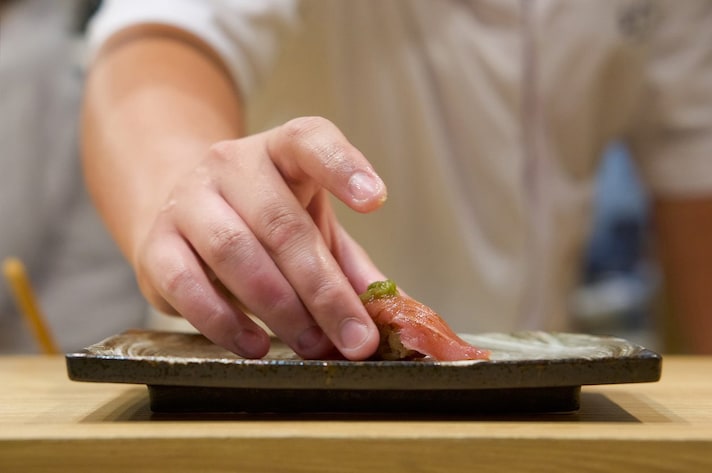
Below you will find some rules that every sushi lover should follow to avoid making a bad impression:
- It's essential to wash your hands thoroughly before ordering. In Japan, it's traditional for restaurants to offer oshibori (おしぼり), a hot towel, before the meal to allow guests to clean their hands. This custom is deeply rooted in Japanese culture, where geisha once also served customers, in a role similar to that of today's waiters.
- Don't spear sushi with chopsticks: one of the most important rules when eating this dish. Spearing the fish is considered rude and shows a complete lack of respect for the food you're about to eat.
- Sushi should be eaten entirely in one bite. Dividing sushi into multiple pieces is considered disrespectful to the chef, who has dedicated years to perfecting the cuts and preparing the dish. Eating it as it was prepared is a sign of appreciation for the sushi master's skill and artistry.
- Asking if the fish is fresh demonstrates distrust of the chef and his work. A true sushi master always selects the freshest ingredients, so raising a doubt is considered inappropriate.
- Never ask for a knife to eat sushi because you don't need one.
- Chopsticks are not held like swords. They are held with the tips of the fingers.
- Each bite of sushi and sashimi is a small masterpiece: it should not be eaten with detachment and sufficiency, but with attention and admiration for the work done by the itamae.
- Don't mix wasabi with soy sauce.
- You need to dip the fish side in the soy sauce, not the rice side.
- Never rub your chopsticks. For Japanese people, rubbing your chopsticks is an insult to the chef and the restaurant.
- Ginger served at the table can be eaten between courses to cleanse the taste buds.
As a final tip, if you're in Japan and eat sushi at a high-end restaurant, perhaps sitting directly opposite the chef, it's polite to thank him for his work once you're finished. "Domo arigato" is a common form of "thank you" in Japanese, while those who wish to be more formal can say goodbye with "Gochisosama deshita," which more elegantly means "thank you for the meal."
;Resize,width=767;)
