They are enjoyed for breakfast, dunked in tea or milk, as a snack, or at the end of a meal, perhaps paired with a good fortified wine: we are talking about biscuits, a very popular baked product that boasts many variations around the world, artisanal, industrial, and even homemade. In Europe, they first appeared in ancient Roman times, with the name panis bis coctus, or twice-baked bread: the consistency became drier, making it a food that could be preserved for a long time. Each region has its own favorite biscuits, which reflect local traditions and raw materials, including more rustic or refined specialties, linked or not to religious holidays: below we have selected the most famous Italian biscuits, those that have transcended territorial borders, becoming popular throughout Italy, and abroad.
1. Amaretti

Amaretti are found throughout Italy, with different variations from North to South. What they all have in common is their mixture of sweet almonds and apricot kernels, the bitter almonds that give them their distinctive bitter aftertaste. Probably the most famous are those from Saronno (in the province of Varese), with a crumbly, crunchy texture and a brown color, made with egg whites, apricot kernels, and sugar. The leading confectionery company (which registered the trademark) is the Lazzaroni family, which began producing them in the second half of the 18th century.
2. Baci di Dama (Lady's Kisses)

Elegant and delicious biscuits, baci di dama are made of two small domes made of flour, almond flour, butter, and sugar, enclosing a dark chocolate filling: the composition itself evokes kissing lips. These traditional Piedmontese biscuits initially used hazelnuts instead of almonds, which were once very available and affordable. Their origins date back to the mid-19th century in Tortona, but there are also other tales, one that leads to Novi Ligure and another to the court of Vittorio Emanuele II of Savoy.
3. Brutti Ma Buoni

We're staying in Piedmont with the brutti ma buoni, also known as brutti e buoni (ugly but good). These cookies, also found in other parts of Northern Italy, are characterized by an irregular and rather rough appearance. As the name suggests, however, don't be fooled by their appearance, because the taste is not disappointing, thanks to the dough made with meringue (whipped egg whites and sugar) and chopped hazelnuts. They can be flavored with vanilla and cinnamon, or enriched with bitter cocoa.
4. Anise Biscuits

Among the most popular traditional biscuits are those with anise, which are especially popular in central and southern Italy—Tuscany, Abruzzo, Umbria, Molise, and Sicily—as an after-dinner treat, paired with a glass of fortified wine or a cup of coffee. The star of the show are anise seeds, a spice known since ancient times (not to be confused with star anise), which lend their classic aroma to a dough that's usually butter-free.
5. Canestrelli

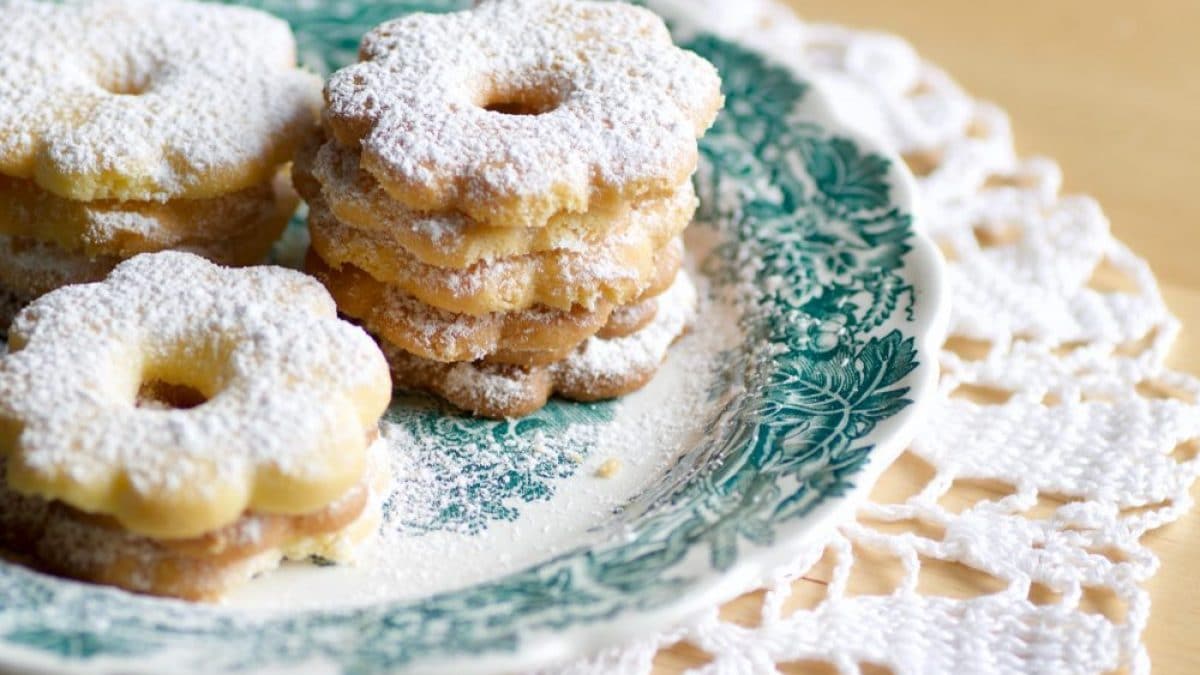
Typical of Liguria, here are the romantic canestrelli, with their unmistakable daisy shape with a hole in the center, which makes them immediately recognizable. These are very popular sweets that have their roots in the town of Torriglia (in the province of Genoa), and have since spread beyond the regional borders, especially in Piedmont. The most famous version is a delicious biscuit, rich in butter and sprinkled with powdered sugar.
6. Cantucci

Cantucci are biscuits that need no introduction: typical of Tuscany, they are also called cantuccini, and are characterized by their elongated shape made from a stick of dough made with flour, eggs, almonds, sugar, and vanilla. They are baked twice, making them particularly crunchy and perfect for dipping in Vin Santo. Similar tozzetti are made in Umbria, Abruzzo, and Lazio, with chocolate and hazelnut variations.
7. Krumiri

Eggs, sugar, butter, and flour are all it takes to create an iconic biscuit that originated in Casale Monferrato in 1878: krumiri were developed by pastry chef Domenico Rossi, it is said, after an evening with friends, sipping krumiro, a date-based liqueur in vogue at the time that needed a worthy accompaniment. Their appearance recalls the famous handlebar moustache of King Vittorio Emanuele II, who died that very year.
8. Occhio di Bue (Italian Sandwich Cookies)

Their homeland is probably Trentino Alto-Adige, but occhio di bue biscuits are famous throughout Italy, easy to find in pastry shops and bakeries, perfect for enriching a tray of biscuits. These are round shortcrust pastry biscuits that are paired in pairs: the top one has a hole in the center through which you can see the jam-based filling underneath, usually apricot, strawberry, or berry, with variations also including hazelnut cream.
9. Paste di Meliga (Cornmeal Cookies)

These pastry biscuits come from Piedmont, specifically from the areas of Cuneo, Canavese, and Biella (the first records of them date back to around 1850). They are made with a soft, buttery dough where wheat flour meets corn flour, giving them a pleasant grainy texture. The most common shape is a ring-shaped one: in the Barge area (in the Cuneo area), corn biscuits are called batiaje, because in the past they were offered during baptisms.
10. Reginelle

Reginelle, also known as queen biscuits or sesamini, are a Sicilian specialty, particularly from Palermo, whose main ingredient is sesame, known in dialect as cimino. The seeds coat a shortcrust pastry made with flour, lard, sugar, food-grade ammonia, egg, milk, vanilla extract, and orange zest. They are very crunchy when bitten into, making them excellent dipped in milk or a fortified wine, such as Marsala or Zibibbo.
11. Ladyfingers

Rather than being eaten plain, ladyfingers are biscuits used primarily in traditional desserts like tiramisu, zuppa inglese, and zuccotto. They're hard to mistake: they're light and spongy, elongated in shape, made with eggs, sugar, flour, and potato starch. Their name harks back to the House of Savoy, which is precisely why they're so popular in Piedmont and Sardinia (the pistoccus), where the Savoy dynasty was influential, as well as in Sicily: in Caltanissetta, for example, raffiolini appear, which are given as Christmas presents.
12. Sweet Taralli

Sweet taralli, tarallini, and tarallucci: not to be confused with the equally famous breakfast biscuits from a historic Italian brand, these are the dessert version of a savory specialty that boasts multiple interpretations in Central and Southern Italy, including Tuscany, Lazio, Campania, Puglia, Calabria, and Sicily. In this case, the simple dough (without butter) is enriched with sugar and white or red wine, then baked; some variations may be lightly glazed.
13. Torcetti

If you're passing through Piedmont and the Aosta Valley, you might come across torcetti (torcèt in Piedmontese and torcets in French), once called torchietti, whose main ingredients are butter, flour, sugar, and yeast. Their shape resembles twisted breadsticks, closed like bows. They pair perfectly with sparkling wine or fortified wine.
14. Zaeti

We conclude our review with a star among Venetian biscuits, the zaeto, also known as zaleto or zaletto. You'll find them in all the bakeries and pastry shops in Venice, and their name refers to their yellowish color (zalo in dialect) due to the corn flour used, the same flour used for polenta. Crispy and crumbly, the zaeti are traditionally diamond-shaped or elongated, and are a peasant recipe that the nobility of the Serenissima adopted, adding raisins (often steeped in grappa) and butter. Some variations include chocolate chips.
;Resize,width=767;)
