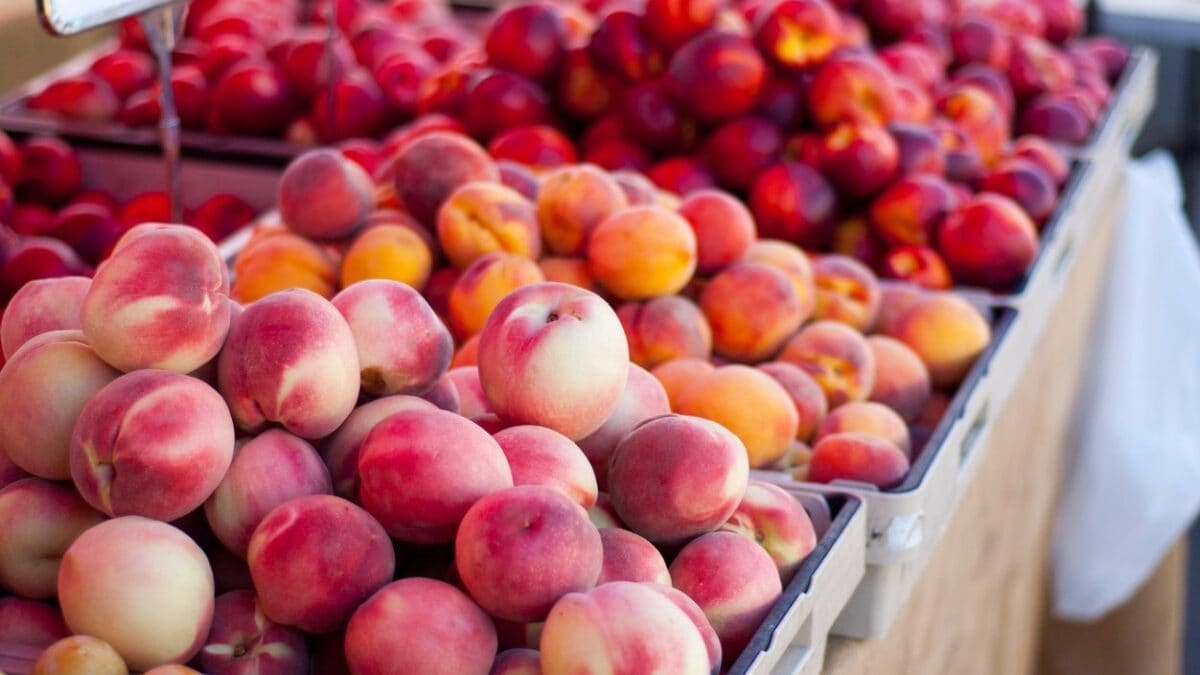
Among the fruits that accompany us during the summer, peaches have a place of honor: available for a few months each year (from June to September), they are found in numerous varieties at supermarkets, at the local greengrocer's, and at local markets, where most often varieties closely linked to the local area appear. Popular throughout the country and less common, peaches can be distinguished with the naked eye by the texture of their skin, whether covered with light fuzz or glabrous, and by the color of their flesh, white or yellow. This difference is due to the quantity of carotenoids present in the fruit, which science has attributed to the presence or absence of a specific gene, capable of degrading these plant pigments typical of many fruits and vegetables we bring to the table. Rich in benefits, peaches, when in season, become ideal allies for the well-being of our body, with the advantage of being particularly delicious – thanks to their aroma and sweet taste – both in pastry and in savory recipes. Let's see what the most common types are and how to best use them in the kitchen.
1. Yellow Peaches
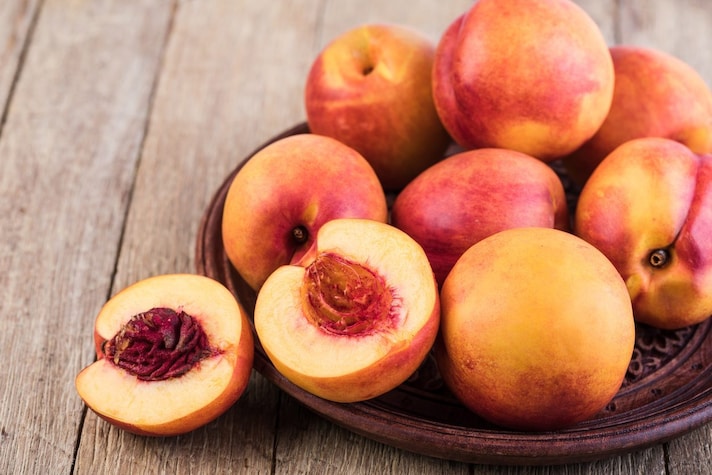
This is the best-known and most versatile variety of peach, suitable for being enjoyed plain, at the end of a meal, for breakfast with yogurt or in a fruit salad, but also for making jams, ice creams and a variety of desserts, in preparations that require it raw or cooked. These peaches usually have the classic velvety skin with shades ranging from yellow to red: the inside is juicy, full of pulp, where the sweetness prevails, but it can have acidic notes.
2. White Peaches
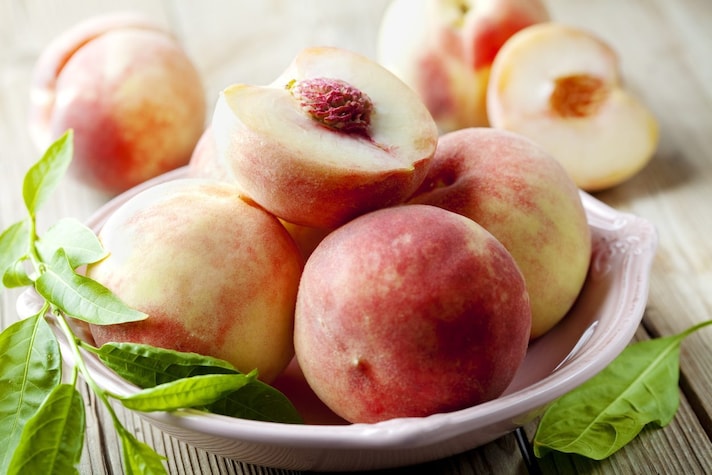
White peaches are also highly prized: they have a thin, light-colored skin—with or without fuzz—ranging from creamy white to pale pink. They are characterized by their melting (in some cases very soft) flesh, which is highly aromatic and has a high concentration of natural sugars combined with low acidity, making them generally sweeter, more fragrant, and more elegant than yellow peaches. For this very reason, they are prized in the kitchen when eaten raw or in recipes that call for their use fresh, including drinks like the Bellini cocktail.
3. Nectarines
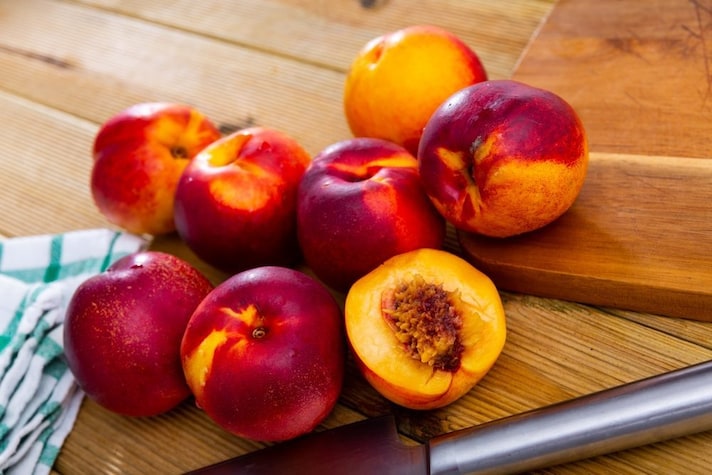
They have firm, crunchy flesh with an intense aroma, which, depending on the color, classifies this variety as yellow or white peaches. Their distinguishing feature is their smooth, shiny skin, free of any fuzz and featuring bright yellow or red hues. Nectarines are commonly found on fruit and vegetable shelves and are perfect for eating raw, such as in salads or cold desserts, or cooked, for making soft cakes, tarts, and baked stuffed peaches.
4. Flat Peaches
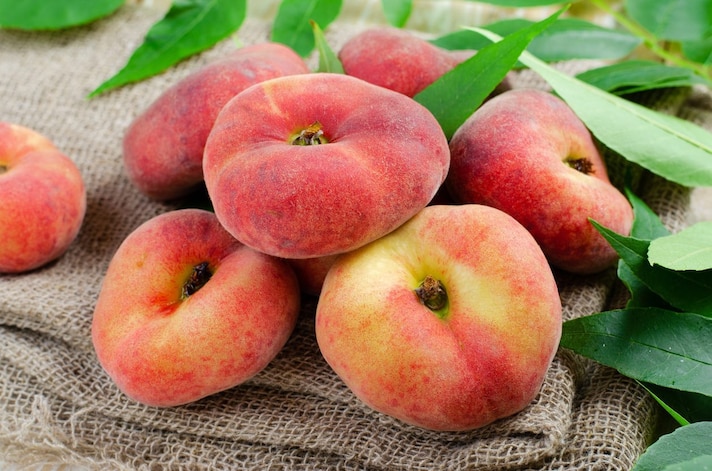
Compared to the rounded shape of more common peaches, in this case we are faced with a fruit with a squashed appearance, with flattened poles. Its scientific name is Prunus persica var. platycarpa, and it is also called platicarpa peach, ciabatta peach, or UFO peach: it is made up of different cultivars around the world which all have in common: medium-small size, thin and velvety skin, small stone, marked sweetness and low acidity of the tender and fragrant flesh, which can be yellow or white. How to use it? It is best served fresh, in sweet and savory dishes: try it in sweet and sour sauces or cut into cubes and segments to accompany tartare or fish carpaccio.
5. Clingstone Peaches
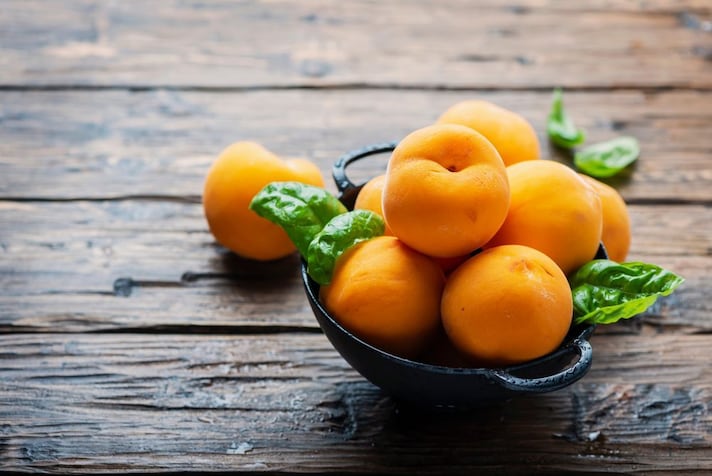
We're always referring to a particular peach very common in Southern Italy with a medium-large size, firm, slightly fibrous flesh, a more or less intense yellow color that, depending on the variety, can be tinged with red. The skin is velvety and matches the color of the inside. If you have them, then know that they hold up well to cooking as they remain full-bodied and don't fall apart: becoming an ingredient to be used in baked cakes, preserves (such as peaches in syrup), and peasant preparations tied to the region, such as peaches in wine.
The Most Famous American Varieties of Peaches
Peach cultivation (Prunus persica) has a long history in the United States, especially in states like Georgia, South Carolina, California, and New Jersey, where the climate and soil are ideal for the fruit. Originally native to China and brought to the Americas via Europe, peaches in the U.S. come in a wide range of varieties, though the ones we see in supermarkets are only a small fraction of the country’s biodiversity. Among the most prized are the Elberta peach, famous for its large size and juicy yellow flesh; the Redhaven, an early-season favorite with sweet, firm flesh; and the Georgia Belle, known for its fragrant aroma and tender texture. Flat peaches, often called “doughnut peaches,” such as the Saturn peach, are also widely grown and appreciated for their unique shape and concentrated sweetness.
Specialty and heirloom varieties are also preserved by initiatives like Slow Food USA’s Ark of Taste, protecting gems such as the White Imperial, a white-fleshed variety with delicate aroma; the Indian Blood peach, valued for its late harvest and rich flavor; and the Elberta Blood, a rare cultivar cherished for its deep red flesh and history in southern orchards. Local farmers’ markets often feature these heirloom peaches, giving consumers a taste of the country’s rich peach-growing heritage beyond the standard supermarket selections.
;Resize,width=767;)
