Saving on your monthly bills isn't just about turning on the dishwasher at certain times of the day or optimizing your refrigerator usage: not many people know this, but savings also depend on the type of cooking you choose to prepare your food and the type of appliance you use. Not all cooking methods are equal in terms of energy consumption, and choosing one over another is one of the small tricks you can use to reduce consumption.
Some of the most commonly used methods are also the most energy-intensive: for example, boiling potatoes or pan-frying them takes about 30 minutes, which, in terms of energy consumption, means you'll use about 300 watts per hour. Grilling or baking consumes even more: over a 40-minute cooking period, the former uses 425 watts per hour, while the latter can reach peaks of 800 watts per hour.
Other techniques, however, are decidedly less expensive and, while sometimes less healthy or slower to prepare, can help you save on energy costs. The least expensive is induction cooking, followed by other techniques like frying or other methods like pressure cooking, but there are many more: here are all the most economical cooking methods that can help you save on energy costs.
1. Induction Cooking

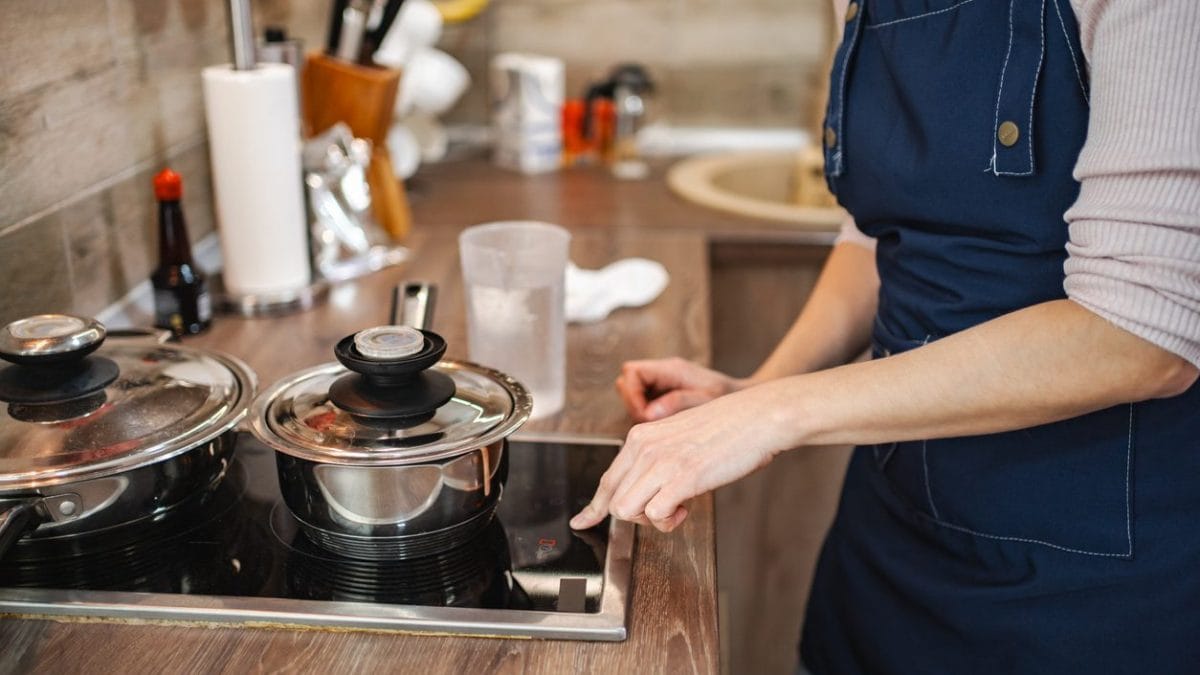
Among the most useful kitchen tools for saving money is induction cooking, which uses an induction hob, a flame-free system that uses electric plates instead. There is a lot of confusion surrounding induction hobs, because many are convinced that it is more expensive than traditional gas hobs precisely because it is powered by electricity. In reality, this is not the case: using an induction hob allows heat to be localized without generating a flame, eliminating heat dispersion —and therefore the possibility of waste— and significantly reducing preparation times. Induction hobs offer 90% energy efficiency, compared to 50% for gas hobs. Naturally, its costs will impact your electricity bill, not your gas bill, so the advantage also depends on the cost of energy itself. However, consider that induction hobs heat up very quickly and are very powerful, allowing for quicker cooking and consequently a reduction in appliance use.
2. Steam Cooking

It's a method that's fallen into disuse and isn't exactly typical of our cuisine (Chinese cuisine, for example, uses it much more than we do), but it's a system you should learn to understand and re-evaluate because it's not only economical but also has many benefits: steam cooking allows you to avoid using fat, preserves the nutrients and flavors of foods, and allows you to cook multiple dishes at the same time. This last aspect is precisely what saves you money: thanks to the stack cooking system in which the baskets are stacked, you can cook multiple foods simultaneously on a single burner, reducing the time you use the appliance. This type of cooking is particularly suitable for fish, both whole and in pieces, meat—especially white meat—and rice.
3. Frying
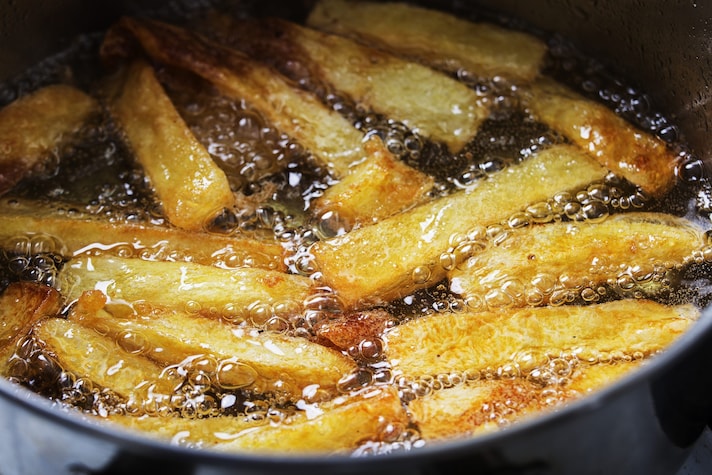
We bet you don't expect it, but frying is one of the most economical cooking methods. How is this possible, considering how expensive oil is? The explanation is simple: it cooks at high temperatures for just a few minutes, so the burner or griddle remains on for very little time, and consequently the costs are very low: in fact, consumption is around 30W per hour, provided, of course, you fry correctly. The disadvantage of this method is that it is decidedly unhealthy, but in terms of savings, it is still one of the least expensive.
4. Microwave Oven
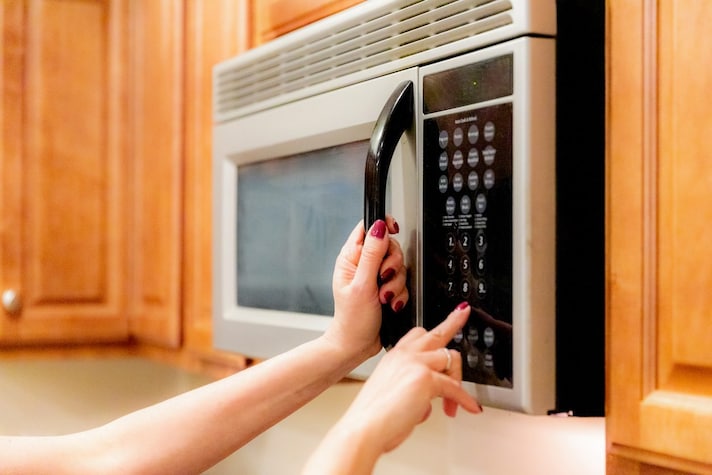
At first glance, the microwave doesn't seem like a particularly economical appliance; in fact, it might seem like a real energy drain. This is actually true, but only partially: while it's true that the microwave's power is higher than that of a traditional oven—about 1000 watts—it allows for such rapid cooking that, ultimately, it saves you money on energy. An average microwave consumes around 167 watts per hour, so all things being equal, you'll consume less energy using the microwave than you would cooking on a regular stove or in a traditional oven. Obviously, we're talking about fairly recent microwaves used to their full potential.
5. Pressure Cooker Cooking

Very popular in the '80s and '90s and forgotten in the early 2000s, the pressure cooker is experiencing a resurgence and is making a strong comeback. The reason? It's easy to explain: it uses 25% less gas or electricity than a regular pot. Unlike "traditional" pots, the pressure cooker uses pressure and steam, which is hermetically sealed inside, to cook food, resulting in shorter cooking times and consequently lower energy consumption. For example, cooking dried chickpeas, which usually takes about 2 hours (plus soaking time), will be ready in a pressure cooker in 35-40 minutes and without soaking: a notable difference. But be careful: even in this case, it's important to optimize the tool and use it to its full potential, following a few basic rules.
6. Slow Cooker
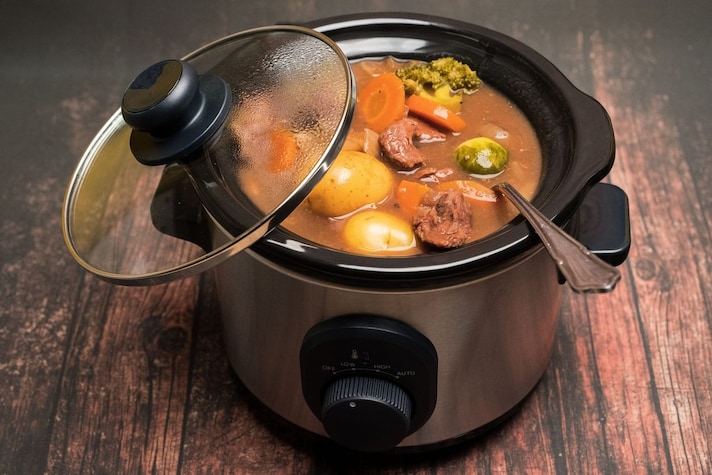
Just like the pressure cooker, slow cookers are also coming back into fashion, and it's no coincidence: these particular slow cookers have extremely low energy consumption, consuming only slightly more than a traditional light bulb, and allow for one-step preparation. In this type of pot, in fact, you can add the ingredients all at once, which is why they are particularly suitable for recipes like soups, stews, and any other recipes that require slow cooking and a low but constant temperature. The only "defect" is the cooking times, which are longer than those of a traditional pot.
;Resize,width=767;)
