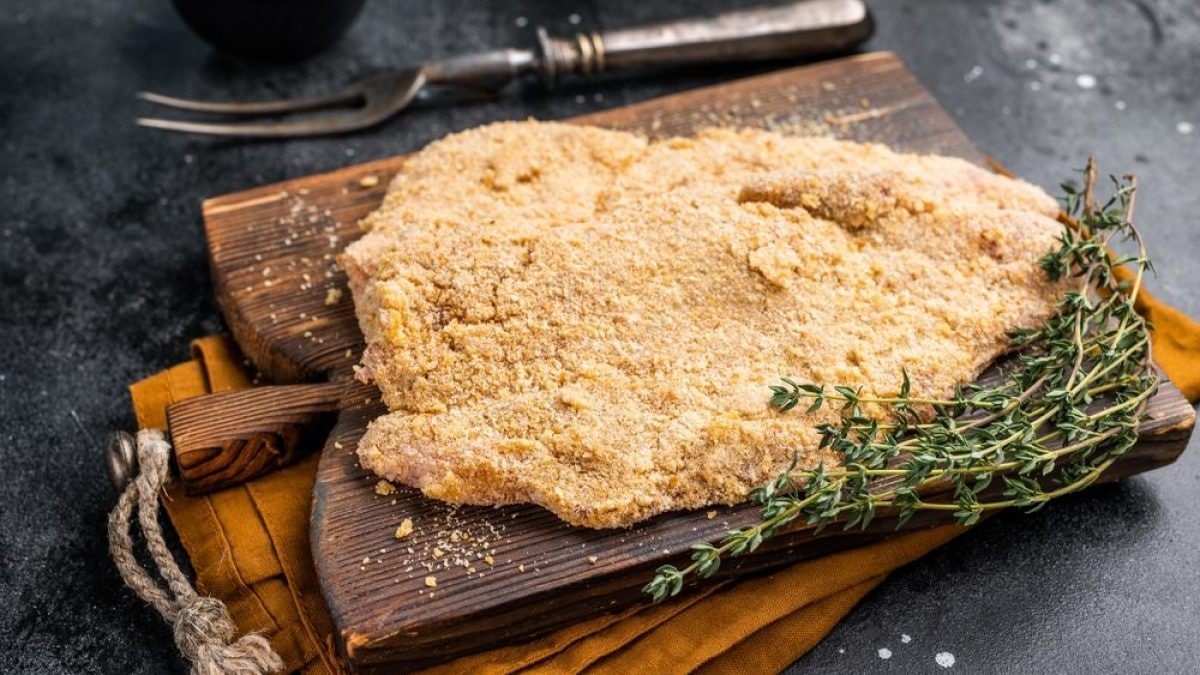
It holds a place of honor in European gastronomic tradition, but not only: the schnitzel is an iconic dish featuring a slice of breaded and fried meat that remains tender on the inside while becoming crispy and golden on the outside. From the Milanese, to the Bolognese and Palermo styles, to the Austrian Wiener Schnitzel or even to Japan with tonkatsu, the national and international variations of this specialty are numerous: they can be stuffed, garnished, thicker or thinner, with different coatings (breadcrumbs, panko, with or without eggs, floured or not), cooked in butter, clarified butter, seed oil and olive oil, lard, or baked in the oven, for a "lighter" version. And what about the meat? The most classic cut of meat, as the name itself suggests – from the French côtelette, chop – is the one obtained from the rack, generally of veal. However, you can also use other parts of the same animal, or focus on pork or white chicken and turkey meat. Let's see what the various options are.
Why The Cut Makes The Difference
Choosing the right ingredients in the kitchen is essential to a successful recipe. When it comes to a meat-based dish, many factors must be taken into consideration, as we are dealing with an important raw material that needs to be of high quality, both from a functional and animal welfare perspective, avoiding the use of meat from intensive farms as much as possible. Specifically, the schnitzel is a preparation characterized by a short cooking time (less than 10 minutes in total), traditionally pan-fried in butter or seed oil, but it can also be baked, and must remain soft on the inside and crispy on the outside. For this reason, tender cuts are preferred, coming from under-stressed muscles and poor in connective tissue, such as those obtained from the loin or the bone-in rack – the classic Milanese cutlet – or from lean parts of the thigh such as the rump, from the fillet or breast, depending on the animal of origin.
Schnitzel is a versatile recipe, easy to make at home, in versions using beef (especially veal, but also beef), pork, chicken, and turkey. Let's see which cuts are best depending on the dish you want to bring to the table.
Best Veal Cuts

Veal is the most popular choice for making a perfect cutlet: its tender, lean meat retains its juiciness once cooked. The preferred cut is the loin, complete with bone, a noble and flavorful part that comes from the dorsal part of the animal and lends itself well to quick cooking: it is the basis of the famous Milanese cutlet. At home, you can opt for equally top-quality, yet more economical and practical alternatives, such as the rump: both come from the thigh, have a more delicate flavor, are tender and pliable, and easily transformed into classic breaded slices that, despite being thin, cook without drying out.
Best Chicken Cuts

A much-loved variation is the cutlet made with white chicken (or turkey) meat, often used to create lighter, more digestible dishes that can be baked in the oven or pan-fried using very little olive oil. The choice of cut falls on the breast, which is the most valuable, leanest and protein-rich part. These meats have a rather neutral flavor: to enhance them, we often play with breading, flavoring them with herbs or spices, or livening them up with cornflakes, in variations that appeal to children. Care must be taken not to make them stringy: give the slices a regular thickness (4-5 mm), coat them evenly and do not prolong the cooking time too much, because the meat must be well cooked (chicken and turkey are never eaten raw for food safety reasons), but without drying out.
Best Pork Cuts

Compared to veal, pork is very tasty and less expensive. The best cuts are lean and flavorful ones, cut into thin cutlets: here is the rack (or sirloin), the loin (the muscle of the rack without bones) which is very popular and easy to find, and the fillet, known for being very tender and more valuable than the other two. Also worth considering is the capocollo (or coppa): it comes from the part of the back closest to the head and is characterized by good fat infiltrations, which give intensity and tenderness, and is suitable for thick slices: try it to prepare katsudon, the famous Japanese cutlet bowl.
The Ideal Cut's Characteristics
Whether it's veal, chicken, or pork, the meat must be tender and come from muscles that are under-stressed, with short fibers and almost no connective tissue. Cuts that are too rich in membranes or sinews are not suitable for this type of recipe, because they tend to curl or deform in the pan during cooking: the very common effect is to see the cutlet "curve." Pounding the meat with a meat tenderizer is useful for adding tenderness and for regulating the thickness, which must be uniform: in the Milanese cutlet, the slice remains quite high (on average 2 cm) and the presence of the bone helps maintain juiciness and distribute heat evenly. Homemade slices, on the other hand, tend to be thinner, from 4 to 8 mm and without the bone, making them more practical and manageable: pound them firmly and delicately, taking care not to tear the meat.

In addition to tenderness and thickness, also consider width: the cutlet works when the slice is wide and well-trimmed at the edges, because it allows for an easy surface to bread and, consequently, to become crunchy and golden. Finally, the best cuts are lean, but at the same time have a moderate amount of marbling, which contributes to the success of the dish: the light infiltrations of fat, in fact, melt during cooking, giving a softer consistency and flavoring the flesh, but without making the cutlet heavy.
Mistakes to Avoid When Choosing and Preparing Meat
A cutlet is a simple preparation that requires few ingredients, so mistakes are always lurking. First, make sure the meat is fresh and well-preserved: dull-colored slices, a slimy surface, or unpleasant odors are signs not to be ignored. In the past, the lemon slice that accompanied the Milanese cutlet served precisely to mask possible defects, but now it's definitely best not to resort to this trick. If you're not skilled at handling knives and properly preparing cuts, you can have the operation done by the butcher or purchase pre-packaged slices for this preparation, which are widely available at the supermarket.

Take some precautions even in the preliminary stages: cold is the enemy of meat tenderness, as it stiffens the fibers, so let it rest for a few minutes at room temperature. Furthermore, one of the most common unpleasant consequences, the peeling of the skin, must be avoided: this is due to a frying temperature that is too low, certainly, but also to residual moisture. Therefore, it's a good idea to pat the slice dry with paper towels before coating it, so that the flour, egg, and breadcrumbs adhere well.
;Resize,width=767;)
