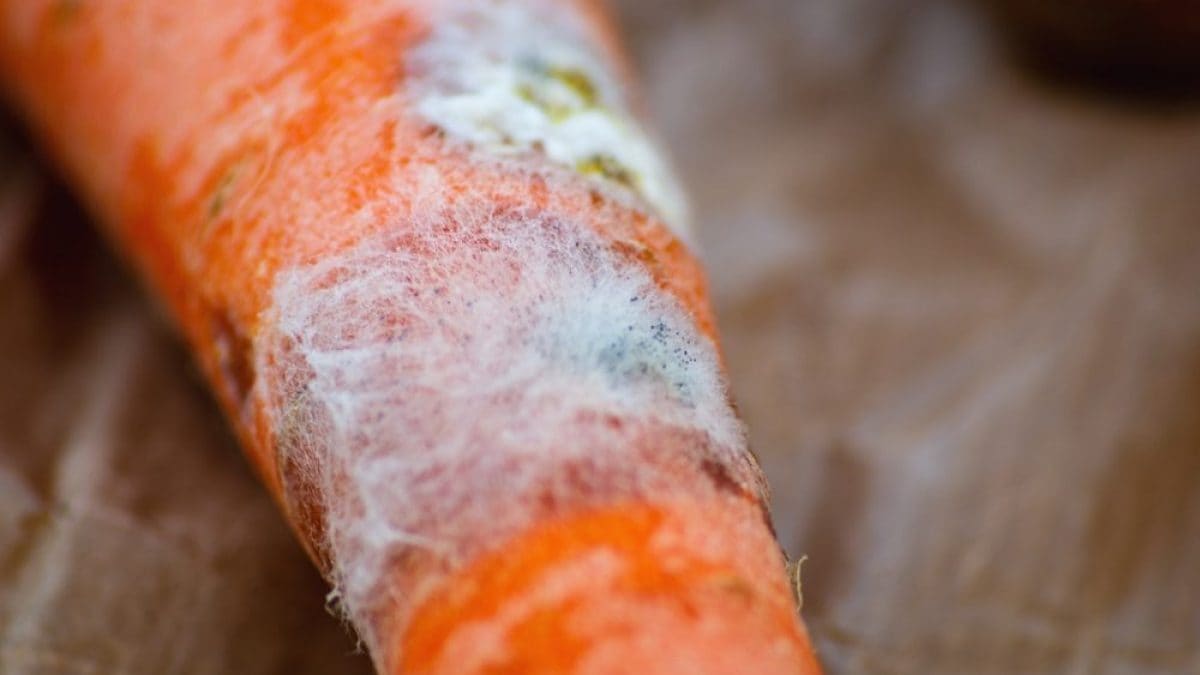
Have you ever taken a carrot out of the fridge and noticed small white filaments, root-like growths, or unappealing dark spots on its surface? It's not reassuring, and your first thought is mold, insects, or parasites. In most cases, however, it's none of these: what you're seeing is a carrot that has begun to react to its environment, activating natural survival mechanisms.
The Carrot is a Living Root (Even After Harvesting)
Contrary to what we often imagine, the carrot is not an "inert" food once harvested: it is a real root, composed of living tissues that continue to breathe and respond to external conditions even far from the ground.
In high humidity or after long periods of storage, carrots may develop small secondary roots on the surface. The clear filaments that appear are not parasites, but adventitious rootlets, the plant's attempt to absorb water from the environment.
The main causes of this phenomenon are related to storage, especially for large-scale retail products: excessively humid refrigerators, closed packages that retain condensation, and long periods between harvest and consumption. The supply chain also plays a significant role.
Carrots selected for shelf life are often harvested before they are fully ripe and stored for weeks or months, increasing the likelihood that the produce will begin to “react” once it reaches your home.

When White Filaments Are Not a Problem
The presence of these rootlets alone does not indicate that the carrot is dangerous. If the tissue is still firm and the odor is normal, the phenomenon is more related to a loss of freshness than a health risk: the carrot is still edible. From an organoleptic standpoint, however, the flavor may be less sweet and slightly bitter: an initial sign that the quality is declining.
Dark Spots and Soft Tissue Are a Different Sign
However, dark, soft, or slimy areas are a different matter: these are no longer signs of germination, but rather tissue degradation. Excess moisture encourages the proliferation of bacteria and fungi, making the pulp watery and unpleasant. In these conditions, even if there's not always an immediate danger, the carrot has lost much of its nutritional value and is not recommended for consumption.

Can You Eat a Carrot in These Conditions?
If the carrot is still firm, free of unpleasant odors, and has only a few superficial fibers, it can be eaten after careful peeling. However, the flavor may be less fresh. If, however, there are soft, dark, or slimy parts, it's best not to take any chances: the quality is compromised.
How to Best Store Carrots
To help your carrots last as long as possible, here's how to best store them:
- Store carrots in the refrigerator. Wrap them in paper towels and place them in a perforated bag to keep them crunchy, then place them in the bottom drawer of the refrigerator, between 39°F/4°C and 43°F/6°C. They will last about 2 weeks this way, but after a week they will start to become soft and less flavorful. Sliced and peeled carrots can be placed in a glass jar (such as a jam jar), covered with cold water, and stored in the refrigerator. Remember to change the water every day; they will last 2-3 days, up to 7 days.
- Store carrots in the freezer. Peel and dice the carrots, then place them in freezer bags. Alternatively, you can blanch them (boil for 2 minutes, cool in ice water), dry them, and freeze them. They can be stored for 6-8 months, but should be consumed immediately after thawing.
- Storing carrots in sand. A less common but effective technique for root vegetables, but very useful if you have the opportunity. Place the carrots in a wooden box, covering them with sand, soil, or dry sawdust. Store in a cool, dark place like a cellar; they can last up to 6 months this way.
;Resize,width=767;)
