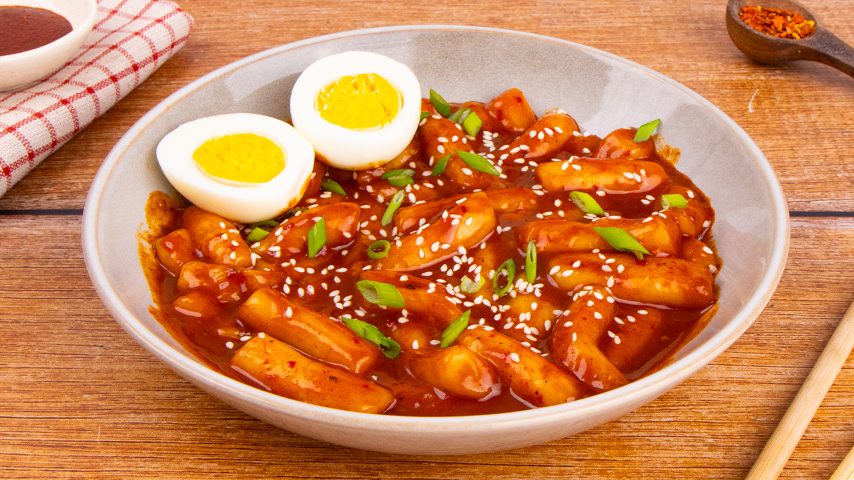
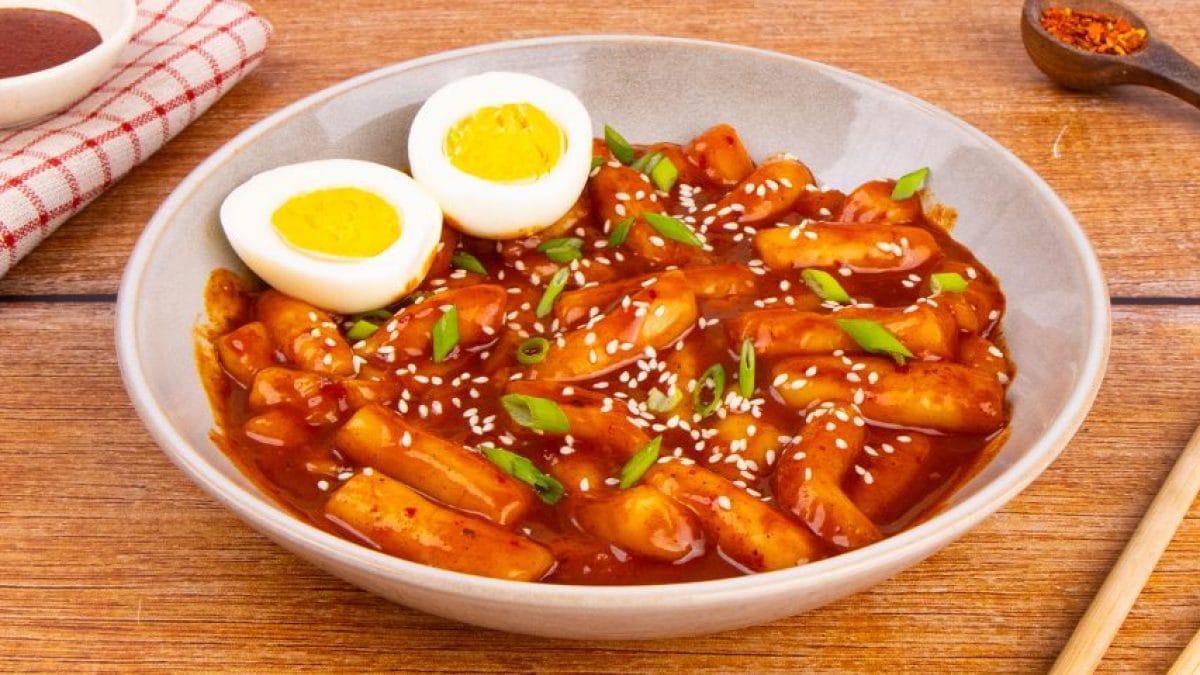
This beloved Korean classic is built around soft, chewy rice dumplings simmered in a bold, slightly sweet, slightly spicy sauce. The sauce is made with kombu, soy sauce, sugar, and chili paste. If you enjoy bold flavours, chewy textures, and dishes that feel both comforting and lively, this dish is great for you.
What is Tteokbokki?
Tteokbokki has roots that stretch back centuries in Korea. Although the version most people recognise today, the fiery red, sauce-coated rice cakes, became popular in the mid-20th century. Originally, it was a soy-based royal court dish, much milder and more restrained. Then came the introduction of chili paste (gochujang), and suddenly, things got exciting. Also in Korea, it’s a go-to comfort snack for students after school.
Pro Tips for the Best Tteokbokki
- The dough should feel smooth and slightly springy, not sticky. If it clings to your fingers, dust in a little more flour.
- That small piece of seaweed quietly builds depth in the sauce. It’s subtle, but noticeable.
- Once the dumplings float, they’re done. Overcooking makes them too soft.
- Let the sauce reduce properly. A slightly thickened sauce clings better and brings everything together.
- Stir gently, not aggressively because these dumplings are delicate. Treat them kindly or risk breaking them.
Frequently Asked Questions
Can I use store-bought rice cakes instead?
Store-bought versions save time and are widely used. Just soak them in warm water first if they feel firm, so they soften and cook evenly in the sauce.
Is Tteokbokki very spicy?
It can be, but it doesn’t have to be. The chili paste level is adjustable, so you can dial it down for a milder version or increase it if you enjoy heat.
Can I make this dish vegan?
Yes, it’s quite easy. This version already leans plant-based, just ensure your soy sauce and chili paste are vegan-friendly, and skip the egg garnish.
What does kombu actually do?
Kombu adds a subtle umami depth to the sauce. It doesn’t overpower but gives the dish a richer, more layered flavour.
Can I add other ingredients?
Fish cakes, tofu, mushrooms, or even instant noodles can be added to make it more filling and varied.
How to Store Leftovers
Tteokbokki is best enjoyed fresh, but leftovers can be stored in an airtight container in the fridge for up to 2 days. When reheating, add a splash of water to loosen the sauce and warm it gently on the stove.
Ingredients
How to Make Tteokbokki
;Resize,width=712;)
In a bowl, combine the glutinous rice flour and water. Knead until the dough becomes smooth and no longer sticks to your hands. Adjust with small amounts of water or flour if needed.
In a bowl, combine the glutinous rice flour and water. Knead until the dough becomes smooth and no longer sticks to your hands. Adjust with small amounts of water or flour if needed.
;Resize,width=712;)
Divide the dough into two portions.
Divide the dough into two portions.
;Resize,width=712;)
Roll each into a long rope about 0.5 cm thick, then cut into 4 cm pieces.
Roll each into a long rope about 0.5 cm thick, then cut into 4 cm pieces.
;Resize,width=712;)
Bring a pot of water to a boil and drop in the dumplings. Cook for about 2 minutes until they float to the surface, then drain thoroughly.
Bring a pot of water to a boil and drop in the dumplings. Cook for about 2 minutes until they float to the surface, then drain thoroughly.
;Resize,width=712;)
In a saucepan, combine water and the kombu seaweed. Let it simmer gently for a few minutes to extract flavour, then remove the kombu.
In a saucepan, combine water and the kombu seaweed. Let it simmer gently for a few minutes to extract flavour, then remove the kombu.
;Resize,width=712;)
Add sugar, chili paste, and soy sauce. Bring the mixture to a boil, then reduce to a simmer and allow the flavours to meld together.
Add sugar, chili paste, and soy sauce. Bring the mixture to a boil, then reduce to a simmer and allow the flavours to meld together.
;Resize,width=712;)
Add the cooked dumplings into the sauce. Cook over medium heat, stirring occasionally, until the sauce thickens.
Add the cooked dumplings into the sauce. Cook over medium heat, stirring occasionally, until the sauce thickens.
;Resize,width=712;)
Transfer to a serving dish and finish with sesame seeds, chopped spring onion, and slices of hard-boiled egg.
Transfer to a serving dish and finish with sesame seeds, chopped spring onion, and slices of hard-boiled egg.
;Resize,width=767;)
