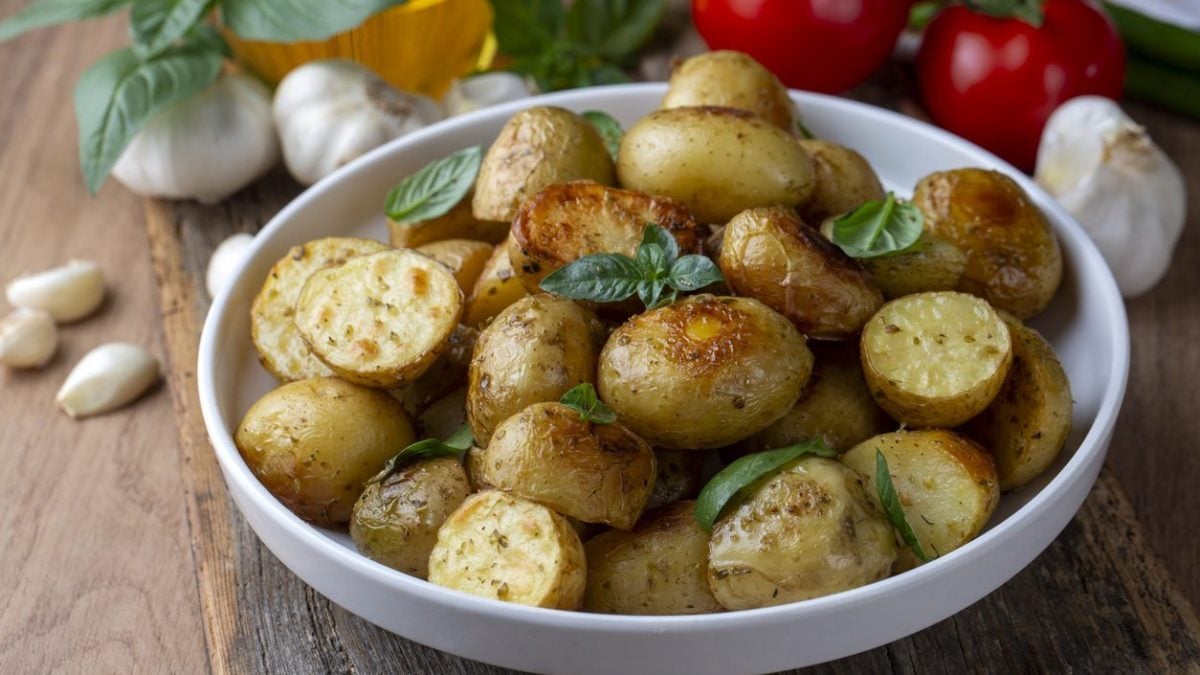
Delightful to look at and taste, new potatoes are a very versatile vegetable, perfect for elegant recipes, and much loved by children for their small size and naturally sweet flavor. They're usually served with their skin on, as it's very thin, and become a true delicacy when baked, remaining crispy on the outside and tender on the inside. Be careful, though: unlike other potatoes, they're not available year-round, but only during a specific period: late spring and early summer. Let's see why.
What Are New Potatoes?
Their scientific name is Solanum tuberosum, just like that of common potatoes. The reason is simple: new potatoes are, in fact, nothing more than selected varieties of traditional tubers that are harvested before they are fully ripe. This is why, once sown in the second half of winter, they are available between mid-May and June, so much so that spring is considered their season. The cultivation of these early or very early varieties is widespread in California, Florida and North Carolina, where the generally milder climate than that of the northern regions provides ideal conditions for their growth.
Differences From Common Potatoes
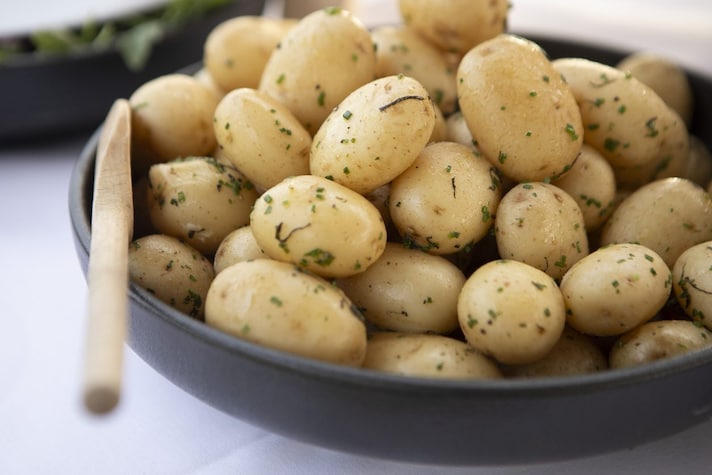
We've already mentioned an important characteristic of these vegetables compared to mature potatoes: they're seasonal. For this reason, they're not available year-round like their "cousins," but can be found on fruit stands between late spring and early summer. Aesthetically, they're hard to mistake: new potatoes have a regular oval shape, are smaller, have smooth, thin, and pale skin, and have firmer flesh that's less floury after cooking. These characteristics make them perfect for cooking whole (they're very attractive) and without peeling.
All The Benefits of Not Peeling
Thick, leathery, bitter, uneven: the peel of traditional potatoes is often considered waste, even though the peel contains a large amount of dietary fiber, vitamin C, and mineral salts (especially potassium), substances important for the body's general well-being. So much so that there are many (and delicious) ideas on how to recycle the peel, starting with frying them. New potatoes and traditional potatoes have the same nutritional properties, but precisely because the peel doesn't need to be removed, the former are more complete, more convenient (you can do without a potato peeler), and less wasteful.
How to Use Them Best
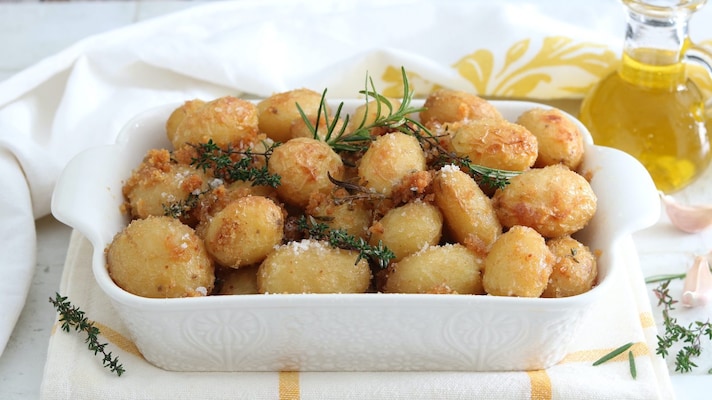
New potatoes are the queen of side dishes: they are usually cooked whole (or halved) and are perfect for baking. When you want to roast them, boil them for 10 minutes, season them with oil, salt, and herbs, and then bake them at 395°F/200°C: 15 minutes are enough to have them ready, significantly reducing the cooking time. Otherwise, opt for more creative alternatives, such as mashing new potatoes in the oven. Before using them, they must be cleaned carefully, precisely because the skin can remain: simply immerse them in a bowl of water and scrub the surface with a soft-bristled brush. If, however, you want to remove it, then simply rub them gently with your hands during the previous step, or immediately after blanching them, using a small knife. Their small appearance makes them perfect for accompanying simple recipes, but with an elegant touch, such as a chicken roulade. Try caramelized new potatoes, which are prepared in a pan by browning them with butter and sugar. A great way to showcase them is in cold salads: it often happens that when using ordinary potatoes, especially if they are old (better suited to mashed potatoes, gnocchi, and flans), the flesh falls apart, while that of new potatoes remains pleasantly firm.
How to Choose and Store Them Best
When purchasing new potatoes, it's a good idea to follow the same fresh identification techniques you use for regular potatoes: the skin should be intact and smooth, free of wrinkles or green spots, and the consistency should be firm to the touch, with no mushy or soft spots. Once you bring them home, however, consume them within a few days: precisely because they're young, with a thin skin and a flesh that has a higher water content than mature potatoes, new potatoes aren't suitable for long-term storage. Store them in a cool, dry place, away from humidity and heat sources. If you buy them at the supermarket, you can also find them vacuum-packed, peeled, in the refrigerated section: in this case, the unopened package will last up to one or two months (check the expiration date), while once opened, the contents should be cooked immediately.
;Resize,width=767;)
