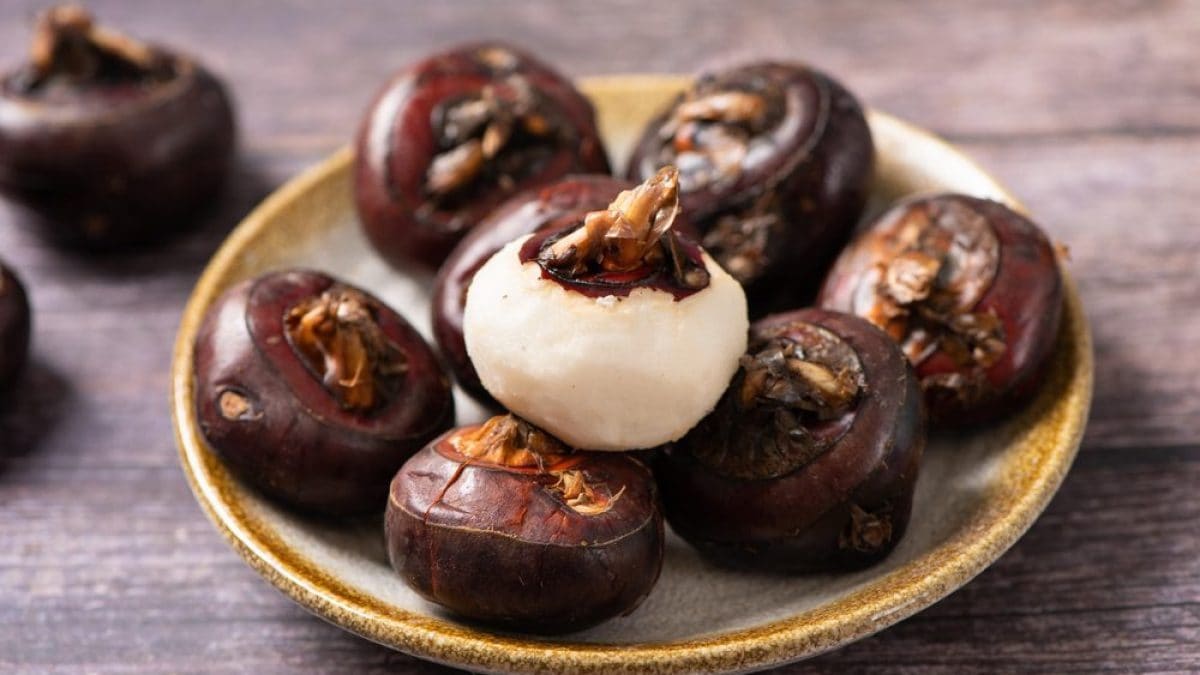
Although the name might suggest a lesser-known variant of the famous chestnut, this "fruit" actually has nothing to do with the autumnal specialty we all know. Water chestnuts, in fact, refer to two distinct botanical species that, being edible, you may have found in some dishes, perhaps even tasted without knowing it, especially if you enjoy Asian cuisine. We're talking about traditional Asian ingredients that share some characteristics that make them similar, so much so that they share the same name, potentially generating some confusion. Let's clarify and learn how to distinguish them.
Water Chestnuts, Two Plants Worth Knowing About
The ever-increasing cross-fertilization of cooking methods is leading to the discovery of previously unknown foods, creating new and creative combinations. In recent years, this has been especially true with foods from Asia, from algae to mushrooms, which have become popular in our pantries as well. A similar fate could be reserved for water chestnuts, which are gradually becoming popular in the West due to their versatility, gluten- and lactose-free properties, and their perfect fit for those following specific diets, including vegan and vegetarian ones, as they are a source of carbohydrates, plant fiber, and minerals, with a caloric intake close to that of potatoes (about 85-90 kcal per 100 grams).
The term water chestnut refers mainly to two edible aquatic plants:
Eleocharis dulcis belongs to the Cyperaceae family and is typical of humid areas, such as swamps and rice paddies in Southeast Asia, including China, the Philippines, Indonesia, Vietnam, and even Oceania. It is a perennial plant with long, thin stems that emerge from the water. The edible part is the globular bulb, known internationally as water chestnut, which grows on the lower part and has a thick brown rind that encases a white pulp with a nutty, crunchy flavor.

Trapa natans, on the other hand, has a completely different appearance, as well as being from a different family, Lythraceae. It is an annual plant composed of a floating rosette of leaves, which flowers and bears fruit between September and October. The fruit is leathery, black in color and shaped like a knobbly top with four curved tips: inside it contains the seed, with a floury texture and a sweetish flavor. Where does it grow? In addition to being present in the stagnant areas of Asia, it appears in the Northeast, especially in the Hudson River Valley, New York, and some areas of New England, Pennsylvania and the Mid-Atlantic, although it is considered an invasive aquatic plant.

How to Use it In The Kitchen
If you've already tried it, you've probably been struck by Eleocharis dulcis, the most widespread internationally and known as the Chinese water chestnut. In the U.S., it can be found in jars or vacuum-packed, already peeled and ready to use, usually pre-cooked. At this point, you can cut the bulbs into pieces or chop them, or lightly boil them if they are still raw, although they can also be eaten as is: use them to add a crunchy note to rolls, to a dish of stir-fried vegetables in the wok, and to fill ravioli. Its use in desserts is notable in countries like Thailand, Vietnam, and the Philippines: it is used in desserts based on coconut milk, tapioca flour, sugar, and ice, where the bulbs are chopped and syruped to create "pearls" that contrast with the other creamy ingredients.

The process for Trapa natans is similar, but it's a little more laborious and harder to find: the fruit must first be boiled to soften the shell, which is then cracked to extract the seed. The seed, which is very rich in starch, can be roasted or stir-fried, or dried and ground into a flour with a low glycemic index. In India and Pakistan, singhara (as the water chestnut is known) are used to make bread, meatballs, and spiced puddings. Singhare ka atta is also used as a substitute for cereal flour during periods of ritual fasting. Interesting fact: in the past, in the Mantua area, risotto with water chestnuts was prepared using risot col trigol, the pulp of which was minced and sautéed with onion.


