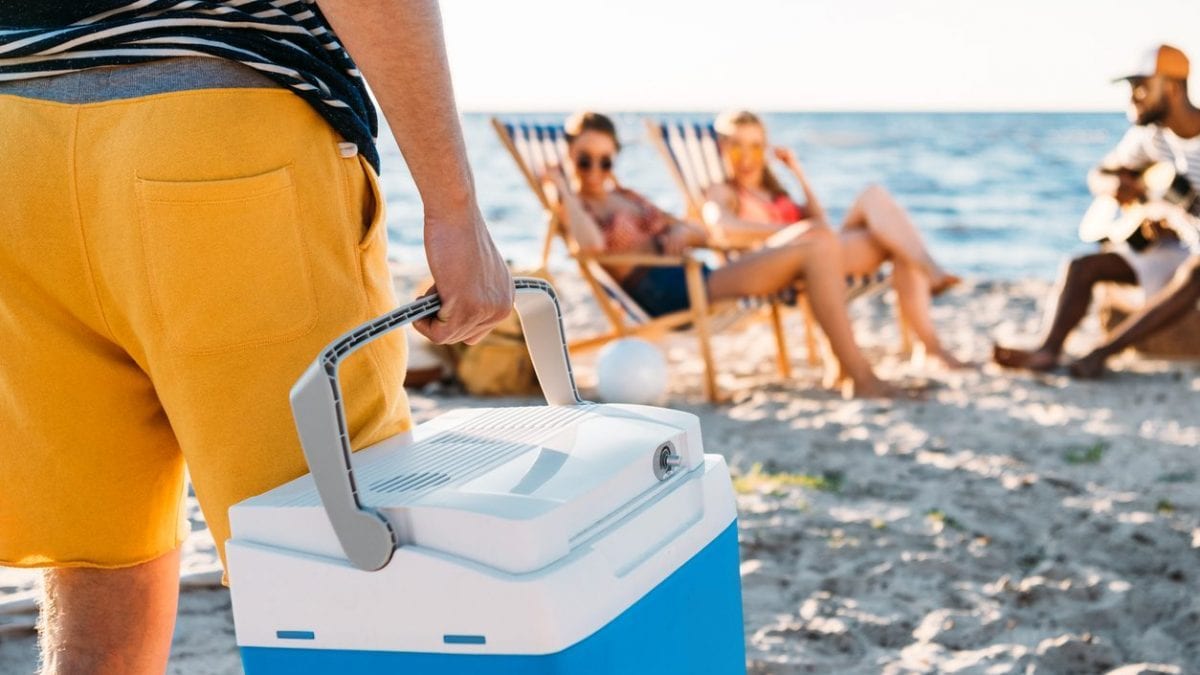
Temperatures are high, the days are long, and there's nothing better than spending long hours at the beach or planning a fun trip to get away from home all day. This means you need an essential item during the summer: the cooler, a very useful tool for saving the day and keeping food and drinks cool, something you can't do without during those long hours spent under the sun. This airtight container, whether rigid like a small cooler or a classic soft cooler bag, is specifically designed to keep food and drinks cool, which is why we tend to stuff a little bit of everything inside, but obviously its capacity is not unlimited.
Even though it might be able to keep things cool after hours in the sun (or exposed to high temperatures even in the shade), even the best cooler can't save its contents, especially since the cooling elements inside it eventually melt. How long does a cooler actually keep things cool, and more importantly, what can actually survive six hours in the sun? Here's everything you need to know.
What Foods Really Last a Long Time in a Cooler?
How many times have you heard that it's best to bring fresh, light foods to the beach? This is obviously helpful to keep you cool and enjoy the sea to the fullest, but also because these foods keep best during the long hours you spend in the heat. A cooler isn't foolproof throughout the day, partly because it doesn't create cold, but rather maintains it using what you put inside, usually ice packs or previously frozen water bottles. Depending on the type of cooler you use, the food inside can last about 2-4 hours if it's unpacked, and about 6 hours if you add ice packs.

After this time, no matter how hard you try to keep it in the shade, the cooler will no longer be able to perform its function, and the food inside will inevitably begin to warm up, but more importantly, it could end up spoiling. So, in light of this, what are the safest foods to bring with you, those that are guaranteed to last for 6 hours or more? The best solution is always a mixed salad made with a base such as rice, pasta, or grains like spelt and barley, combined with ingredients that are "stable" enough to last a long time, such as corn, olives, tomatoes, tuna, and avocado.
Be careful with meat, as not all of it lasts a long time (for example, chicken is excellent, both in bread and in a mixed salad). Potatoes are also good, as are dairy products if they're fresh and light, the kind that keeps best when kept warm, such as mozzarella, ricotta, feta, stracchino, and cottage cheese, or spreadable cheeses like Philadelphia. Savory pies are also excellent, a compact one-dish meal that keeps for a long time without spoiling, as are raw fruit and vegetables cut into strips, and snacks like crackers, biscuits, or dried fruit.

Of course, stuffed sandwiches or classic filled rolls are also fine, but be careful how you fill them: cured meats and sausages, as well as some types of cheese, can spoil quickly in the sun, which is why they are foods that theoretically should be kept in the refrigerator until mealtime. If you decide to use them, make sure to eat them within two or three hours of placing them in the cooler; otherwise, if the mealtime is further away, it's best to avoid them. As for fish, only canned ones like tuna or mackerel are fine, while smoked salmon slices, for example, should be avoided: the risk of bacterial contamination is high if they are not stored at low temperatures.
For the same reason, don't use raw or undercooked eggs, as this also increases the risk of heat-induced bacterial contamination. However, scrambled, hard-boiled, or omelette-style eggs pose no problem. Also remember to use mayonnaise sparingly, as it's often used everywhere, from sandwiches to rice salads: it can easily deteriorate in the heat and encourage bacterial growth. Experts also warn against pre-cutting and peeling fruit at home: while it's more convenient, it also heats up more quickly. It's better to bring the fruit whole and cut it directly on site, as it keeps better, even if a cooler reduces its cooling effect.
Rules for a Correct Use of The Cooler Bag
Regardless of the food you decide to bring, which as we have seen is not a random choice, there are some rules you must follow to maximize the shelf life of the food in the cooler:
- pre-chill the bag before filling it with ice and food, so that it is already fresh a few hours before use;
- put the packages with the already cold food inside, never put hot food in the bag;
- add enough cooling elements and place them strategically between the layers of food, so as to allow for even distribution of the cold;
- Don't overfill the cooler because if it's too full, the cold air won't circulate freely and the internal temperature won't stay cool even with ice;
- limit opening the bag to when necessary and try to do so quickly to avoid the dispersion of the cold;
- Place the cooler in the shade as much as possible, so that it is not hit by direct sunlight and the frozen elements inside can last for long hours without melting.

;Resize,width=767;)
