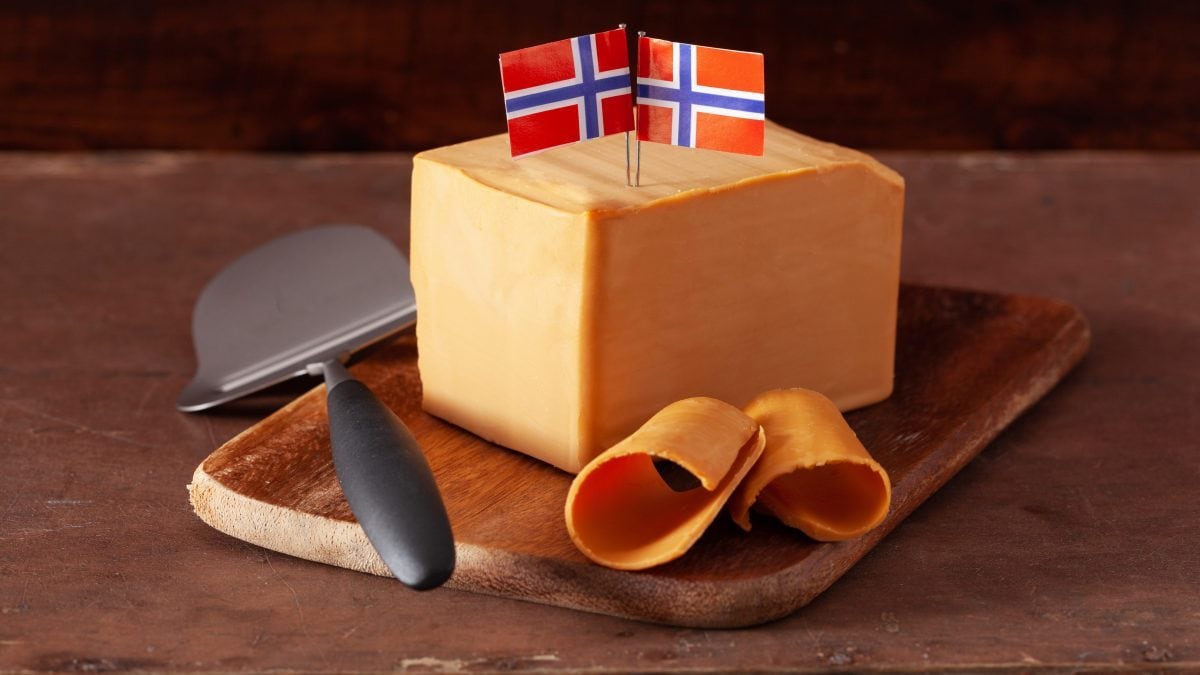
At first glance, it might look like a large block of butter with an unusual color, but looks can be deceiving. That caramel-colored block is none other than Brunost, literally "brown cheese," a typical Norwegian product that has held a place of honor in the Scandinavian country's culinary traditions for over a century.
Despite its name, Brunost isn't technically a cheese, even though it's marketed as such: unlike traditional dairy products, it's made from whey (not curd), which determines its unique production and sensory characteristics. It's a unique product, with a firm, slightly springy texture and a sweet-and-savory flavor, with hints of toffee and caramel. Let's discover its origins, how it's made, and how to best enjoy it.
The Origins of Brunost
Brunost originated in the ancient Norwegian farming world, where it was more necessary than ever, especially due to the harsh environmental conditions, to exploit every available resource. On mountain farms, where goat and cattle farming was one of the main economic activities, even the residual whey from cheese production was recovered and reused to make this characteristic product.
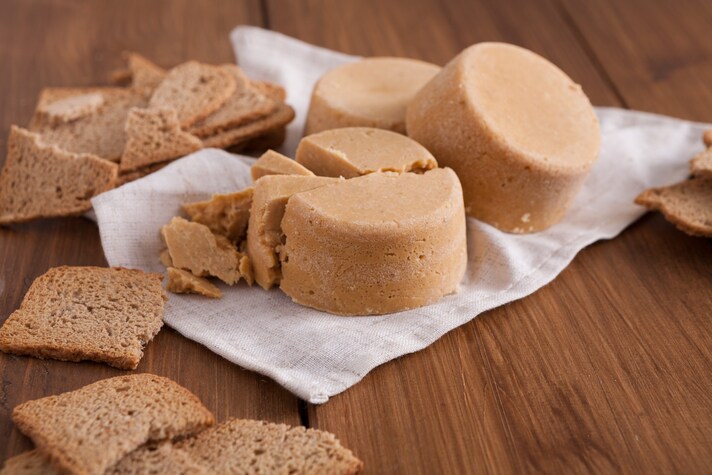
The modern version of Brunost appeared in the second half of the nineteenth century, thanks to the contribution of Anne Hov, a breeder from the Gudbrandsdalen Valley, who had the intuition of adding cream to the whey during cooking, thus obtaining a loaf with a smoother and more melting consistency, but above all decidedly more appetizing to the general public in the city.
While Brunost was long an almost exclusively Norwegian specialty, in recent years interest in Nordic culinary traditions and artisanal dairy products has encouraged its spread abroad. Today, it is available from numerous specialized importers and is constantly attracting new consumers.
Brunost's Production and Variants
Brunost's production process is what makes it so special. It all starts with whey, which is boiled for hours until most of the water has evaporated. During this process, the sugars naturally present in the milk concentrate and darken, caramelizing. At this point, cream is added to enrich the mixture, which is then further cooked until it becomes a thick cream. It is then poured into special molds and left to cool until it solidifies. The final result is a compact yet soft block, with an amber color and a distinctive flavor that sets it apart from any other dairy product.
The final characteristics can vary significantly depending on the type of milk used (goat or cow), the animals' feed, and the processing time. For this reason, each producer uses their own recipe and can achieve different aromatic nuances and colors.

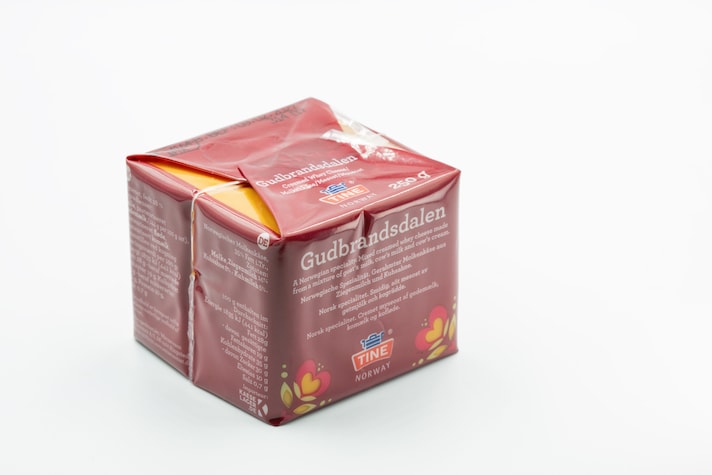
For example, among the most popular versions is fløtemysost, made with cow's milk and cream, with a more delicate and rounded flavor. Ekte geitost, on the other hand, is made with goat's milk and whey and has more intense and persistent aromas. Gudbrandsdalsost, a combination of cow's and goat's milk, is particularly popular and is one of the best-known types, even outside of Norway. There are also reduced-fat variants, obtained by modifying the ratio of whey, milk, and cream.
What Does Brunost Taste Like?
The flavor of Brunost is so complex it's almost indescribable. On the nose, hints emerge that recall a mix of caramel, toffee, and toasted nuts, accompanied by light herbaceous notes. The taste is surprising for the contrast between sweetness, saltiness, and lactic notes: the first bite is usually difficult to appreciate, because incredibly different flavors converge in a single piece of Brunost. A sweetness almost reminiscent of dulce de leche, followed by a slight acidity, lactic nuances, and a light saltiness. After a while, you get used to it, and eating it becomes a habit, perhaps a real addiction.
How to Eat Brunost
In Norway, including the Svalbard Islands, Brunost is a true daily ritual, especially for breakfast. It is cut into very thin slices or into characteristic curls, obtained with a special spatula: this way, the non-cheese melts easily on the palate.
The most common combination is with cranberry jam, berries and vafler, or waffles, thin sweet wafers, often heart-shaped, slightly crunchy at the edges and softer and more pliable towards the center.

It can also be enjoyed simply on toasted bread or rye crackers, or grated over oatmeal porridge as a garnish. Finally, it is often used to prepare sweet and savory recipes: biscuits, muffins, pancakes, but also accompanying sauces, such as the one that goes well with finnbiff, a reindeer or venison stew.
;Resize,width=767;)
