Discovering tropical fruits is like taking a trip without leaving home: just reading about dragon fruit, star fruit, or durian is enough to be fascinated by these natural inventions that aren't always easy to find even in our latitudes. Indeed, to try them, you'd often have to buy a real plane ticket, not just your imagination. This is the case with mangosteen, a delicious fruit from Southeast Asia that's rare to find in the U.S., considered among the best in the world, if not the best of all: the flavor of its pulp would make even a queen's mouth water. Let's see why.
What is Mangosteen?
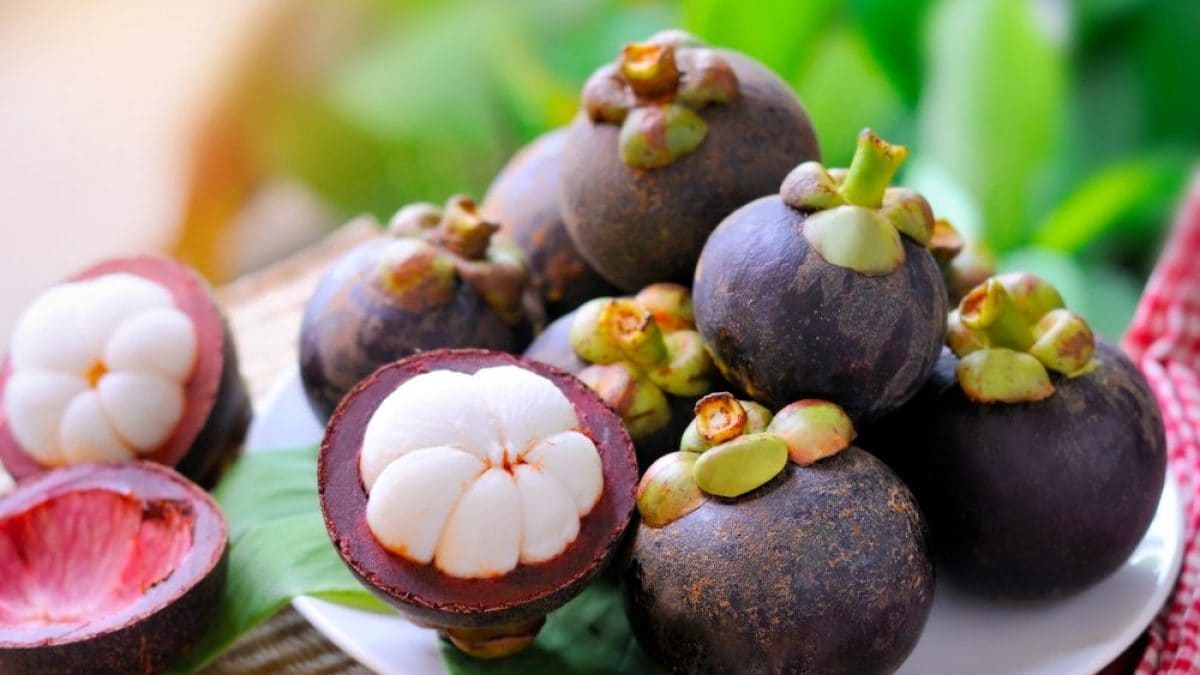
Its scientific name is Garcinia mangostana and refers both to a tropical plant typical of Southeast Asia and to its fruit, known as mangosteen in English and mangusteen internationally. From a botanical point of view, we are talking about an evergreen belonging to the Clusiaceae family that has found its ideal habitat in Thailand, the country that has become its largest cultivator. What catches the eye is the fruit, the size of a mandarin, rounded in shape, with a tough, smooth, and thick peel. The latter is dark purple on the outside, while internally it turns lighter shades of purple and surrounds a very white, pure pulp, divided into segments, which aesthetically resembles a head of garlic. The similarity, however, ends there, as the flavor, texture and aroma are extremely pleasant: mangosteen, in fact, is juicy and creamy, with a taste reminiscent of pineapple, peach, lychee with floral hints of rose and jasmine.
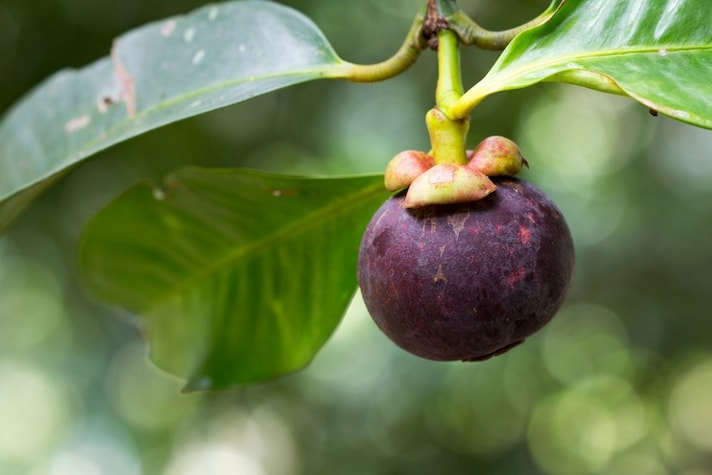
It is important to note that the mangosteen plant requires a warm, humid climate to grow, which is why production is concentrated in Thailand, Indonesia, Malaysia, Myanmar, Vietnam, and the Philippines. It bears fruit between June and October, and the fruit is very delicate, so much so that before the technological innovations in food storage developed in the 21st century, it was very difficult to move it from one place to another and, consequently, export it. It is precisely from these difficulties that the legend seems to have arisen that Queen Victoria, upon learning of this delicacy, around 1890, knighted anyone who brought one to her in England: hence the nickname "queen of fruits" for the mangosteen.
How It's Used in Cooking
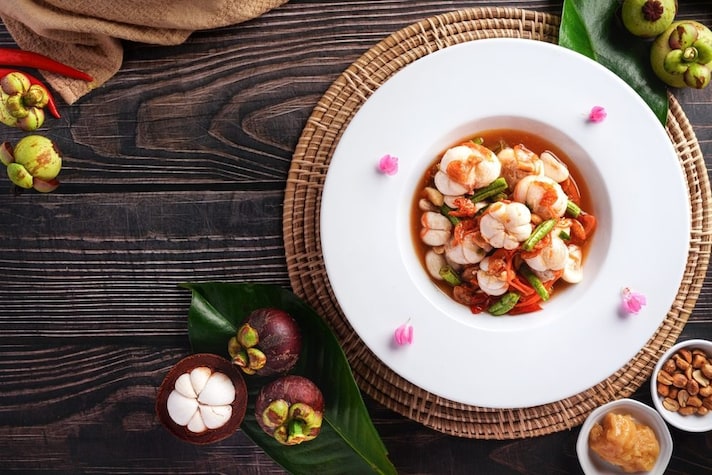
Mangosteen is one of those fruits that is best enjoyed raw. Only the white segments are edible, which can be removed once the fruit has been cut open. This is very simple: simply apply light pressure with your fingers to create a crack in the cap and remove it. Alternatively, you can use a sharp knife to make a cut down the middle, without cutting too deeply (or you'll ruin the pulp), and then split the fruit in half with your hands. The segments are then removed as you would a citrus fruit, separating them one by one. They can vary in size, and the larger ones often contain a black seed, which is best removed. They are used whole in fruit salads or fruit salads, or blended into smoothies, sorbets, and rice puddings. The fresh, floral flavor of mangosteen pairs well with the tartness of lime and lemon, the sweetness of coconut, and the neutral-acidic flavor of yogurt. One of the most popular products is mangosteen juice, which can be drunk as is or used to flavor cocktails and thirst-quenching soft drinks with an exotic feel.
From a nutritional point of view, it is a low-calorie fruit (65 kcal per 100 g), rich in fiber, carbohydrates, vitamin C and boasts a good quantity of folates (vitamin B9): in addition, it has a high concentration of antioxidants, in particular xanthones, bioactive compounds with anti-aging and anti-inflammatory action which, however, are not located in the segments, but in the pericarp (the peel), used in the form of food supplements and extracts in cosmetics to make skin creams.
How to Choose a Good Mangosteen
Compared to other tropical fruits, mangosteens are not very common in the U.S., as they're considered a special fruit: they can be found in well-stocked supermarkets and specialty shops, while in their native countries, particularly in Thailand, they are one of the many varieties that make local market stalls lively and intriguing (for a traveler). Once you've identified these fruits, we recommend trying them. Mangosteens are eaten when they reach the right ripeness: they are easy to recognize because they have a green, fleshy stalk and a completely purple skin with a slightly yielding consistency. In fact, they open with minimal pressure or by cutting with a knife, which should slide in easily. If the mangosteen is hard with a dried-out stalk, then it is no longer good.
;Resize,width=767;)
