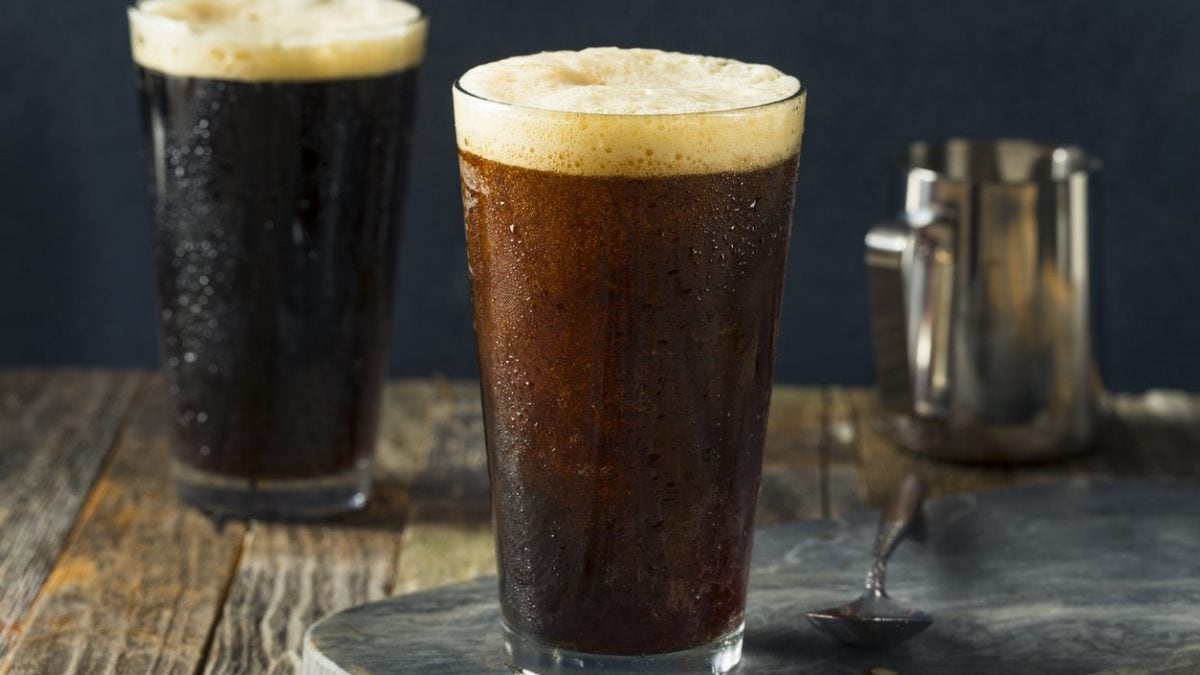
More and more people are discovering the most authentic taste of coffee, paying attention to the process, the country of origin, and the different aromatic profiles. The world of specialty coffee is attracting the taste and curiosity of many, inviting them to discover a drink with a unique complexity, which to simply call "coffee" is an understatement. In this panorama, a highly popular type is gaining ground, especially during the summer season: we are talking about cold brew coffee, a type of cold extraction that has nothing to do with the classic iced coffee we are used to. Still a niche market, however, is a particular variant that adds the word nitro to the name: it is a cold brew to which nitrogen is added, giving it a silky and velvety consistency.
Cold Brew and Nitrogen, a Winning Combo
Cold brew has been a favorite among coffee lovers for several years now, thanks to its freshness and generally smoother taste than other brews. However, there is another variation that involves the use of a rather curious element: nitrogen. Nitrogen, usually associated with brewing beer, is an odorless and colorless gas that doesn't alter the flavor of the coffee, but rather modifies its consistency: nitrogen creates many tiny bubbles that make the drink creamier and smoother. Compared to a classic cold brew, nitro doesn't present significant chemical differences, as demonstrated by some recent studies, but what does change is the sensory perception. The smoother texture can give the impression of greater sweetness and less acidity, without changing the chemical composition of the drink.

Nitro Cold Brew's Origins
It's not known exactly where it originated, but what is certain is that it's a relatively recent beverage, born around 2010 in the United States, within the specialty coffee scene. Its origins are still a matter of debate, but when people talk about nitro cold brew, one roaster, Cuvee Coffee in Austin, is often cited, along with others like Stumptown Coffee Roasters. The idea, regardless of its exact birthplace, stems from the use of nitrogen to create a dense foam and a creamy texture: a principle that some American roasters have begun to experiment with, giving life to a beverage that combines the typical structure of beer with the aromatic complexity of coffee.
How to Prepare and Serve Nitro Cold Brew
At this point, it's interesting to understand the process that leads to the creation of nitro cold brew coffee. It begins, as with traditional cold brew, with a cold extraction: the coffee, ground quite coarsely, is left to infuse in cold water for a period ranging from 12 to 24 hours. After this time, the resulting liquid is filtered and transferred to a sealed barrel, into which nitrogen is injected under pressure. This gas does not dissolve completely in the liquid, but disperses in the form of microbubbles, contributing to the typical creamy texture. It is precisely this characteristic that distinguishes nitrogen from the carbon dioxide used in carbonated drinks. The well-known CO2 dissolves easily in the liquid, forming carbonic acid and producing a fizzy sensation. Nitrogen, on the other hand, is poorly soluble and non-reactive, so it does not make the drink effervescent, but generates a soft and velvety texture, modifying the sensorial perception without altering the taste.

Finally, what fascinates those who encounter this drink is the way it's served. We're all accustomed to seeing coffee come out of a moka pot or an espresso machine; at most, those who enjoy experimenting will also be familiar with filter extractions. What you'd never expect, however, is to see coffee flowing from a tap just like a beer. Nitro cold brew, in fact, is served on tap from pressurized kegs, using a tap that favors the formation of nitrogen microbubbles. Once poured, the coffee develops the typical dense and persistent foam, offering a consistency similar to that of a stout beer.
;Resize,width=767;)
