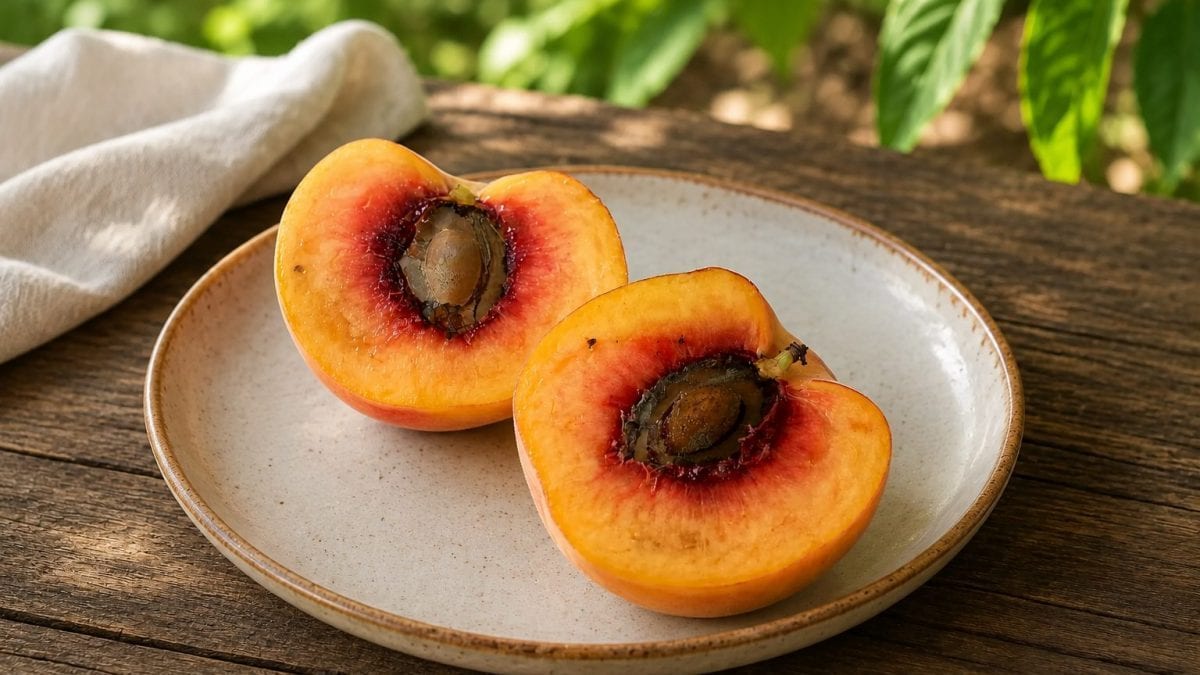
Among the anomalies that can affect stone fruits, particularly peaches, one of the most common is the presence of a split stone inside the fruit. Between botanical curiosities, cultivation issues, and consumer concerns, the topic of peaches with split stones raises questions among consumers. Finding a peach with a split stone can easily lead to the belief that it's no longer good, or that it's a defect related to ripening or storage. In reality, the origin must be sought much earlier, during the fruit's development on the tree. Understanding why this phenomenon occurs and what consequences it can have allows us to better understand one of the most beloved summer fruits and correctly evaluate its quality and characteristics. Let's investigate the "pit splitting" phenomenon, discover what causes it, and, above all, understand together whether a peach can be safely consumed even with a split stone.
Why Do Some Peaches Have Split Pits?
The phenomenon known in agriculture as pit splitting (literally "stone splitting") refers to a physiological anomaly, especially in peaches and nectarines, in which the stone splits inside the fruit. Although it may surprise consumers, in most cases it does not represent a food safety issue nor does it indicate that the fruit has gone bad. The cause is completely natural and simply involves a growth imbalance: while the flesh continues to rapidly expand in volume, the stone, which is hardening, can be subjected to tension that causes it to fracture. The peach stone, in fact, is nothing other than the woody endocarp that protects the seed and which, during growth, goes through a delicate hardening phase.
It's a phenomenon similar to that which occurs with tomatoes, when the skin splits due to excess water: in this case too, it's a "physiopathology," that is, a problem caused by external conditions and arising during the ripening process. Although the pit splitting phenomenon is well known to producers and fruit industry experts, it continues to arouse curiosity among consumers, who often wonder about the consequences such an anomaly could have on the quality and edibility of the fruit.
What Factors Cause the Pit Splitting Phenomenon?
A split peach stone isn't caused by a single cause, but is the result of a series of factors related to the plant's physiology and the environmental conditions that accompany the fruit's growth. The main cause is generally excessively rapid peach growth at a stage when the stone has not yet fully hardened. During development, the fruit goes through several stages: while the pulp can expand rapidly thanks to the accumulation of water and nutrients, the stone requires more time to lignify and acquire the strength necessary to withstand internal pressure. If the fruit expands too rapidly during this development phase, the mechanical stresses from the pulp can exceed the resistance of the woody structure, causing cracks or even splits.

Irrigation and soil water availability play a key role in pit splitting . After a period of water stress, such as high temperatures or low rainfall, heavy irrigation or intense rainfall can cause a sudden acceleration of fruit growth. Climatic conditions also play a significant role: particularly mild springs, followed by hot, humid days, can favor vigorous fruit growth, while sharp swings between dry and rainy periods further amplify the risk. These factors are often aggravated by poor cultivation practices that alter tissue growth, such as poor irrigation management: sharp fluctuations in water supply (going from very dry soil to abundant watering or rainfall) cause sudden water absorption. The fruit swells rapidly while the epidermis or shell is unable to expand, causing pit splitting. Pit splitting can also be caused by excessive use of nitrogen fertilizers, because they push the plant towards accelerated vegetative growth, or by soil that is particularly deficient in calcium, which acts as "cement" for the cells, and boron, which facilitates its transport.
Peach Varieties Most Subject to This Phenomenon (And When Does It Occur)
Not all peaches are equally susceptible to pit splitting: some varieties are naturally more susceptible than others. The most susceptible varieties are generally those that ripen early and very early, completing their development cycle relatively quickly. In these cultivars, the stone has a more limited window to complete the lignification process before the flesh begins its rapid growth phase, thus increasing the risk of internal fractures. Conversely, late-ripening varieties tend to be less vulnerable because their development is more gradual and the stone has more time to solidify. Susceptibility can vary significantly even within the same group of peaches: some cultivars have been selected specifically for their lower tendency to develop this anomaly, while others, particularly prized for their early ripening or large fruit size, may exhibit it more frequently.
Seasonally, the phenomenon is observed mainly during the first harvests of the year, between late spring and early summer, when early varieties enter production. During this period, climatic conditions are often characterized by rapid changes in temperature and water availability, factors that can favor accelerated fruit growth. Agronomists have observed that the risk increases particularly in years where relatively dry periods are followed by heavy rainfall or intense irrigation during the stone hardening phase. For this reason, the incidence of pit splitting can vary significantly from one season to the next and even between neighboring growing areas, depending on the weather patterns and the management practices adopted in the orchards.

Can You Eat Peaches With Their Stone Split?
Let's now address the most common consumer question: can peaches and other fruits with split pits be eaten? The answer is yes, despite pit splitting, peaches can be eaten without any particular problems. A split pit is merely a physiological defect that primarily affects the fruit's internal structure and does not in itself imply the presence of harmful substances or alterations that would make it unfit for consumption. If the flesh appears healthy, firm, and free of any unusual odors, the peach can be eaten normally even if the pit is fractured or split into multiple pieces.
However, cracking can sometimes allow microorganisms to enter through small internal injuries or create conditions that accelerate the fruit's deterioration. For this reason, it's always a good idea to carefully inspect the area around the pit after opening the peach. If you notice any browned, moldy, or particularly soft areas, or if the flesh has a fermented or unpleasant odor, it's best to remove the affected parts or, in more obvious cases, discard the entire fruit. The most important precaution, however, is not to ingest or chew the seed. While accidentally consuming small traces isn't generally a problem, peach seeds contain amygdalin, a natural compound that gastric juices and digestive enzymes convert into hydrocyanic acid, commonly known as cyanide. Don't worry: the seed is only toxic if chewed or ingested in large quantities, but it's still good to be aware of this and exercise caution.
;Resize,width=767;)
