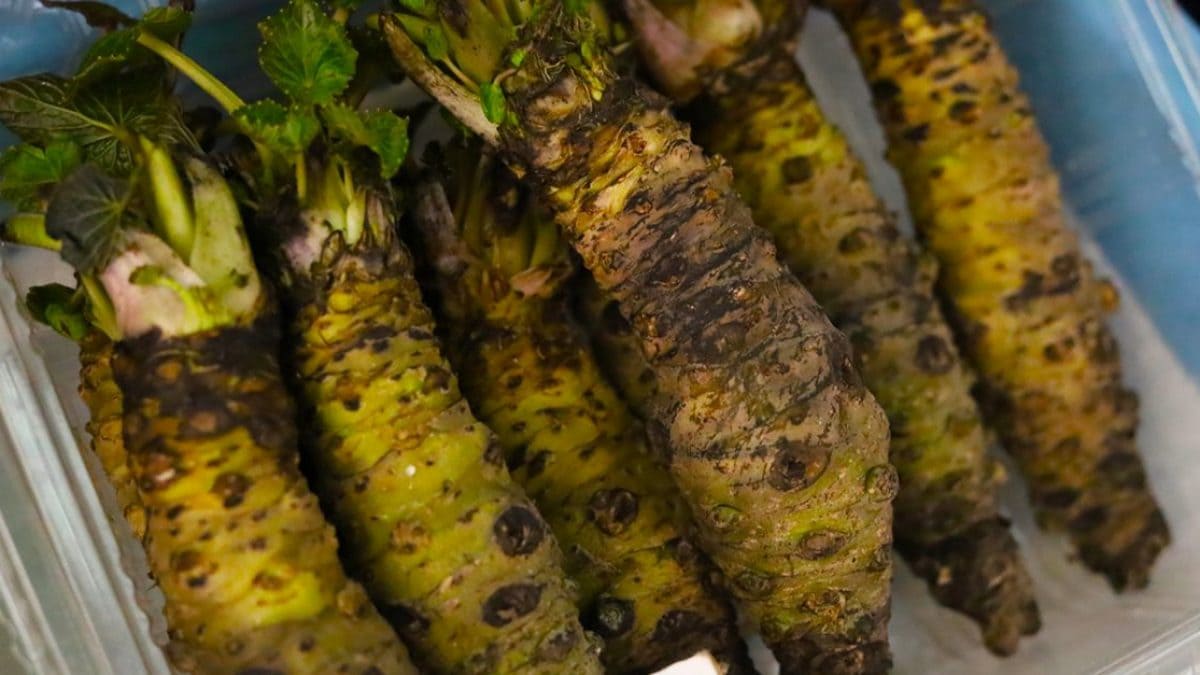
Scientifically known as Wasabia japonica, wasabi is a perennial plant belonging to the Cruciferae family, the same family as mustard, cabbage, and arugula. It grows primarily in the cool, mountainous regions of Japan, where it is cultivated in well-watered soil and, above all, in specific environments that guarantee its quality. Here, we'll explain everything you need to know about this product.
Real Wasabi Isn't The Kind You Find in Restaurants
You may have tried it in Japanese restaurants because it pairs beautifully with sushi and sashimi. What we commonly eat at all-you-can-eat restaurants is actually a low-quality green paste. It's commonly sold as wasabi, but it has nothing whatsoever to do with the Japanese plant, as it's made with mustard, spicy radish, and artificial green coloring. Before explaining the reasons why restaurateurs make this choice, it's important for you to understand what "real wasabi" is.
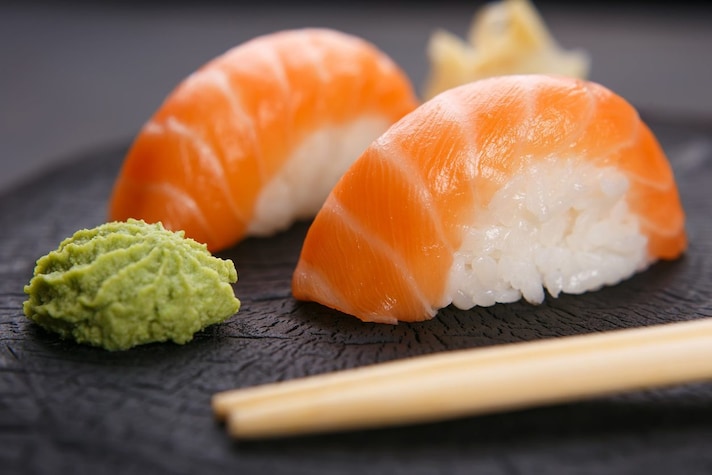
As mentioned previously, once the plant is harvested, green wasabi paste is prepared by grinding the rhizome (root), which is the part that gives it a rich, spicy, and pungent flavor. In Japan, it's common to try it with sushi for the striking contrast it creates with the delicate flavor of the fish.
Unlike chili pepper, wasabi expresses its spiciness mainly in the upper part of the palate, which can sometimes even make you watery. If you've never tried it before, we recommend trying a very small amount first to see if you can handle its flavor. Once you've become familiar with this new spice, you can pair it with sushi. We recommend always using small amounts of wasabi, as its dominant flavor means too much green paste will completely alter the flavor of the fish.
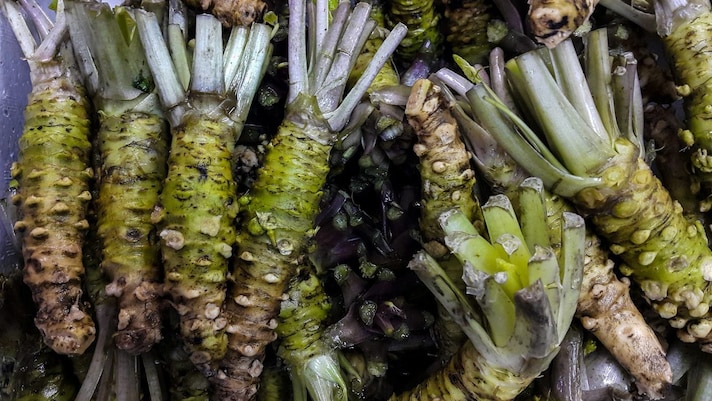
Returning to some restaurateurs, who serve a colored paste rather than real wasabi, they make a choice based on the plant's high cost. In their home country, the highest-quality wasabi can cost over a thousand dollars per kilo. Furthermore, ready-made blends are easier to distribute in large quantities in restaurants, especially those serving large crowds.
Wasabi's Beneficial Properties
In Japan, once the plant has been extracted, washed, and dried, a grater (oroshigane) made from a wooden board covered with ray skin is used to prepare the mixture for sushi. Wasabi is not only a valuable culinary ingredient but also contains beneficial properties that are excellent for health. Here's why:
- Antibacterial properties: Contains a compound called isothiocyanate which, according to some studies, has counteracting properties against what could be bacteria in raw fish.
- Stimulates digestion: Like other plants of the Cruciferae family, the pungent flavor of wasabi promotes the activity of gastric juices, making digestion easier.
- Antioxidant Properties: Contains natural antioxidants that can protect the body from damage caused by free radicals by slowing down the cellular aging process.
- Cardiovascular benefits: Several studies have suggested that the compounds found in wasabi may be helpful in reducing cholesterol levels and improving cardiovascular health.
;Resize,width=767;)
