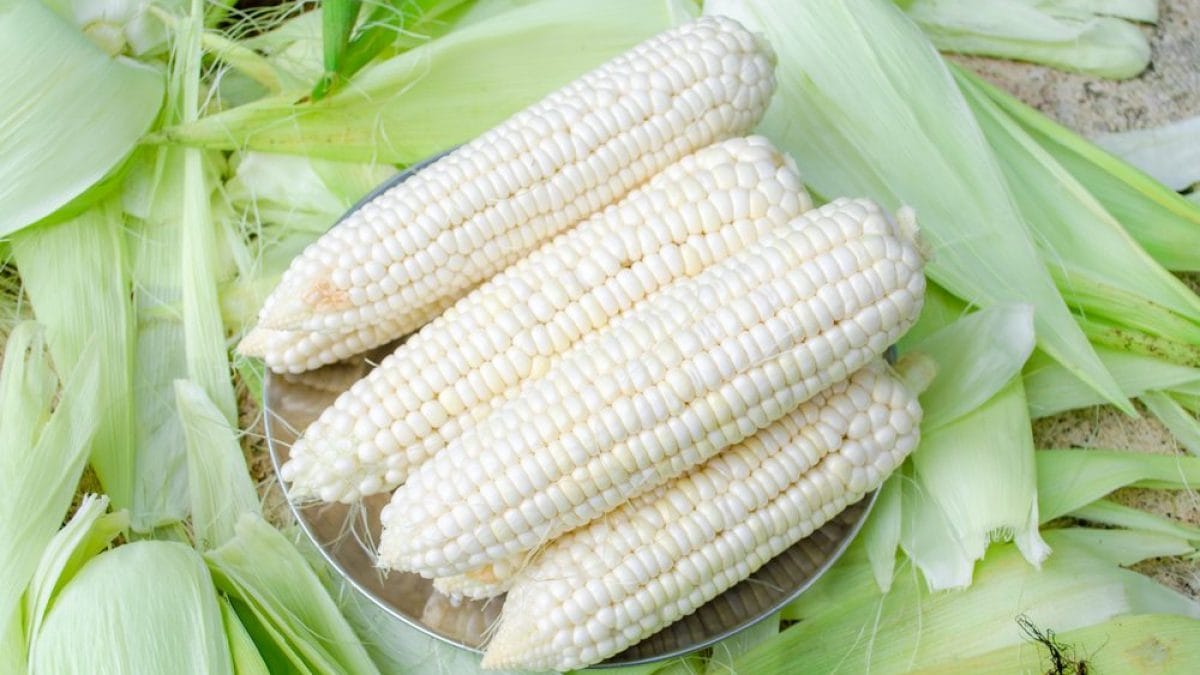
In the U.S., it is available but not as common as its yellow counterpart – except in some areas of the South and the Midwest – while in Latin America it is the protagonist of emblematic recipes in countries like Mexico and Venezuela: we are talking about white corn, an ancient grain whose main characteristic is the white color of the grains of its long, tapered cob. This variety reached us after the conquest of the New World and was gradually abandoned in favor of the more common yellow corn. In Mexico it is the basis of the famous tortillas. Let's discover it.
What is White Corn and Where is It Grown?
In the simplest possible way, we can say that white corn is a variety of the same plant as yellow corn, namely Zea mays, which is distinguished by the light hue of its kernels. There is also purple corn, better known as maiz morado, the cob of the Peruvian Andes. In this case too, we go to Latin America, where white corn is one of the most widespread crops, between Venezuela, Colombia and Mexico: in the U.S., it arrived with the Native American cultivation, integrating particularly well into the cultures of Florida, Georgia, Texas and partly also into those of California. In the U.S., one of the traditional white corn varieties historically grown in the Northeast was similar to what farmers often called “pearl white” corn. During the 20th century, it was gradually replaced in commercial agriculture by yellow corn, which was more high-yielding and profitable. Despite this, white corn remains popular in regional specialties, particularly in the Mid-Atlantic and Southern states, where it is prized for grits, hominy, and white cornmeal. The flour from these kernels is high in starch, versatile, and ideal for dishes ranging from cornbread to creamy polenta-style sides, keeping the heritage of white corn alive in American cuisine.
What is The Difference From Regular Corn?
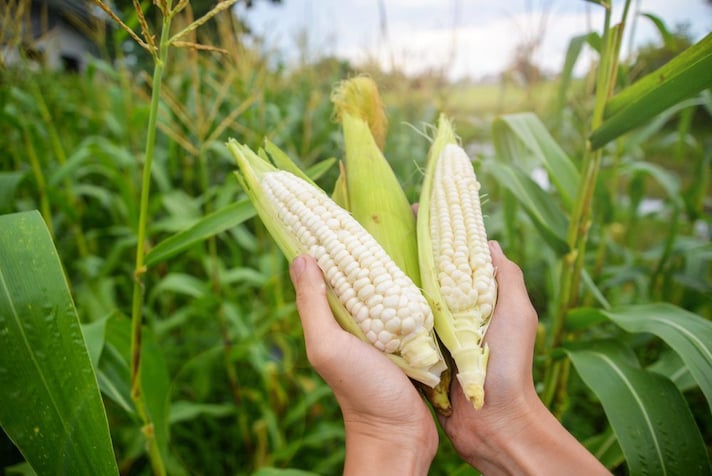
No laboratory experiments: the color difference is due to the almost complete absence of carotenoids (beta-carotene), plant pigments that give the grains of common corn their typical yellow-orange hue. The appearance, therefore, is unmistakable, but the flavor is also perceived as different, softer and more delicate. As for its properties, white corn has a higher amount of fiber and iron, while also remaining a good source of potassium and magnesium. It also contains vitamins B, C, and E, but these are in negligible quantities from a functional standpoint.
The flour obtained by grinding the grains is considered highly digestible, has a low glycemic index, and is highly satiating. It is worth remembering that it is a nutritious product (on average 350 kcal per 100 g) and naturally gluten-free, making it suitable for those with celiac disease. Regarding food intolerances or allergies, compared to wheat flour and yellow corn flour, it has a very low percentage of nickel (0.07 mg/kg), which is often a source of discomfort such as bloating and abdominal pain.
How to Use it In The Kitchen
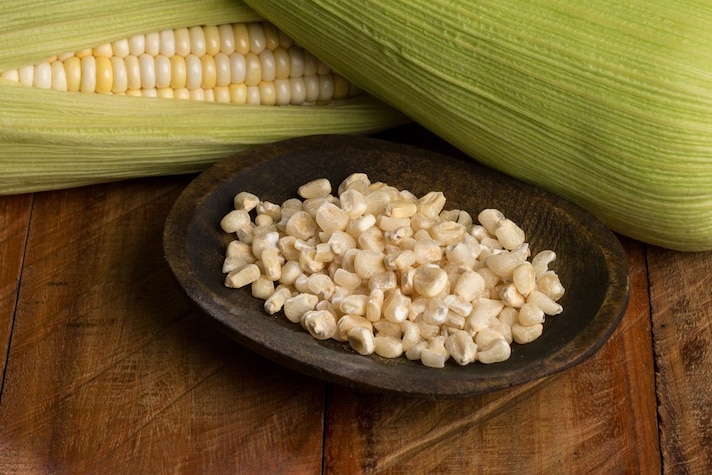
White corn is usually associated with flour. In the U.S., white corn is primarily used to make fine, delicately flavored white cornmeal, which can be served creamy or firm, as a side dish, base for cornbread, or even as an appetizer. In Southern and Mid-Atlantic cuisine, it’s a staple for grits and hominy, pairing perfectly with seafood dishes such as shrimp and crab, or with fried catfish and other regional specialties. White cornmeal is also popular in gluten-free baking, where it can be used to make light, fragrant biscuits, muffins, or cornbread, often enhanced with ingredients like chocolate chips, dried fruit, or nuts for added flavor.
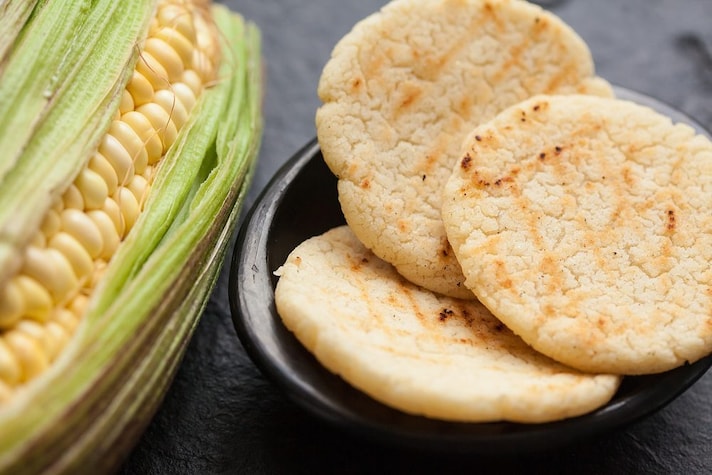
If we look across our borders, in Latin America, white corn is the main ingredient in many national dishes, a symbol of the gastronomic traditions of several countries: in Venezuela, Colombia, and Bolivia, we have arepas, soft flatbreads made with the addition of water and salt: they are served as a side dish for meat, fish, and vegetable dishes, but are also great for sweet spreads. In Mexico, masa harina (as it is known) is used to make the famous tortillas, which can be filled piadina-style or fried and transformed into crispy nachos or quesadillas, cheese-filled dumplings. Anyone who has seen the Disney film Coco will remember tamales, festive rolls made with a cornmeal-based dough, stuffed with meat and vegetables, and wrapped in dried corn husks. Finally, it is also used as a thickener in the hot chocolate par excellence, champurrado, excellent as a snack for children (but not only) in winter and during Christmas.
;Resize,width=767;)
