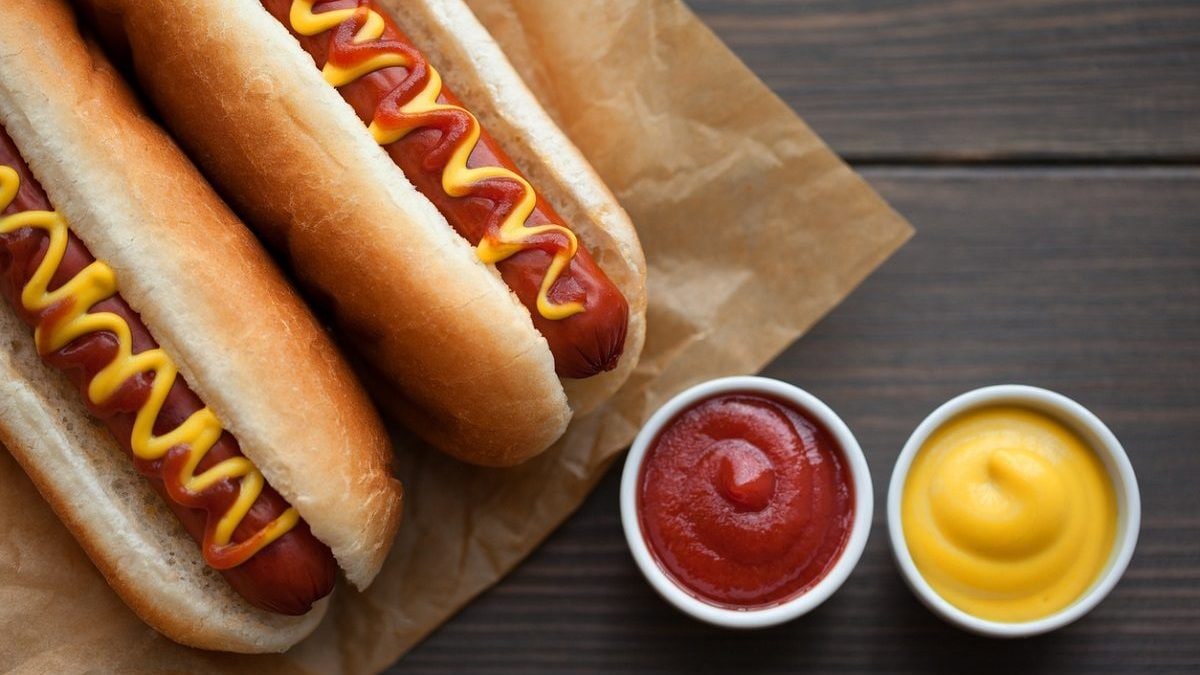
The hot dog has become one of the most recognizable symbols of America around the world. A soft, elongated bun with a hot sausage in the middle and a mix of sauces on top: simple and immediate, a food that everyone loves, from adults to children. Up to this point, everything should be clear; what you may not have imagined is how this dish has truly managed to become so famous and globalized. You may have eaten it at a fair, at a village festival, amid the lights of a Christmas market, or while following your favorite team at the stadium, probably without wondering why it is so popular and why it appears precisely at those moments of celebration and crowds. In short, you should know that that hot dog you have eaten on more than one occasion has a very long history and that, absentmindedly (we are almost certain that is the case), you have most often ignored. A history made up of immigrants, brilliant intuitions, and names born almost by mistake (which incredibly also involves dogs) has later become that of the most famous street food of all time. Let's find out together how the hot dog was really born.
What Do Dogs Have To Do With Hot Dogs?
Let's start with the question everyone's asking: what do dogs have to do with a sandwich, and why call it that? There's no real explanation for the origin of the name, but there are two versions, which we'll explain below. For the first story, we need to go back to the early 1900s.
The Giants were playing at New York Stadium, and in this context, ice cream vendor Harry M. Stevens reinvented himself as a way to make money in the winter, since the cold made it difficult to sell ice cream. He positioned himself in the stands with a cart and started shouting: "Get your hot dachshund sausages!" Before you "whiten," don't worry, hot dogs weren't originally made with dachshund meat, but the reference was due to the elongated shape of the sausage, which perhaps somewhat resembled that of the friendly four-legged animal. The turning point for the name came when a cartoonist for the New York Evening Journal, Tad Dorgan, couldn't spell the word "dachshund" correctly. In one of his comic strips, he drew a dachshund inside a bun and called it a "hot dog."
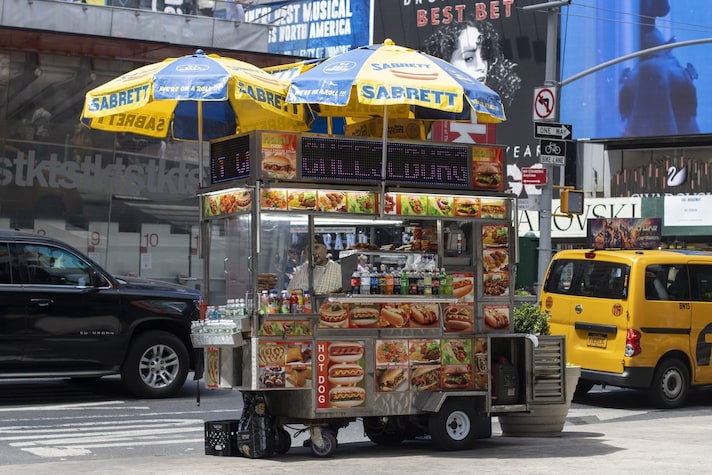
In reality, there's a version that's perhaps even more plausible regarding the name. Before we get into it, though, let's disclaim a bit, because dogs are indeed involved in this story. It's Germany in 1867, and a traveling sausage vendor was desperate because his sales were dwindling. So, as a ruse, he started saying his sausages contained dog meat. The idea worked so well that other vendors copied it, shortening the slogan to the more immediate "hot dog." We don't know if the vendor was fully aware of his prank, but there's one detail that makes the story plausible: until the early 1900s, the consumption of dog meat was far from uncommon in many parts of Germany. That's why the hypothesis that dog meat could actually end up in sausages isn't as unlikely as it seems.
The True History of Hot Dogs, From Europe to The U.S.
What you don't know is that before becoming the pop icon of NBA arenas and football stadiums in America, the hot dog was a simple sausage in Germany. Specifically, it was in the city of Frankfurt, which today houses the European Central Bank, the place where the famous Frankfurter würstchen had been prepared for centuries. At the time, it was a humble but welcoming food, easy to prepare, practical and quick to eat, and perfect for those who endured long workdays.
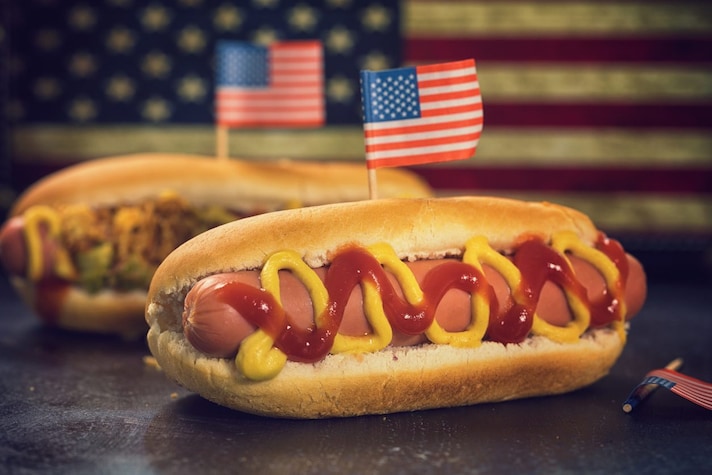
Between the 19th and 20th centuries, millions of Europeans crossed the Atlantic Ocean to land in America in search of fortune. They brought with them suitcases and recipe books, which, in some cases, included the recipe for their original sausages. The definitive breakthrough came on the shores of New York, in Coney Island, in 1871. Charles Feltman, a German emigrant salesman, had the idea that would forever change the concept of street food: serving his Frankfurt sausage in the middle of a bun.
Until then, sausages were served to customers on a paper plate, accompanied by a fork and knife. But Feltman understood that Coney Island beachgoers and tourists wanted something more immediate: food they could eat while walking, without having to sit down or bother with cutlery. An idea that seemed banal but which for its time was a true revolution.
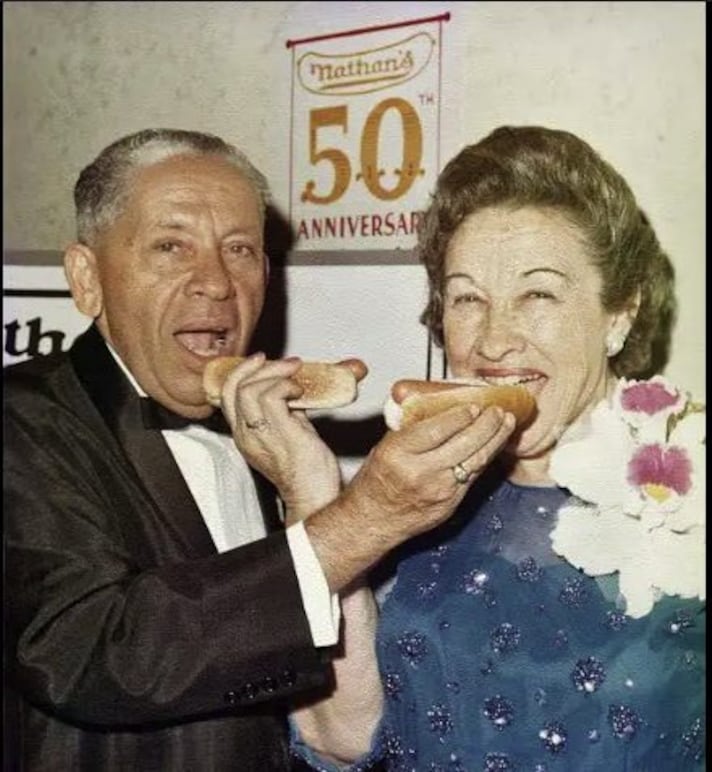
There's another defining moment in the story, which came in 1916. Nathan Handwerker, a former Feltman employee and a Polish-Jewish immigrant, opened a tiny sandwich stand right across from his old boss's restaurant. With a new recipe suggested by Eddie Cantor and Jimmy Durante, two of his regular customers, and with an incredible price of 5 cents (half the price of Feltman's), his Nathan's Famous attracted hordes of customers. Nathan's quickly became the new gastronomic symbol of Coney Island, and his cheap and popular hot dog became synonymous with the American urban imagery. In the 1920s, between Prohibition and the baseball boom, the sandwich spread to stadiums, amusement parks, and traveling fairs, cementing itself as the street food par excellence. Its connection with American culture is such that, since 1916, every Fourth of July Coney Island has hosted Nathan's Hot Dog Eating Contest, the hot dog eating contest that has become one of the most iconic rituals of the national holiday.
What's Really in Hot Dogs?
The question everyone asks sooner or later is simple: what's really inside a hot dog? The irony surrounding "dog meat" continues to this day, thanks to the less-than-stellar reputation of its ingredients. In reality, the hot dog is nothing more than a sausage.

Traditional ones should contain only pork —or at most a mix of pork and beef—while chicken or turkey versions are considered cheaper and of lower quality. In the United States, the most common ingredients include pork and beef, a good amount of fat, salt, spices like garlic and paprika, and typical preservatives like sodium erythorbate and sodium nitrite.
;Resize,width=767;)
