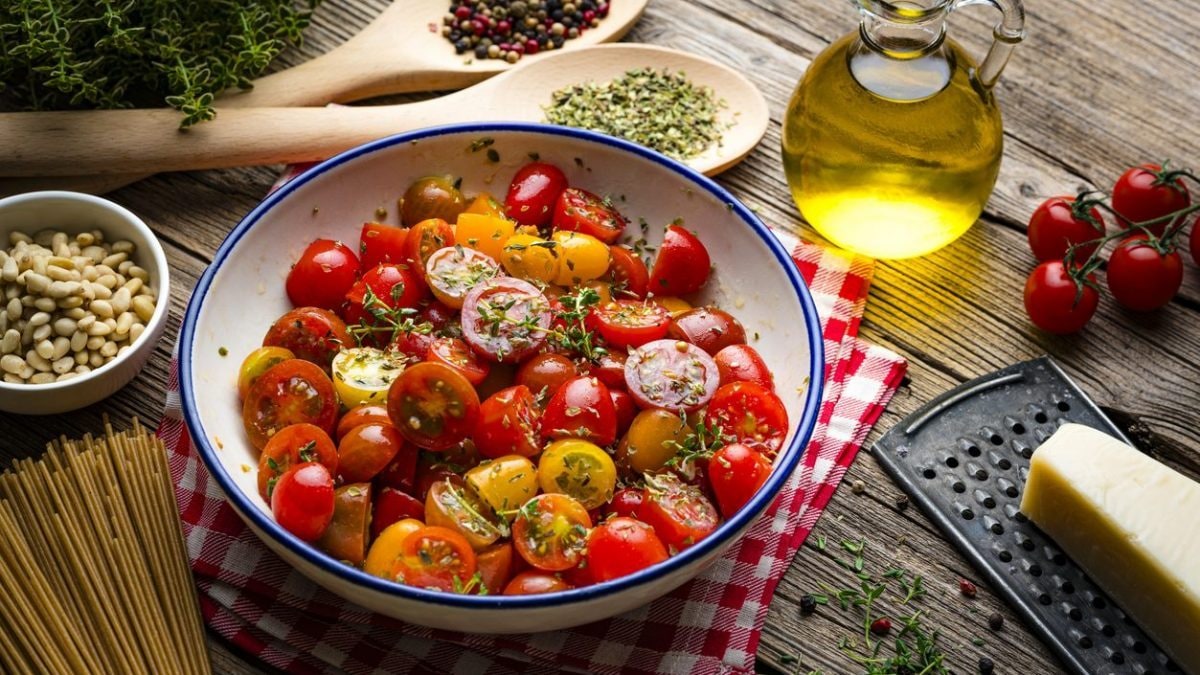
Among the many tomato varieties available on the market today, the cherry tomato is undoubtedly one of the best-known and most popular. Small, rounded, and grown in large bunches, it stands out for its fresh, balanced flavor and its great culinary versatility. Perfect eaten raw, it also lends itself to cooked dishes, from quick pasta dishes to vegetable casseroles, pizzas, and focaccias.
Its success is largely due to its combination of practicality and organoleptic qualities: its small size makes it easy to use, while its juicy pulp and intense flavor enhance even the simplest recipes. Here's everything you need to know about cherry tomatoes: from their origins to the characteristics that have made them a staple of Mediterranean cuisine, including the dishes in which they can best be showcased.
What is The Cherry Tomato Like?
The cherry tomato is one of the most widespread and popular varieties in the world thanks to its high productivity, long shelf life, and extraordinary versatility. Unlike well-defined varieties such as the San Marzano or the Beefsteak, the cherry tomato is not a single cultivar, but rather a category of tomatoes sharing several distinctive characteristics, including their small size, rounded shape, and cluster growth. The fruits generally weigh between 15 and 30 grams and can develop in numerous clusters of up to several dozen tomatoes.
The skin is thin but tough, a characteristic that facilitates transportation and storage, while the flesh is particularly juicy, rich in seeds and aromatic substances that contribute to the intense flavor. Over the years, numerous selections and hybrids belonging to this typology have been developed, with differences that may concern sweetness, productivity, disease resistance, and adaptation to different growing environments.
In the United States, the Sungold cherry tomato is one of the most celebrated and widely appreciated varieties, especially among home gardeners, farmers’ markets, and chefs. Developed in Japan but embraced across American agriculture, it is prized for its intensely sweet flavor, bright orange color, and delicate skin. Grown particularly well in regions like California and the Pacific Northwest, where warm days and long growing seasons help concentrate its sugars, Sungold tomatoes are considered a benchmark for flavorful cherry tomatoes in the U.S. market.
Cherry Tomatoes Vs. Datterini Vs. Piccadily Vs. San Marzano
Cherry tomatoes are often confused with other small-sized varieties, but they have very specific characteristics.
- Cherry and Sungold. Cherry isn't a specific variety but a type of tomato characterized by small, rounded fruits. A name like Sungold, on the other hand, refers to a specific cherry tomato cultivar, while certain American regional labels may refer to where a tomato is grown rather than the variety itself. A Sungold cherry tomato is always a cherry tomato, but not every cherry tomato is a Sungold.
- Cherry and Datterini tomatoes. Although both belong to the small tomato category, they have different characteristics. The datterino has a more elongated shape and a generally sweeter flavor, while the cherry tomato stands out for its better balance of sugars and acidity. Furthermore, its flesh is often juicier, a characteristic that gives it a fresher taste.
- Cherry and Piccadilly tomatoes. The Piccadilly tomato is generally larger and slightly elongated, with firmer, meatier flesh; the cherry tomato, on the other hand, contains a greater amount of juice and develops a more vibrant flavor profile. For this reason, it is often preferred for raw preparations, while the Piccadilly tomato is also widely used in recipes that require longer cooking times.
- Cherry and San Marzano. The San Marzano is a variety traditionally used for processing and making preserves and purees: the fruits are larger, elongated, and characterized by a very firm, seedless pulp. The cherry tomato, on the other hand, contains a greater amount of liquid and is more commonly used fresh, thanks to its juicy texture and distinctive aroma.
How to Use Cherry Tomatoes in Cooking
The cherry tomato is considered one of the most versatile tomatoes because it adapts effortlessly to a wide variety of preparations, from the simplest recipes to those requiring cooking. Its success stems from its balance of sweetness, acidity, and aroma, a combination that allows it to enrich a dish without overpowering the flavors of other ingredients. Unlike sweeter varieties like the datterino or plumper ones like the piccadilly, the cherry tomato offers a fresh flavor that is particularly appreciated in Mediterranean cuisine.
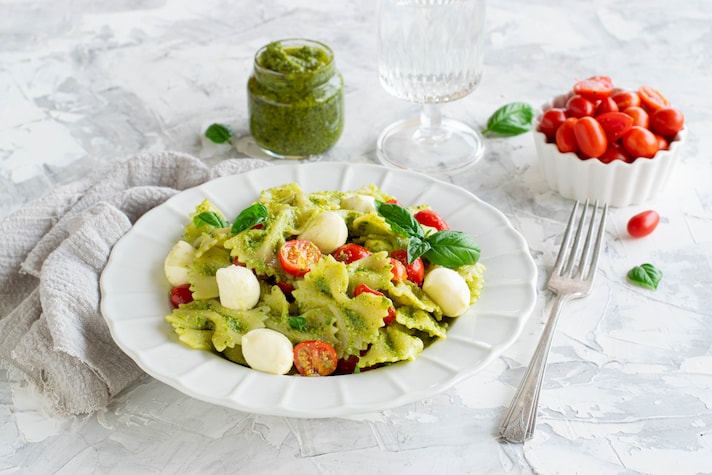
When eaten raw, it's ideal for salads, bruschetta, caprese salad, cold pasta dishes, and fish or mozzarella-based dishes. Its juicy flesh and thin skin provide a pleasant bite, while its small size allows it to be used whole or simply cut in half, preserving its flavor and appearance.
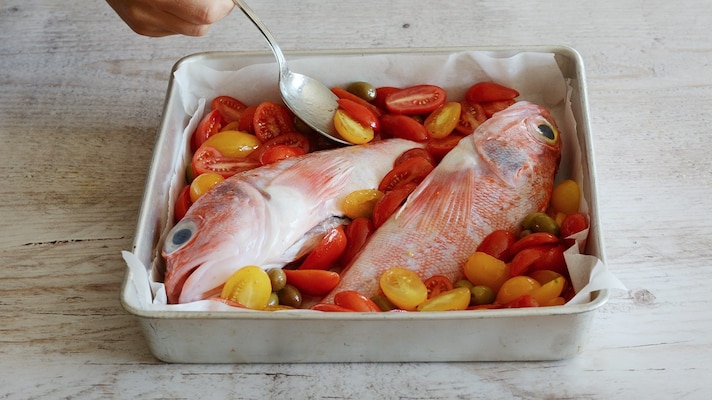
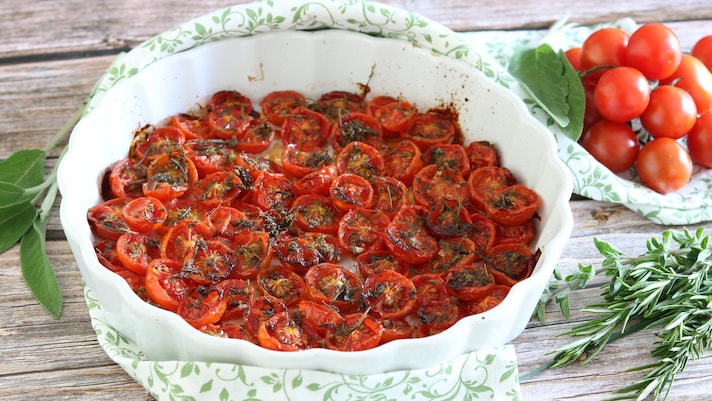
When cooked, cherry tomatoes develop equally interesting characteristics: the heat gradually concentrates the natural sugars and aromatic substances present in the pulp, intensifying the flavor without completely eliminating the typical acidic note. For this reason, they are often used to prepare quick sauces, pasta toppings, pizzas, focaccias, vegetable dishes, and meat or fish-based main dishes.
It can be cooked whole, confit, sautéed, or roasted in the oven. If you want a particularly sweet tomato puree, you can use it in combination with more watery tomatoes such as San Marzano or coppery tomatoes. Its ability to offer convincing results both raw and cooked, combined with its ease of use and availability throughout most of the year, has made the cherry tomato one of the most popular tomatoes in home and professional kitchens, as well as one of the symbolic ingredients of Mediterranean gastronomy.
;Resize,width=767;)
