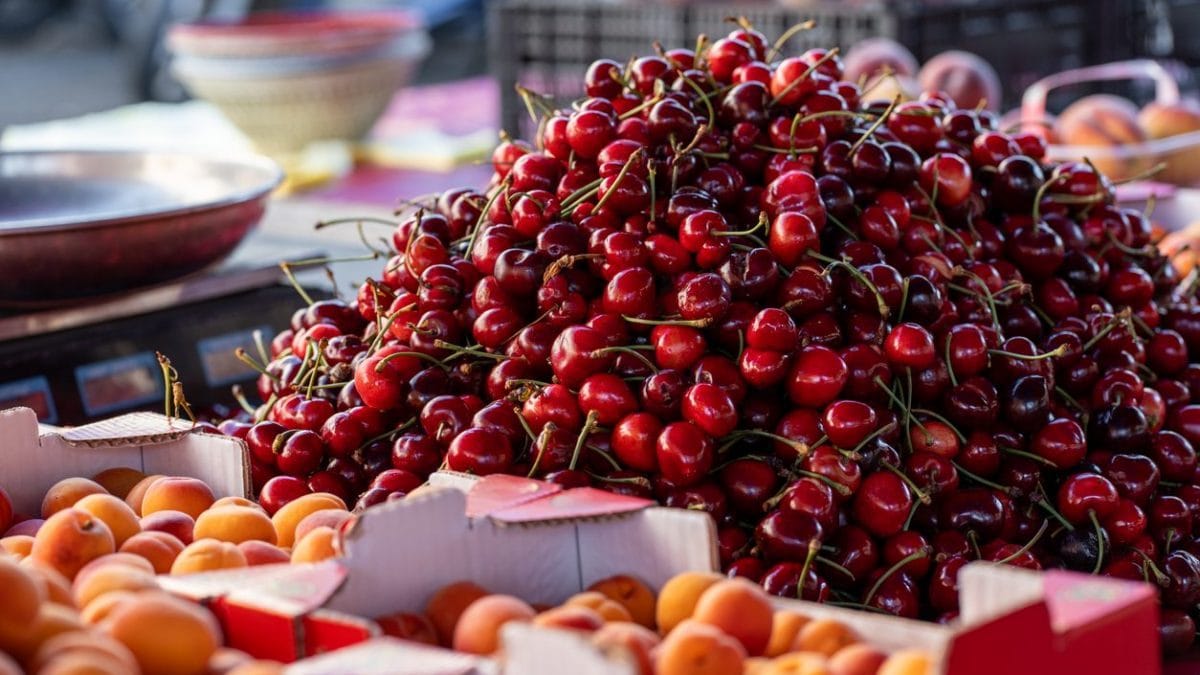
Red, juicy, versatile: cherries are a true symbol of the beautiful season. Once you bring them to the table, it's hard to resist their deliciousness and one leads to another. There are more than 1,500 varieties in nature, of which approximately 1.000 are found in the U.S. alone. But beyond their deliciousness and beneficial properties, they all have another characteristic in common: their cost.
Despite their irresistible flavor, cherries are currently one of the most expensive fruits on the market. They have never been a cheap product, but in recent years they have almost become a "luxury" fruit, thanks to a series of climatic and political events that have impacted their cultivation and trade: in 2022, prices increased in part due to the outbreak of war in Ukraine, and in 2023 and 2024, a series of environmental disasters caused a further price surge.
All these events certainly haven't helped a fruit that was previously expensive. But, aside from specific events like those mentioned above, what are the reasons why cherries always have a higher or lower price? The cost of cherries is the result of a combination of climatic, economic, and logistical factors: let's try to understand what they are and why they cause the price of these delicious jewels of nature to soar.
1. Seasonality

Cherries have a very short shelf life because they're not a fruit that keeps for a long time, and their sales window is also shortened by the blossoming of the trees: from the moment the cherry trees produce fruit and are then harvested, it takes time to get the product to the shops. Cherry season comes and goes quite quickly, which is why the market tries to get as much of this fruit as possible in the short time available: the first fruits hit the market at a very high price (up to 35 dollars per kg depending on the origin), then prices drop after a while and rise again towards the end.
2. Labor Costs

The cost of labor used to grow and harvest cherries is one of the factors that most impacts the price: the trees on which these delicious fruits grow are difficult to manage because they are very delicate, and they can only grow in certain regions of the U.S.. Growing cherry trees therefore requires special expertise, and to make matters worse, the fruits can only be picked by hand, one by one, a process that is very costly for the company.
3. Maintenance Costs for The Farmer

As mentioned in the previous point, cherry trees are not an easy crop to manage for the grower: they are a delicate tree that requires a series of fungicides and fertilizers (they tend to easily incubate fungi and bacteria), require a certain type of irrigation, and therefore require specialized labor to manage the entire process. Furthermore, fuel and transportation prices are constantly rising, negatively impacting the cost of distributing cherries. This means that maintaining multiple cherry trees is expensive for the grower, and therefore, the end consumer will also pay more.
4. Climate Change

In recent years, growers have found themselves battling an increasingly unpredictable enemy: the climate. Climate change, in fact, increasingly brings with it the occurrence of sudden and extreme events that destroy crops: the floods we've already discussed, but also heat waves, late frosts, hailstorms, and other phenomena that destroy crops, consequently reducing the quantity of cherries available to growers. A reduction in crop yields therefore translates into a shortage of supply that drives up prices.
5. Transportation Difficulties

Cherries are not only difficult to grow, but also to transport: they are a highly perishable product, requiring careful handling and special refrigeration. For this same reason, prices vary greatly depending on the region you live in: there are hundreds of cherry varieties in the U.S., although only a dozen or so are sold in bulk. In the United States, cherry production is concentrated in a few key states. Washington, California, Oregon, Michigan, and New York account for the vast majority of U.S. cherry-growing acreage, with Washington alone producing roughly 75% of all sweet cherries. It goes without saying that cherries are slightly cheaper in these regions, while in those further away from the main production areas they will be more expensive.
6. Growing Demand

The final factor affecting the cost of cherries is a basic rule of economics: the more market demand increases, the more selling prices rise. This is because when many people desire a certain product, the quantity demanded increases, and sellers, to take advantage of the relative scarcity, tend to raise prices. In other words, when demand exceeds supply, the price tends to rise. In our specific case, the popularity of cherries continues to grow, both for fresh consumption and for use in processed products such as juices, jams, and sweets. This high demand, combined with a reduced supply and all the factors we have mentioned, causes a constant increase in prices.
;Resize,width=767;)
