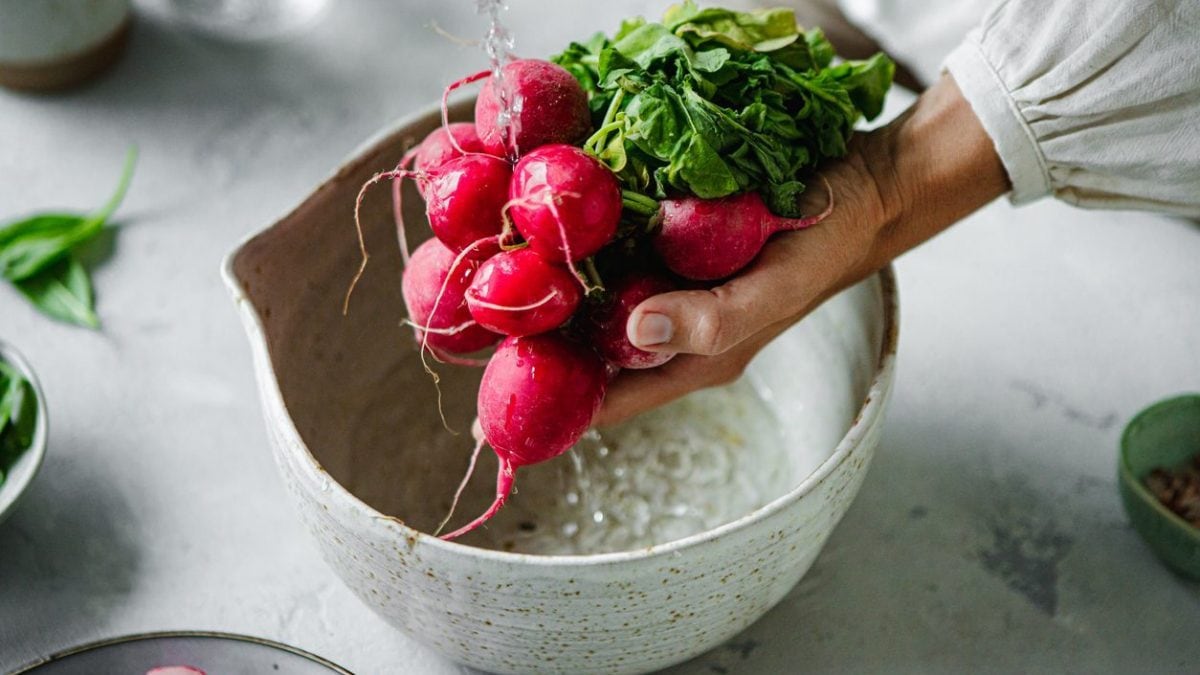
Crispy, fresh, and visually appealing: radishes are among the most underrated vegetables in contemporary cuisine. Often relegated to simple garnishes or salad ingredients, they conceal a distinct and recognizable aromatic personality. Their distinctive spicy "bite" can surprise and divide, but also win over when understood and appreciated. Understanding where this pungent note comes from is the first step to using them more consciously in the kitchen.
Why Are Radishes Spicy?
The spiciness of radishes has nothing to do with that of chili peppers: here, sulfur compounds called glucosinolates come into play, naturally present in the plant's tissues. As long as the radish is whole, these compounds remain "silent"; but when we cut or bite into it, we break the plant cells and activate an enzyme, myrosinase.
This enzymatic reaction transforms glucosinolates into isothiocyanates, volatile molecules responsible for the pungent sensation. They are the same ones found in mustard, horseradish, and wasabi, and in fact the type of spiciness is similar: rapid, penetrating, almost "nasal," rather than lingering on the tongue.
From a sensorial standpoint, isothiocyanates stimulate not only taste, but also pain and temperature receptors (particularly TRPA1), creating the lively sensation we perceive as spiciness. It's not just a question of variety: factors such as climate, water stress, and ripeness influence the concentration of these compounds. In general, radishes grown quickly and in mild conditions are sweeter; those subjected to stress tend to be more aggressive.
How to Tone Down The Spiciness in Cooking
Working on the spiciness of radishes means working on volatile and reactive compounds: isothiocyanates. The good news is that, precisely because of their chemical nature, they are relatively easy to modulate with simple but targeted techniques.
- Soaking in cold water. Soaking in cold water isn't just a trick: it works because some of the isothiocyanates are water-soluble and volatile. Cutting the radish accelerates their formation, but at the same time exposes them to water, which facilitates their dispersion. Finally, remember that low temperatures slow further enzymatic reactions, stabilizing the flavor profile. A 10-15 minute soak is sufficient for a noticeable effect without significantly depleting the flavor.
- Peel them. The distribution of pungent compounds is not uniform: the subepidermal area (i.e., immediately under the peel) tends to be more concentrated; peeling them completely or only partially "peeling them raw" allows you to precisely modulate the intensity.
- Cut them thinly. Cutting is an often underestimated lever: thin slices or mandolin cuts increase the surface area and distribute the pungent compounds more evenly , avoiding localized peaks; conversely, coarse cuts or direct bites concentrate the perception. In sensorial terms, it's not about "eliminating" the spiciness, but rather managing the aromatic density.
- Pair them with fats. Isothiocyanates aren't "neutralized" by fats, but their perception is: lipids create a sort of sensory buffer effect, coating the mucous membranes and reducing direct interaction with irritant receptors. Butter, fresh cheeses, cream, or even a smooth extra virgin olive oil work in this direction.
- Salt and osmosis. A lesser-known but effective step is lightly salting the radish beforehand: salt draws water through osmosis, allowing some of the compounds responsible for the spiciness to escape. After a few minutes, you can pat it dry or rinse it lightly: the result is a rounder radish, with a slightly less crunchy texture but a more controlled flavor.
- Acidic seasonings. Acidic seasonings (mild vinegar, lemon juice) don't eliminate the heat, but they integrate it better into the overall flavor profile. Acidity shifts the sensory focus, making the pungency less dominant. This is the principle behind many quick sweet and sour preparations or mild pickles.
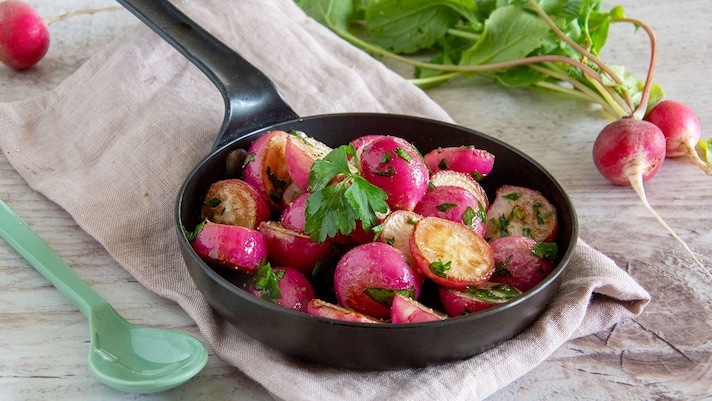
- Cooking. Heat is the most radical intervention: isothiocyanates are thermolabile and rapidly degrade during cooking. A quick sauté or roast in the oven not only reduces the spiciness, but also activates reactions that develop sweeter, more vegetal notes. Cooked radishes transform from crunchy and pungent to soft, almost buttery, with hints of turnip or sweet cabbage.
In short, toning down the spiciness doesn't mean diminishing the radish's flavor, but rather managing its expressiveness. Through extraction, dilution, balance, and transformation, cooking offers precise tools to adapt it to the context of the dish and the intention of the cook.
How to Use Radishes in Your Cooking
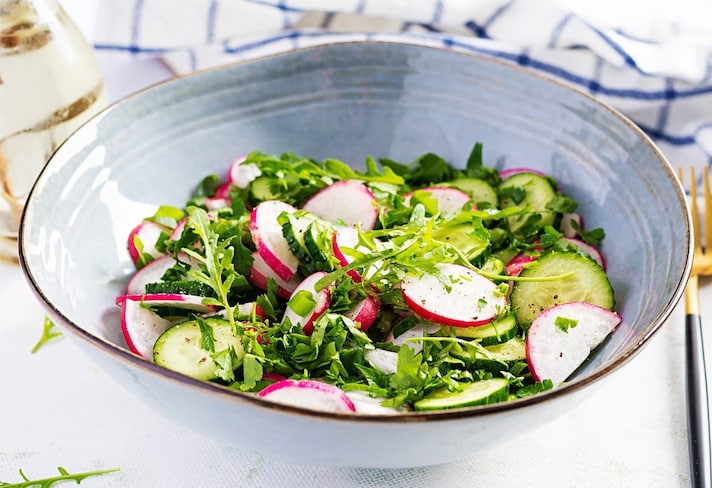
Radishes are highly versatile ingredients, capable of adapting to a variety of culinary styles and contexts. Their crunchy, pungent flavor is best expressed uncooked: thinly sliced, they enhance salads, fish carpaccio, or vegetable carpaccio, or they add a contrast to rich dishes like tartare and charcuterie. Halved and served with butter and salt —the classic French recipe—they serve as a simple yet refined appetizer. If marinated briefly in vinegar, sugar, and salt, they transform into quick pickles, ideal for adding acidity and freshness to rich or spicy dishes.
Cooking, however, opens up a lesser-known dimension: sautéed in a pan with a little butter or roasted in the oven, they lose their spicy component and develop a delicate sweetness, with notes reminiscent of "softer" roots like turnips. They can be glazed, used in hot side dishes, or paired with white meats and fish. Even the leaves, often discarded, are edible and interesting: slightly bitter, they lend themselves to sautéing, making pesto, or adding to soups.
;Resize,width=767;)
