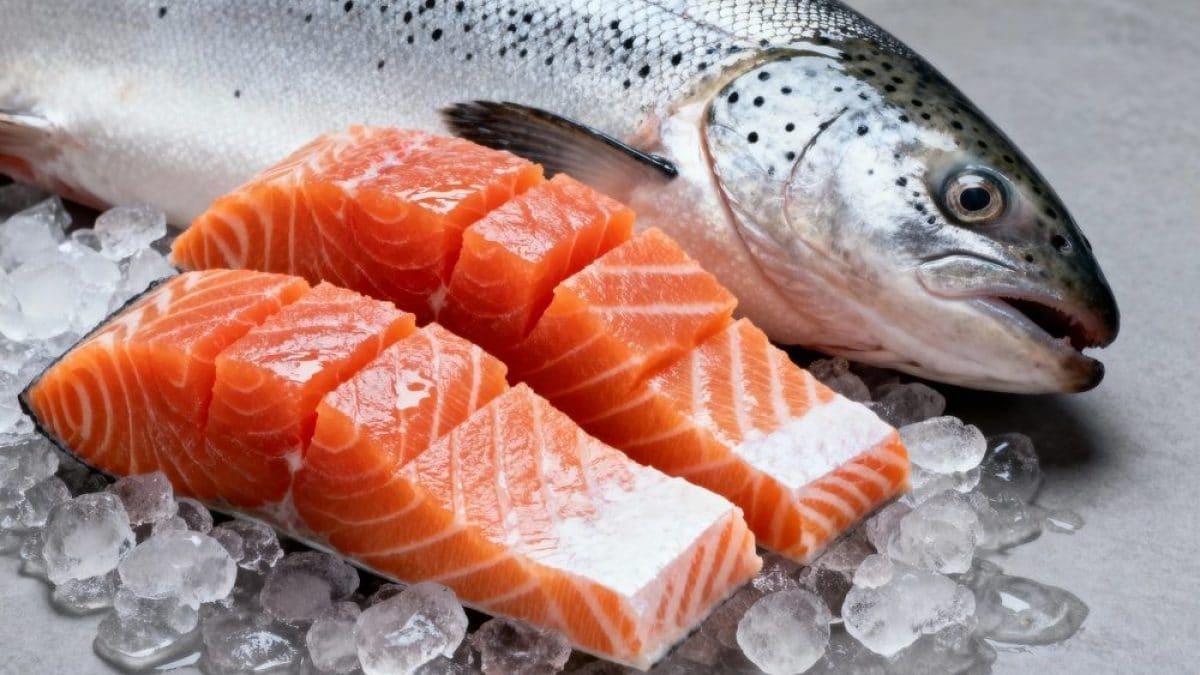
Over the past twenty years, salmon has established itself on global tables with the ease of a guest who shows up uninvited at every party, from sushi to aperitif canapés, to the farfalle that swam in cream alongside it in the 1980s.
Now, however, more than 120 chefs from 26 countries, who together boast more than 90 Michelin stars, have signed an open letter pledging to no longer serve farmed salmon raised in open-ocean cages until the industry can produce it without harming wild salmon, marine ecosystems, and coastal communities.
Leading the initiative in the United States is Alice Waters of Chez Panisse in Berkeley, a pioneer of cuisine based on local and seasonal products, alongside Dan Barber of Blue Hill at Stone Barns in New York, James Beard Award winner Cristina Martínez of South Philly Barbacoa, agrarian chef Matthew Raiford in Georgia, and David Barzelay of San Francisco's Lazy Bear. They are joined by a formidable international cohort, including Massimo Bottura of Osteria Francescana in Modena, Norbert Niederkofler of Atelier Moessmer in Brunico, and Antonia Klugmann of L'Argine a Vencò in Dolegna del Collio.
The global effort also unites Joan Roca of El Celler de Can Roca in Girona, Mauro Colagreco of Mirazur in Menton, Peruvian Virgilio Martínez of Central in Lima, Argentine open-fire master Francis Mallmann, and Spaniard Ángel León, widely known as the "chef of the sea". Published in newspapers across the United States, Canada, the United Kingdom, Australia, and Iceland, the open letter marks a unified stand among more than 120 high-profile culinary leaders worldwide.
The letter is part of Off The Table, the campaign launched in 2022 by WildFish, a British organization that fights for the protection of wild fish. The stated goals are to reduce demand for farmed salmon, increase economic pressure on producers, and prevent ocean farming from becoming too widespread. According to the organizers, over 8,700 chefs and restaurants worldwide have already joined the project.
Why Chefs Are Protesting Farmed Salmon
The letter points the finger at open-net cages, large floating enclosures anchored along the coast where water circulates freely, washing waste, feed residues, and pharmaceuticals into the sea. Sea lice (Lepeophtheirus salmonis) are also prevalent in the farms. These small, parasitic crustaceans feed on the skin, mucus, and blood of the fish. From the cages, they can infect wild salmon, particularly young smolts entering coastal waters for the first time to become adults.
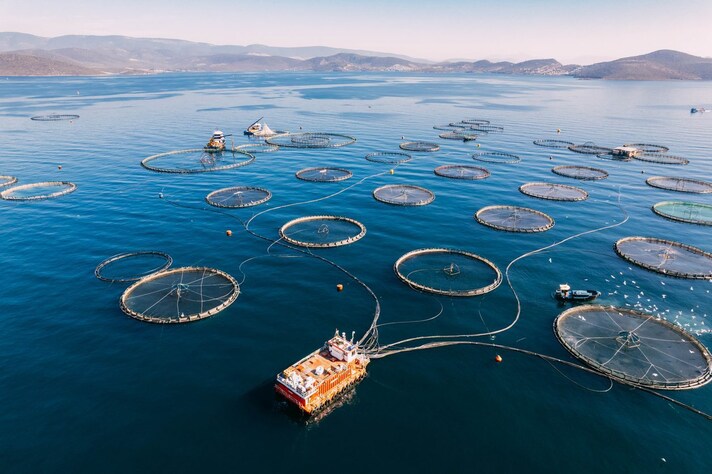
Escapes are also a cause for concern, as the specimens that escape the nets risk interbreeding with wild populations, which have already decreased by 80% since the 1970s according to the campaign's promoters.
How Many Salmons Die in Farms in Scotland and Norway?
Official data confirm that the issue is far from marginal, starting with the annual survey on fish production published by the Scottish government on September 30. Of the salmon released into the sea in 2023 as smolts, that is, young fish ready for saltwater, 68.8 % were harvested and slaughtered. This figure improves on the 61.8% recorded for the previous generation, the lowest figure since the late 1980s, but it means that almost one in three fish, 31.2%, was lost due to deaths, escapes, and culling.
The losses have not slowed down production, which in 2025 reached almost 198 thousand tonnes, 3% more than in 2024. Among the causes of the mortality, the Scottish producers themselves indicate gill diseases, bacterial infections and lice, together with the spread of plankton and tiny jellyfish favoured by warming waters.
The problem also affects Norway, the world's leading producer of farmed Atlantic salmon, where approximately 54.9 million salmon died at sea in 2025. Mortality stopped at 14.2%, down from 15.4% in 2024 and 16.7% in 2023. The Norwegian Veterinary Institute's Fish Health Report attributes 33.5% of recorded causes of death to injuries and trauma and 28% to infectious diseases.
A large portion of those injuries are due to the fight against lice. With the spread of drug resistance, farmers have reduced the use of pesticides and chemical baths and are now increasingly resorting to non-drug treatments: salmon are pumped out of nets and fed into machines that remove the parasites with heated water, jets, brushes, or fresh water, with the risk of causing scale loss, lesions, and severe stress. This is where the paradox of intensive fish farming comes from, forced to injure the fish to free them from a parasite that thrives in their very cages.
Anyone who wants to know which salmon to choose in the United States should start by checking the label. Under FDA and NOAA seafood labeling rules, fresh, frozen, and packaged salmon sold in the U.S. must provide key information such as the market name of the fish and whether it is wild-caught or farm-raised when that claim is made. For many seafood products, the country of origin must also be provided under Country of Origin Labeling (COOL) requirements, although these rules vary depending on the product category and point of sale. For processed products, such as smoked salmon, origin and production details are not always required in the same way, so consumers may need to rely on additional labeling or ask the retailer for more information.
To reclaim the menus of major restaurants, however, the industry will have to imitate the salmon: trying to swim against the current.

