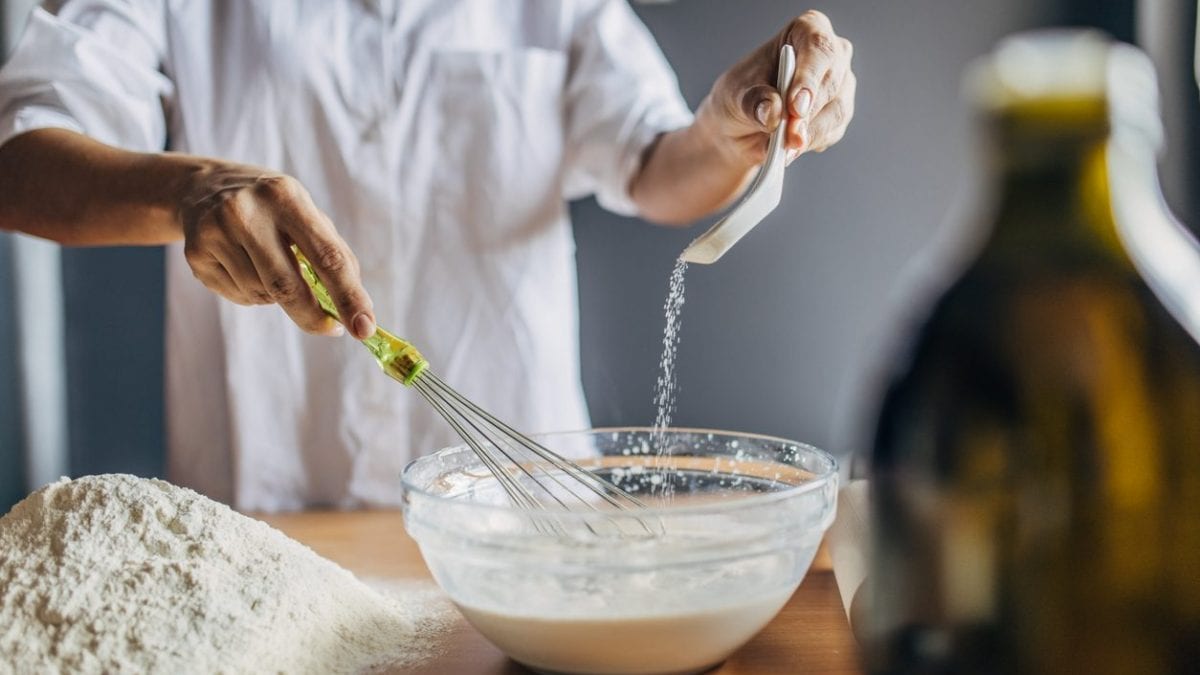
When it comes to bread, pizza, and focaccia dough, a few basic ingredients are usually enough to create a variety of products depending on how flour, yeast, water, and salt are combined. So why is sugar (or, rather, sugars) often brought up? Basically, for two reasons: the first is the belief that a pinch of granulated sugar always aids leavening; the second is the use of malt in professional baking, a natural improver that has now become popular even in amateur home baking. Let's see why sugar is important in dough and how to use it.
What is Sugar Used for in Doughs
In baked goods, whether using brewer's yeast or sourdough, sugar proves to be the yeast's main nutrient and a valuable ally in creating a crispy, amber crust, thanks to the Maillard reaction during baking. Sugars, in fact, are among the main players in leavening which, if done correctly throughout the dough's maturation process, gives the loaf or pizza a soft yet crunchy texture, with highly appetizing aromas.
To understand their role – to put it very simply – just consider that flour contains a minimal percentage of glucose, a monosaccharide that is the yeast‘s main food source. Even these small quantities are not enough to feed the yeast throughout the entire process. As a second option, the yeast relies on the work of various enzymes, particularly amylase, which breaks down the starch molecules contained in the flour, transforming it from a complex sugar into a simple sugar, glucose, thus increasing its availability. Amylase is usually sufficient to complete the entire process, so it is not necessary to add an external sugar boost.
When Do You Need to Add More Sugar?
The more yeast eats, the more gases it produces, which promotes the increase in volume. It also accelerates the formation of the gluten network, the framework of the dough within which the famous alveoli form. As we've seen, adding extra sugar isn't mandatory, especially if you use good-quality flours. For example, short, direct leavening processes (where all the ingredients are mixed together at once) generally exclude it, as the nutrients are more than necessary.
However, it may be useful in indirectly leavened doughs using sourdough starter and pre-doughs like biga or poolish, which require more time. In this case, it's possible to reactivate the yeast to complete the leavening process by adding more sugar.
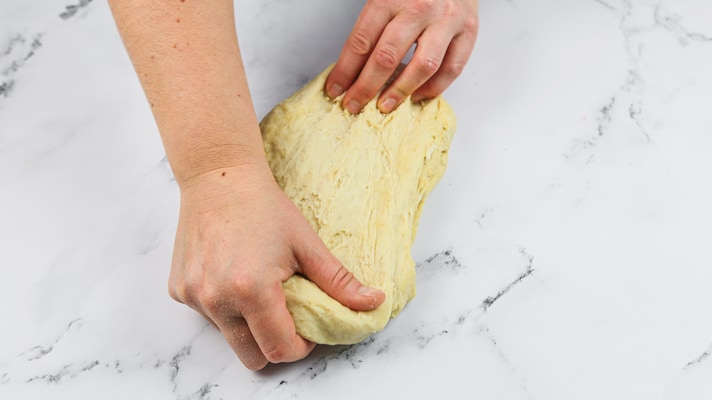
Which Sugar is Best to Use in Dough?
Bakers agree that regular granulated sugar isn't the best solution because it tends to speed up the rising process, resulting in a moist, compact crumb that isn't as soft and light. So, which one should you choose?
- Diastatic malt. Available in paste or powder form, it acts as a natural supplement to flour enzymes, as it is naturally rich in amylase. It is, in fact, a particular process of germinating barley or wheat. It has a high capacity for breaking down starch into simple sugars, allowing for constant yeast growth. It is always added when forming the actual dough, therefore not in the biga or poolish : the recommended amount is 1% of the total flour weight. Malt is also used to impart the characteristic aroma and flavor of fragrant bread, with a crispy, amber crust.
Honey, the Alternative to White Sugar
Honey is composed of almost 90% glucose and fructose and therefore helps as a leavening agent. It is not a direct substitute for diastatic malt: as seen previously, the latter has a greater power on leavening, as it is rich in enzymes that honey contains, but in smaller quantities. Why is it used? Honey is an excellent starter for making sourdough, promoting fermentation. Or it is recommended as a sugar substitute in doughs with weak flours, with brewer's yeast and short leavening times of 1 or 2 hours. Compared to sucrose, which also speeds up the process, honey gives a beautiful amber color, ensuring a final product that is not pale thanks to the presence of carbohydrates responsible for the Maillard reaction, absent in common table sugar. For neutral doughs, such as those for non-sweet breads and pizza, a type of honey with a liquid consistency is preferred, which does not excessively alter the flavor, such as acacia or a delicate wildflower honey. A spoonful is enough, making it a great alternative to white sugar in homemade baking.
;Resize,width=767;)
