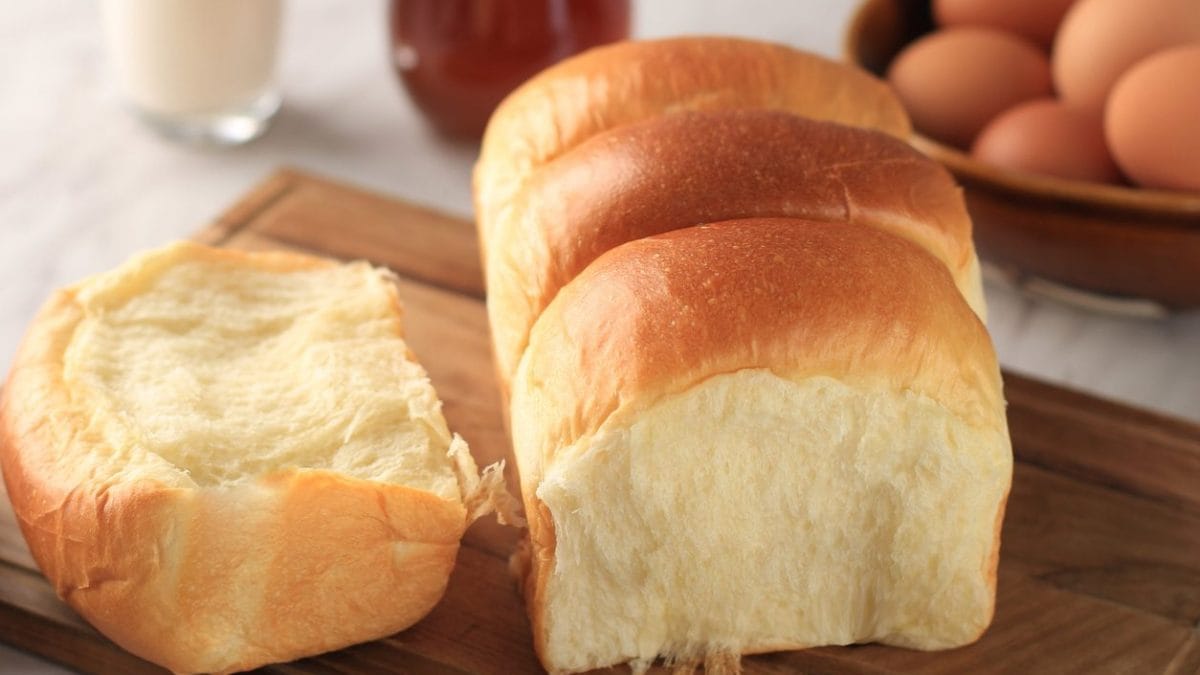
How does a simple dough of water, flour, salt, and yeast bring so much joy? With a scent so intoxicating that it can make you forget even the worst thoughts: we're talking, of course, about bread. A joy for all our senses, as delicious as it is complicated: making bread, in fact, is not that simple, and if you've ever tried making it at home, you know exactly what we're talking about. So, to make your life a little easier, we want to reveal a method that will give you consistently soft and delicious bread: it's called yudane and comes directly from Japan.
What Is It And How Is It Prepared?
Its Japanese origins immediately bring to mind one of the most iconic leavened products in Japanese tradition: shokupan, the softest milk bun there is. The preparation method that gives it that extraordinary texture involves the use of a starter —called tang zhong or water roux —made from flour and water.
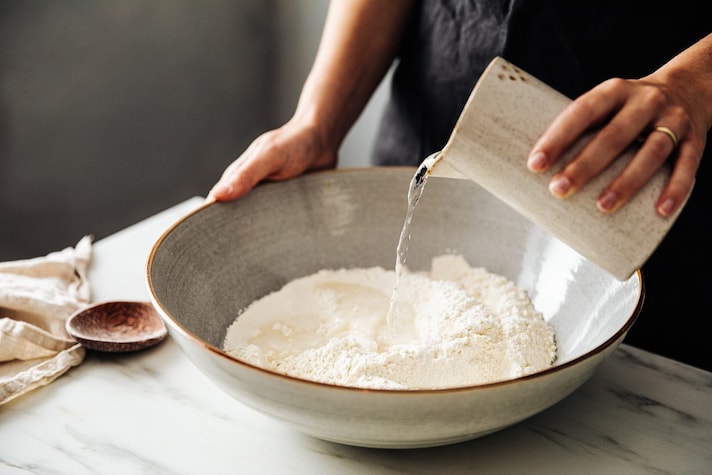
The Yudane method doesn't stray too far from this model, but it does have one fundamental difference: it's still a mixture of flour and water, but the latter must be boiling, at a temperature of around 195°F/90°C. The ratio is generally 1:1, so water and flour are added in equal parts, creating a sort of soft, sticky dough. This mixture is then left to rest in the refrigerator for at least 4 hours – preferably overnight – before being incorporated into the rest of the ingredients called for in the recipe, giving the bread an unparalleled softness and prolonging its shelf life.
How Much Yudane Should You Use?
Since it's simply made of water and flour, it's important to remember to subtract 20% of the total flour called for in the recipe to correctly calculate the proportions. For example, if your recipe calls for 500 grams of flour, you can make your yudane using 100 grams of flour (so 20%) combined with 100 ml of boiling water. For an even fluffier result, you can slightly increase the amount of yudane used.
How Does Yudane Work? The Gelatinization of Starches
The process behind the Yudane method is called starch gelatinization: we won't go into too much detail, but we'll try to give a clear and simple explanation, just to understand how it works.
Starch is made up of two complex molecules— amylose and amylopectin —that combine to form insoluble granules that, however, at certain temperatures, cannot be broken down by digestive enzymes. Consequently, to become digestible, they must be heated, and this usually happens during cooking: water penetrates the starch granules, causing them to swell and lose their ordered structure, absorbing and retaining moisture.
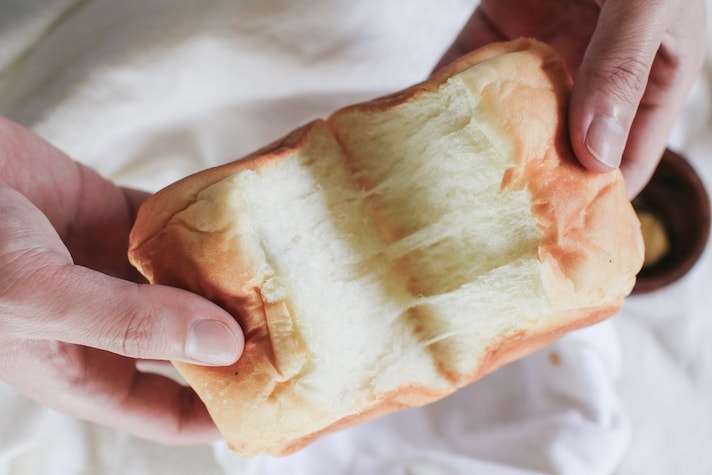
With the Yudane method, gelatinization begins before baking —thanks to the addition of water at around 195°F/90°C —and this slows the retrogradation of the starch, during which the molecules attempt to return to their original structure: this expels the water contained within and makes the bread tougher. In the Japanese method, therefore, gelatinization occurs during dough preparation, creating a more stable network in the starch that retains water more permanently, thus preventing it from drying out too quickly and keeping the bread fresh for days.
Difference Between Yudane and Tang Zhong
Although these two methods both come from the East and share the same goal —to obtain soft, long-lasting bread—they differ in technique, temperature, and final dough structure. Regarding proportions, yudane uses a 1:1 ratio, while tang zhong uses 1:5 (one part flour to five parts water). In tang zhong, the ingredients are heated over low heat until they form a cream similar to a real roux—hence the name water roux—while yudane uses boiling water at around 195°F/90°C right from the start.
Water roux is preferable for high-hydration doughs, such as breakfast breads or soft rolls; yudane, on the other hand, is suitable for medium-hydration doughs, perfect for toast and sandwiches, thanks to its more compact yet still elastic and extraordinarily soft consistency.
;Resize,width=767;)
