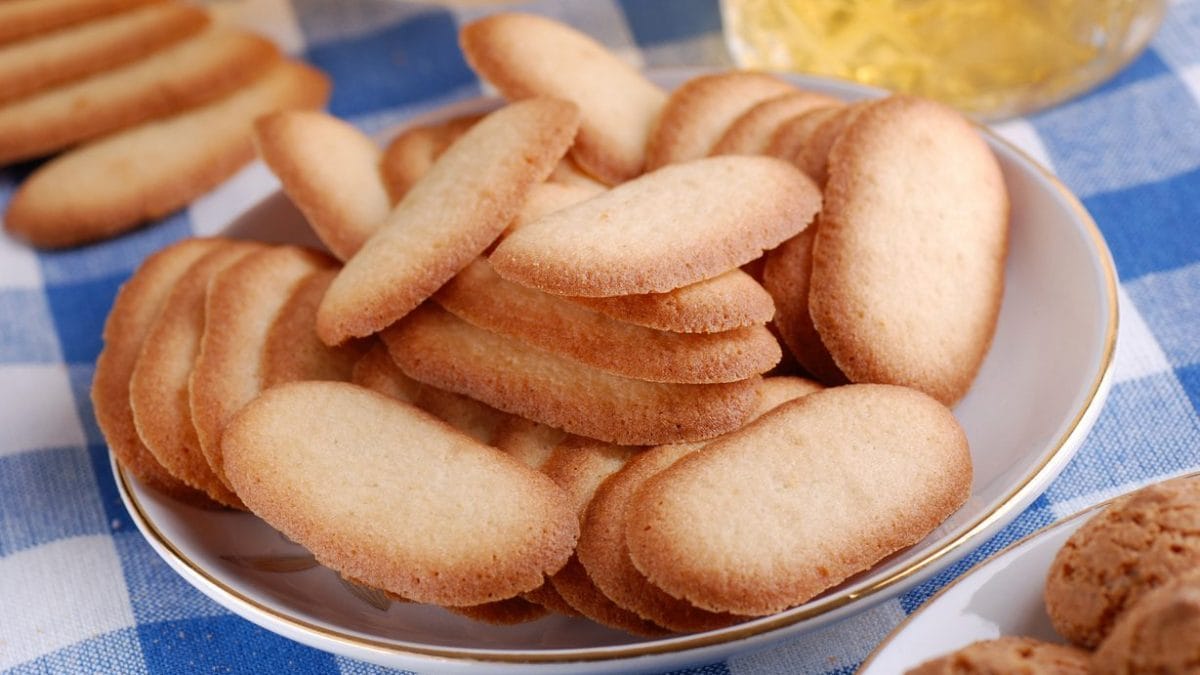
Open a glass jar or tin to grab some delicious treats to nibble on during a break, or bring the entire container to the breakfast table or coffee table for a snack. And don't forget the indulgence of dipping them in a glass of sweet wine. There's hardly a better welcome than those cupboard biscuits, made with wholesome ingredients, a symbol of a deliciousness that tastes like home. From grandma's biscuits to Danish cookies, including cantucci and cat's tongues cookies, here are some to make at home and always keep on hand.
Like their namesake sweets, these biscuits are a delight to behold, yet simple in nature. They're designed to last a long time in the pantry, the preferred storage space in the home when there was no refrigerator. For this reason, they're often traditional specialties from the past: they don't require fillings, icings, or decorations made with fresh foods, which spoil quickly. Instead, they're dry doughs made from flour, sugar, butter, and eggs, which can be enriched with dried fruit or raisins. Here are a few examples.
1. Grandma's Biscuits

Grandma's biscuits are prepared in just a few steps. They're made with eggs, brown sugar, flour, seed oil, milk, baking powder, and vanilla extract. Once shaped—ours are long, but you can vary them to your liking—they're dusted with granulated sugar and baked in the oven for less than half an hour. Perfect for dunking for breakfast or nibbling as a snack.
2. Danish Biscuits

Speaking of grandma: the famous blue tin box had a permanent place in the cupboards, but often it didn't hold the delicious Danish biscuits, with their unmistakable "butteriness," but everything needed for sewing, including needles, threads, and thimbles. A trauma that the time has come to overcome by getting our hands dirty (shortcrust pastry), making these irresistible objects of desire ourselves.
3. Cantucci

Cantucci are one of Tuscany‘s most famous sweet specialties: their distinctive characteristic is their particularly tasty, crunchy, and golden brown texture, thanks to a dough made from flour, sugar, eggs, and whole shelled almonds that is baked twice in the oven. They're ideal served with a glass of Vin Santo, Limoncello, or Amaro: try them in the classic or chocolate version.
4. Regina Biscuits

Staying within the Made in Italy regional tradition, it's impossible not to mention Regina biscuits, typical of Sicily, particularly the city of Palermo, where they are available in practically every bakery. Also known as reginelle, these biscuits are originally made with re-milled semolina and lard (now the combination of all-purpose flour and butter is more common) and covered in sesame seeds, which become incredibly fragrant once baked, perfect for accompanying coffee after a meal. Legend has it that they were prepared by the nuns of the Monastery of Saint Catherine and that Queen Maria Carolina of Habsburg-Lorraine was particularly fond of them.
5. Brutti ma Buoni

All you need are egg whites, granulated sugar, and chopped hazelnuts to make these biscuits, which are very popular in northern Italy, especially in Piedmont. Their name comes from their rather rough and irregular appearance, which, however, doesn't match their flavor, which is very delicious, almost melting in the mouth when bitten like a meringue. They are real sweets, perfect for offering guests after lunch or dinner.
6. Raisin Biscuits

Raisin biscuits are a classic and can be found in various shapes throughout Italy. In the version we're offering, the final result is soft on the inside, with a smooth, even dough made from flour, butter, sugar, baking powder, and eggs, enriched with soaked raisins. Here, they're flavored with lemon zest, but you can also add a pinch of cinnamon or vanilla seeds.
7. Wine Biscuits

Wheat flour, granulated sugar, white wine, seed oil, and a pinch of baking powder: these are the ingredients used to make wine biscuits, traditional biscuits popular in Lazio and Central Italy. In some areas, they're also known as sweet taralli, as they resemble their shape. The best way to enjoy them is to dip them in a sweet wine, such as Vin Santo or Moscato.
8. Stresa Daisies Biscuits

They were first made in 1857 for little Margherita of Savoy, the future queen of Italy, becoming one of the symbolic sweets of the house. In Stresa, a famous Piedmontese village overlooking Lake Maggiore, these biscuits are enjoyed in pastry shops as a snack, perfect with tea, coffee and hot chocolate in winter and can be flower-shaped or round, always white and sprinkled with powdered sugar.
9. Desert Roses

Simple yet dramatic, desert roses are cookies with a retro charm (very popular in the 1980s) and an exotic name, which refers to a distinctive rock formation common in desert countries. These cookies reproduce this rock formation through the use of cornflakes, either crumbled into the dough or as a topping.
10. Cat's Tongues Biscuits

We conclude with a light, elegant, and versatile biscuit that originated in France and later became well-known throughout Europe, including Italy, where it can be found in bakeries and pastry shops. Cat's tongues are thin "puffs" made with flour, egg whites, powdered sugar, and butter that are served with cream, ice cream, and fresh fruit bowls, as dessert.
How to Store Cupboard Biscuits
Besides their versatility, the great advantage of store-bought biscuits is their shelf life. Once you've made them, you'll have them for at least a week, ready to enjoy for breakfast, as a snack, to serve to guests after lunch or dinner, or simply to nibble on whenever you like. Even though they don't contain creams or fillings that spoil quickly, they do require some care: they should be stored in a cool, dry place, away from humidity and heat sources, always in airtight containers that prevent air from drying them out further. Choose glass jars with lids or tins: both are functional and aesthetically pleasing, as you can take them with you when you're ready to serve them.
;Resize,width=767;)
