Tropical fruit has always held a special fascination because it brings with it colors, shapes, and flavors that, to our eyes, are out of the ordinary: fruits called sapote are undoubtedly part of this universe waiting to be discovered. Probably some of you will have never heard of this term: sapote (which is rarely translated in the plural "sapoti") refers to a vast range of botanical species that share certain characteristics that make them very similar to each other. These are, in fact, plants whose origins date back to Central and South America at least three millennia ago, as they were already known to the Aztecs and Mayans, who inhabited Mexico and the Yucatan Peninsula. What makes them appear related to each other without necessarily being "consanguineous", in addition to their land of origin, are their fruits: sapote, in Spanish "zapote", a word that derives from tzapotl, which in the ancient indigenous Aztec language Nahuatl referred to all those soft, juicy fruits that could be eaten. In Europe and many other parts of the world, sapotes are rare, but once you have the chance to try them, they are hard to forget because they are an explosion of sweetness and delicious aromas.
Sapotes include a wide variety of plants that differ in appearance, aroma, and flavor: let's see which four have transcended the borders of their countries, becoming a little more well-known even in other latitudes.
1. Black Sapote

Known as zapote prieto in Spanish and black sapote internationally, its scientific name is Diospyros nigra (or Diospyros digyna) and it belongs to the same genus as the common persimmon (Diospyros kaki). The fruit's appearance, in fact, closely resembles that of its popular cousins: it is round and slightly flattened, with a smooth, bright green skin that turns olive green as it ripens, but the real surprise lies in the pulp. The black sapote, in fact, has earned the nickname chocolate pudding fruit because its interior is creamy and dark, with a flavor reminiscent of cocoa, banana, and dates, making it comparable in consistency and deliciousness to a chocolate pudding. It is an ancient plant native to Mexico and very widespread in Central America. It is also grown in other parts of the world that share a subtropical climate: in recent years, some areas of Southern Italy have become a favorable territory and black sapote that come from Sicily can be found on the market.
2. White Sapote

The white sapote (zapote blanco), scientifically known as Casimiroa edulis, belongs to the Rutaceae family. Although still native to Mexico, in this case we are dealing with a plant that produces a round fruit, also called casimiroa, wrapped in a yellow or green peel, depending on the two main cultivars. The pulp is white, with creamy hues, a buttery texture, and a sweet flavor and aroma reminiscent of a peach. Inside, two large black seeds are clearly recognizable, but they are not edible as they would have a narcotic effect.
3. Canistel or Yellow Sapote

Less well-known but very unique is the canistel (Pouteria campechiana), also known as eggfruit or yellow sapote. Native to Central America and belonging to the Sapotaceae family, it produces fruits with a deep yellow skin and firm, creamy flesh, reminiscent of hard-boiled egg yolk in consistency. The flavor is sweet and enveloping, with notes reminiscent of pumpkin, sweet potato, mango, and chestnut. It is primarily eaten fresh, but is also highly prized in smoothies, creams, and tropical desserts.
4. Mamey Sapote

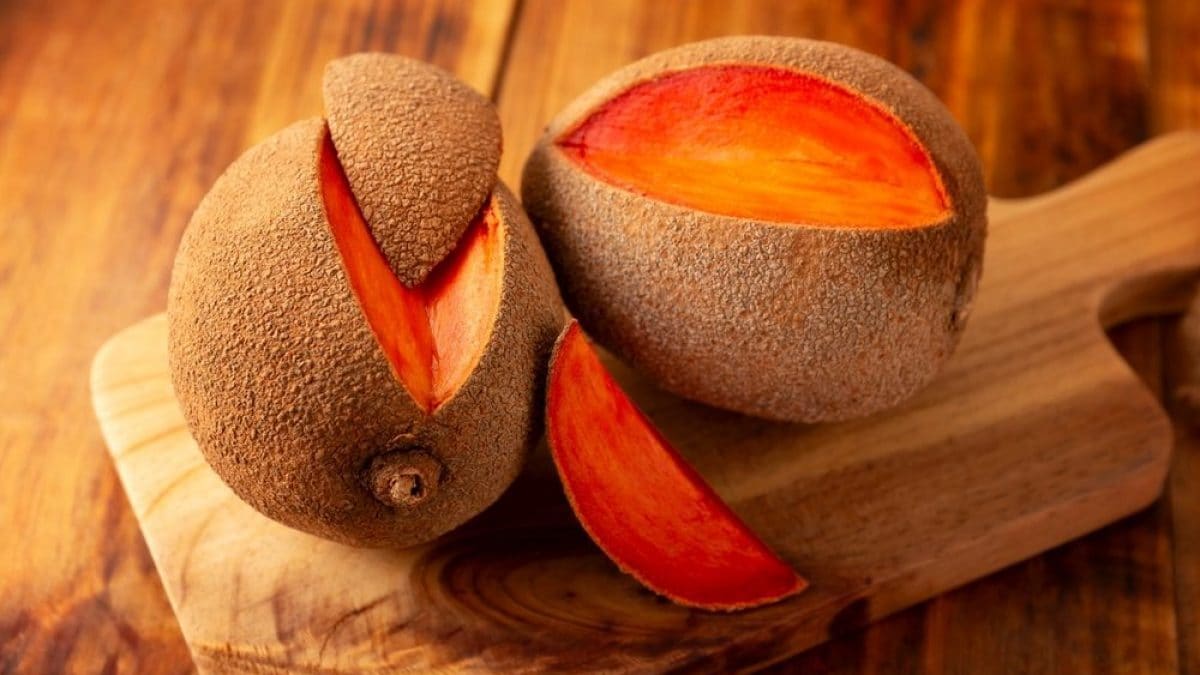
Also present in the pre-Columbian civilizations of Mesoamerica is the mamey sapote, the fruit of the Pouteria sapota, a very ancient plant, but little known outside of Mexico, the Caribbean and Florida: it can also be found in some areas of Brazil and Cuba. It is a vegetable that is part of the Sapotaceae family, from which rather large fruits are born, elliptical or spherical in shape, with a brown and rough skin, while the pulp ranges from intense orange to reddish: the taste is rich and enveloping, with aromatic hints similar to those of apricot, pumpkin, sweet potato, honey and almond.
5. Sadotilla

We conclude with the sapodilla, more easily identifiable under the name of Manilkara zapota. The plant also belongs to the Sapotaceae family, its origins are located in Mexico and Central America, even though it has been exported in the past as far as the Philippines, spreading especially in India and South East Asia: chicle was extracted from its bark, a vegetable emulsion traditionally used to make chewing gum with natural ingredients. Obviously, the sapodilla also produces its fruits: they are small as a medlar, have a brownish skin and a pale yellow-orange pulp, which has the advantage of being very delicate and sugary, with hints of ripe pear and caramel.
How to Eat Sapote Fruits
We have seen that sapotes are not all the same: despite being different plants, however, they still have many things in common from a gastronomic and culinary point of view. Like most tropical fruits, they are rich in beneficial properties, a concentration of vitamins, mineral salts and antioxidants. To be eaten, the fruits must reach full ripeness, otherwise when unripe they are hard and sour, characteristics that make them practically inedible. The pulp, which is fragrant, juicy and soft, is used natural or in recipes: in the black sapote, it can even be enjoyed with a teaspoon, just like a dessert due to its velvety texture, and it is perfect transformed into delicious mousses. Otherwise, in general, the varieties lend themselves to being made into fruit salads, smoothies, milkshakes, fruit juices and to enriching creams: the most successful combinations are those that see them together with other tropical ingredients such as lime, coconut, or spices like cinnamon and vanilla.
;Resize,width=767;)
