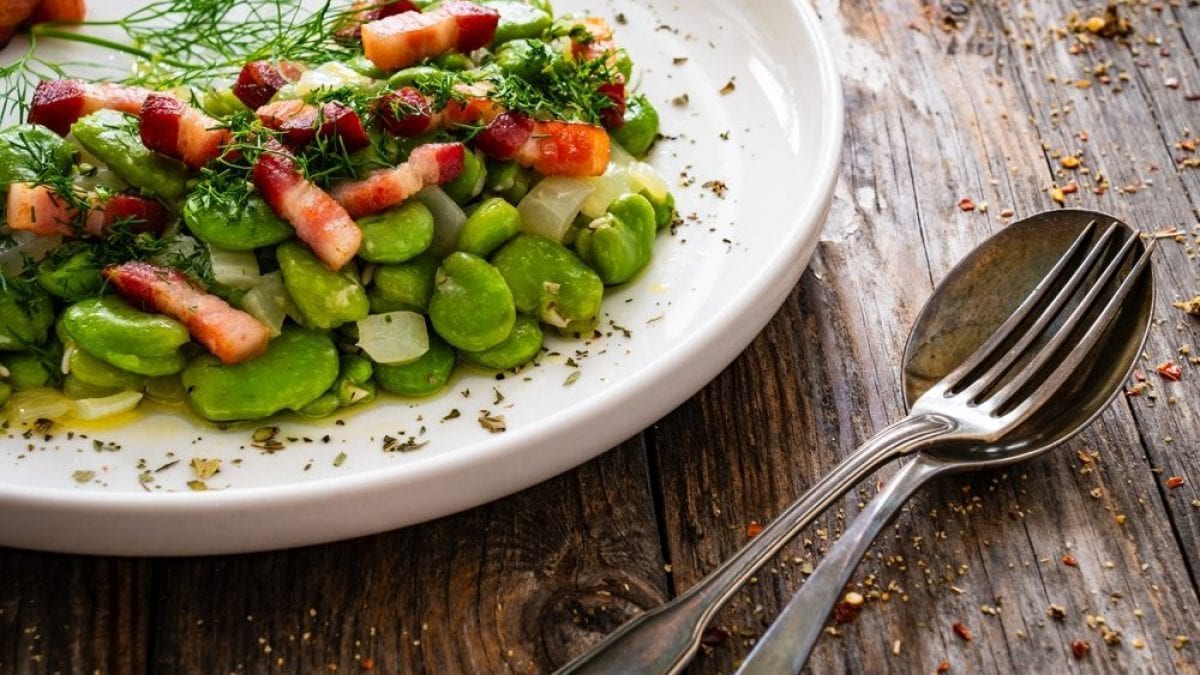
Green, very green: fava beans are among the legumes that symbolize spring, known for millennia both as a food for animals and humans and as a ritual food in many cultures, starting with the inhabitants of ancient Rome, who considered them a symbol of fertility and rebirth, linked to the goddess Flora. Even today, on May 1st, Romans take picnics in the Castelli area, bringing with them fresh fava beans and pecorino cheese. This legume, however, has also been dried for centuries, so as to have it available all year round and, more recently, also frozen. Fava beans are nutritious, once considered a poor man's food, and are part of traditional recipes. When they are in season, they attract with their shiny pods, but often they are not bought because people don't know how to cook them. The good news is that they can be enjoyed in many different dishes, following a few precautions both when choosing and cleaning, and during the actual cooking, because fava beans are at their best when they are pleasantly sweet, tender and crunchy. Below, here are the mistakes to avoid if you plan to get to work.
1. Not Taking Advantage of Fresh Fava Beans

Fava beans are available year-round, frozen or dried, but when they're in season, from April to June, it's best to opt for the fresh variety. In this case, be careful when choosing: younger fava beans have a bright green, firm, spotless pod, while if the pod appears mottled, darker, swollen, and droopy, it means they're overripe and considered "older." The seeds of the former are tender and sweet, perfect for eating raw, while the latter are larger, bitter, and floury in texture, and are always best cooked, such as boiled or stewed.
2. Not Considering Their Waste (Which Can Be Recovered)

The part of fava beans listed as an ingredient in recipes is the seed, contained within the pod. This is considered waste (although there are ways to use it in cooking to reduce waste), and accounts for approximately 70% of the product's weight. Therefore, be careful when purchasing, because one kilo of fresh fava beans means between 250 and 300 grams of seeds. Depending on the dish you're preparing, adjust accordingly, or you may end up with an insufficient quantity of fava beans.
3. Not Removing the Outer Skin

Broad bean seeds have a dull outer skin, called the tegument: in younger beans, it's light green and thin, while in older ones, and generally in large seeds, it's thicker and tougher. What should you do? In the first case, after shelling the beans, you can leave it on, while in the second, it's best to remove it, as it's hard to chew and can make the legume less digestible. Simply press lightly on the seed with your fingers, or make a cut with a small knife: it comes off easily.
4. Forgetting to Soak Dried Fava Beans

We mentioned dried fava beans at the beginning: the seeds are available loose year-round, without the pod, and obviously, they don't need to be shelled. They're best eaten after cooking, remembering to soak them for the time necessary to rehydrate them: whole dried fava beans with the husk require at least 12-24 hours, while the shelled ones require less time, around 7-8 hours. They should then be boiled for 1-2 hours and then used in your favorite recipe. If you buy them packaged, follow the instructions.
5. Cooking The Beans Too Much or Too Little

Fresh fava beans require careful cooking, as they can be hard or fall apart. To fully appreciate them, they should soften but still have a firm bite: generally, boiling or stewing them for 10-20 minutes is enough to achieve a crunchy texture (ideal for an omelette, a salad, or as a pasta sauce), increasing the cooking time to 40 minutes if you want them to be more tender, for example in a side dish like fava beans in porchetta, where a softer texture pairs better with the enveloping texture of the pancetta.
6. Poorly Managing Pan Cooking

Fresh fava beans are much easier to cook in a pan than you might think. As you've seen, timing is important for a good result, but there are other precautions to take: the heat should never be excessive, but medium-low, and the legumes should always be moistened with liquid and flavored. You can proceed by sautéing them simply with oil and onion (or garlic), adding the fava beans, stirring, and adding water or broth to maintain the moisture. If desired, deglaze with white wine for added flavor.
7. Adding Little Flavor

Let's delve deeper into the previous point: fava beans have a delicate flavor that lends itself to being enriched with other ingredients that enhance it. When raw, pair fava beans with aged cheeses like pecorino or cured meats like mortadella and salami, two combinations whose savory flavors enhance the legume's sweetness. Cooked fava beans also include, in addition to onion and garlic, flaked or grated pecorino cheese, which is also used to cream them, as well as bottarga, creamy ricotta, pancetta, guanciale, or sausage browned in the same pan, as well as fragrant touches of pennyroyal, mint, and wild fennel. Furthermore, fava beans and other seasonal vegetables, such as artichokes and peas, go perfectly together to create dishes such as the traditional Roman vignarola, or light recipes for every day such as farro salad with fava beans, peas and cherry tomatoes, or even with asparagus, to be tried in a tasty pasta dish.
8. Not Knowing About Favism
We know that some foods can be harmful to people with allergies and intolerances. When it comes to fava beans, there is a specific form of sensitivity unlike any other that prohibits those affected from consuming them: favism, a hereditary condition (which tends to be passed from mother to son, with women being mostly healthy carriers) that, due to a gene mutation, causes acute anemia when contact with certain substances found in this legume (and also in some substances found in peas and verbena). For some people, simply inhaling the smell or presence of pollen is enough to trigger a severe reaction. Those affected by this condition should avoid this food.
;Resize,width=767;)
