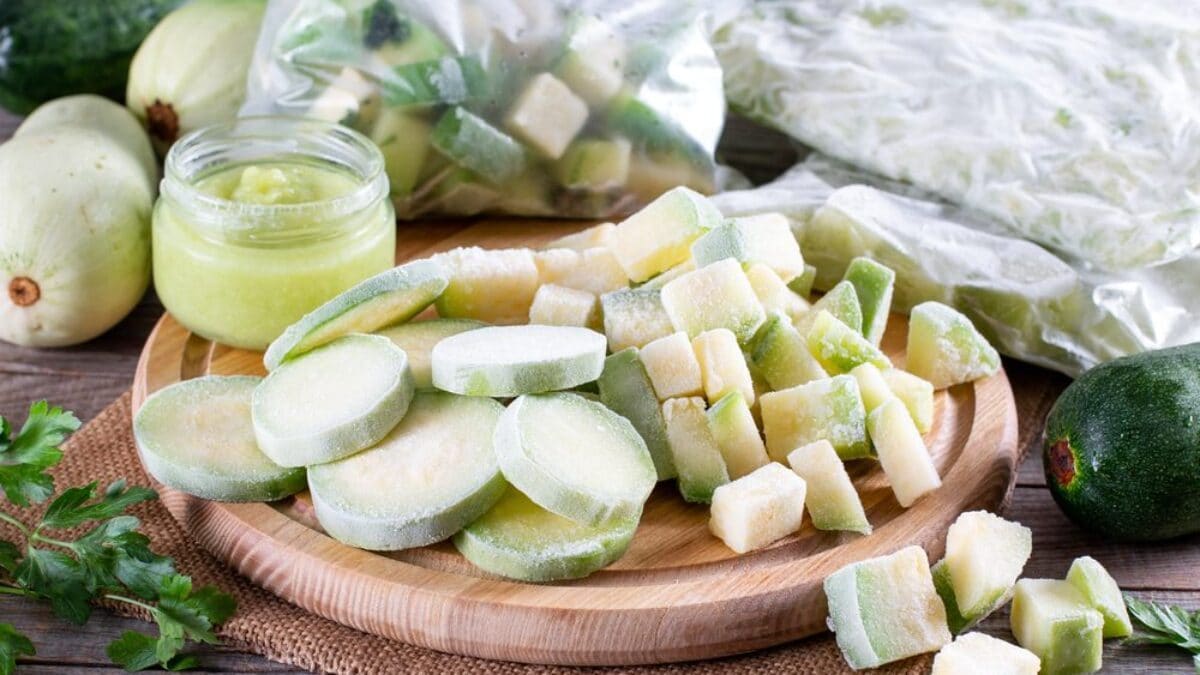
Let's answer the question right away: yes, zucchini can be frozen and will last in the freezer for at least 6-8 months. This is good news for those who appreciate this typical summer vegetable (despite it being available year-round at supermarkets and greengrocers), but it does require a few precautions to keep it at its best. One of the main characteristics of zucchini is its high water content, a quality that makes it low-calorie and purifying, but which also turns out to be a disadvantage when thawed: the large amount of liquid inside freezes, and when brought back to room temperature, the consistency tends to be softer than that of the vegetable when eaten fresh. So let's see how to freeze and thaw zucchini correctly and how to use them in the kitchen to enhance their flavour.
How to Prepare Zucchini Before Putting Them in The Freezer
The first rule for achieving good results is choosing excellent raw materials. What does this mean? Opt for courgettes that are perfectly ripe, firm, whole, and free of bruises, regardless of your preferred variety. It's important to remember that freezing doesn't improve the condition of a food, but rather maintains it, slowing down spoilage thanks to the action of low temperatures. Zucchini should then be washed to remove any soil or impurities and dried carefully, as excess moisture accelerates deterioration. Third tip: avoid freezing whole zucchini, but rather cut them into the most suitable shape for your intended use, such as rounds, cubes, or sticks: the whole vegetable takes longer to thaw, and the abundant pulp would release a lot of water, becoming flaccid and difficult to cut and slice precisely.

Is It Better to Freeze Zucchini Raw or Blanched?
Raw zucchini, once cut into pieces, are ready to be frozen: to ensure that the pieces don't stick together while in the freezer, becoming a single, complicated mass, the trick (which can also be used for other portioned foods) is to proceed in two stages. First, arrange the pieces on a tray, spaced apart, and pre-freeze for a couple of hours, until they are rigid; then, remove and transfer them to freezer bags or classic plastic or glass containers resistant to 0°F/-18°C, sealing them completely and indicating the date. A very simple operation that you can also do after another step, that of blanching: it consists of quickly blanching the chopped vegetables – not just the zucchini – for a few minutes (a couple is enough) in salted water as soon as it reaches boiling point, draining them with a slotted spoon and then immersing them in a bowl of water and ice. Thanks to the thermal shock from hot to cold, the cooking process is stopped, the color is better fixed, nutrients are less degraded and the vegetable has a firmer and "crunchier" consistency. It's not a mandatory step, but if you plan on storing the zucchini in the freezer for a rather long time or if you plan on using it in a way that requires it to retain a certain structure, such as sautéed as a side dish, then consider it. Obviously, zucchini can also be frozen when cooked, but in this case the method depends on the final preparation, whether simply steamed, grilled or fried, or whether instead combined with other ingredients, such as meat, cheese, cereals, from stuffed zucchini to burgers, treating these dishes as leftovers from ready-made meals to be stored in the most correct way possible so as not to waste them.

How to Use Frozen Zucchini (And When to Prefer Fresh Ones)
It's usually recommended to thaw foods slowly in the refrigerator, maintaining the cold chain, or in the microwave, if it has a defrost function. In most cases, frozen zucchini can be used directly in recipes, skipping the time to bring them back to room temperature and cooking them straight from the freezer: you can sauté them in a pan with oil, garlic, and herbs to use in various side dishes or as a filling for savory pies and omelettes, or sauté them with onion, celery, and carrot in a saucepan to make risottos, soups, and cream soups. We have just mentioned many recipes to enhance zucchini in the kitchen, but none of them have their natural consistency as the protagonist: in raw zucchini carpaccio, in marinated courgettes, in grilled and fried zucchini, as well as in those to be hollowed out and stuffed, then the best choice is the fresh vegetable, which maintains its shape and texture.
;Resize,width=767;)
